First Seen
2023-05-10T21:03:42+00:00
simple-description (qwen3.5_2b-q8_0)
The image displays a silhouette of a roller coaster structure with a flag and a sign that reads "Merry Christmas." This visual is used in the context of "Papercuts" (Papercuts), a meme format characterized by text-based visual art where the image serves as the background for a joke, often with a caption. The sign on the coaster, reading "Merry Christmas," plays on the juxtaposition of the classic Santa sign with a ride in an amusement park, suggesting a humorous scenario where Santa is riding a coaster.
simple-description (llama3.2-vision_11b)
I couldn't find any information on a meme related to the category "Papes". Could you provide more context or clarify which meme you are referring to?
detailed-analysis (gemma3-27b-vision)
Okay, here's an analysis of the image, broken down into sections based on the requested theoretical frameworks. I'll note if a section is not applicable.
Visual Description
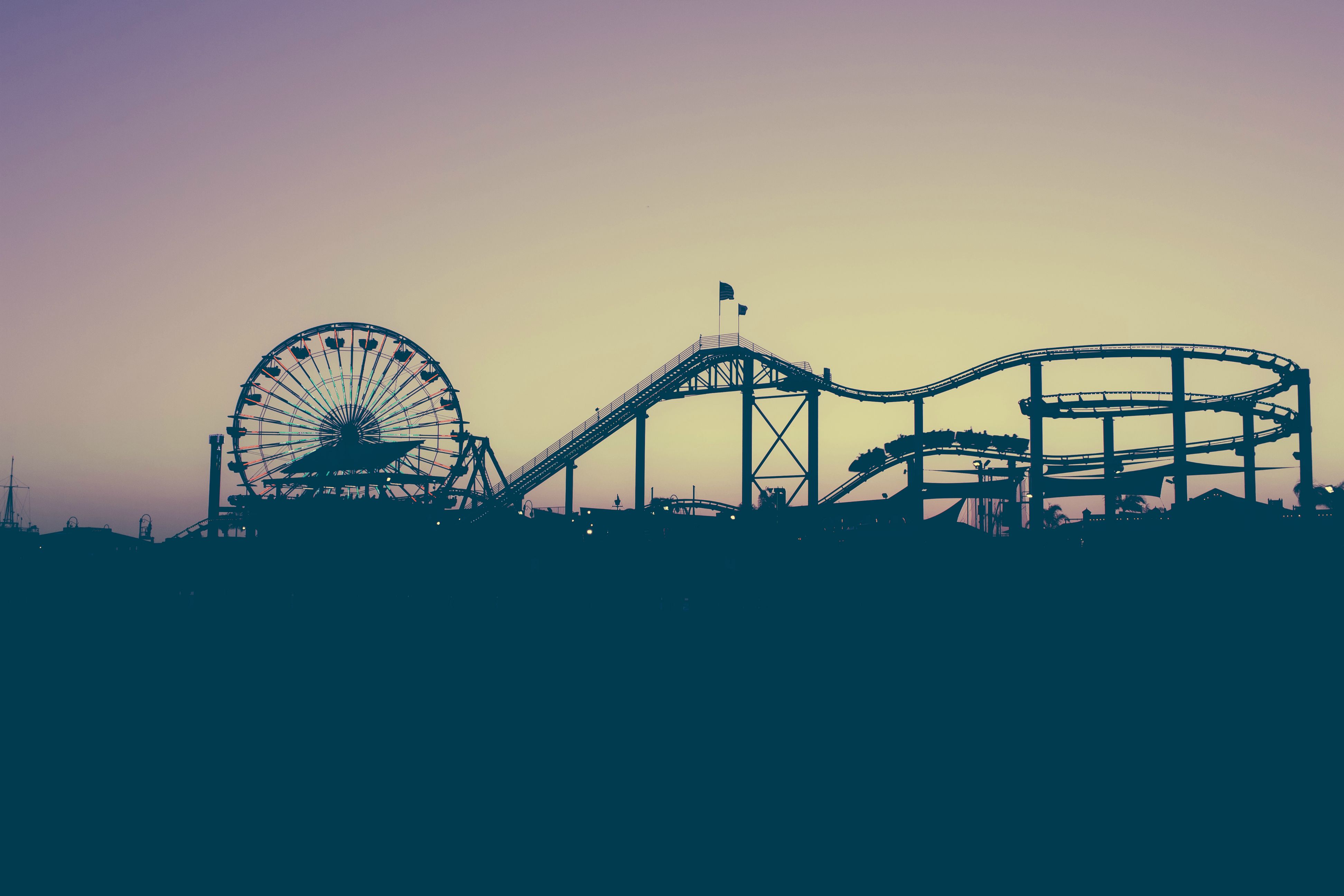
The image depicts a silhouetted amusement park scene at dusk or dawn. A large Ferris wheel and a complex wooden roller coaster dominate the skyline. There are also smaller rides and structures visible in the dark silhouette at the bottom. The sky features a gradient of color, shifting from muted purples and blues at the top to oranges and yellows closer to the horizon. The image is largely monochrome, creating a mood of nostalgia, melancholy, or even a sense of the surreal. There are three flags flying atop the roller coaster. It’s a striking, dramatic composition with a strong emphasis on form and shadow. The lack of detail in the silhouetted forms encourages imaginative completion by the viewer.
Foucauldian Genealogical Discourse Analysis
This image lends itself to a Foucauldian reading through the examination of power dynamics embedded within the concept of the amusement park. The amusement park, as a modern institution, can be seen as a carefully constructed space for disciplining bodies and regulating enjoyment. The roller coaster itself, with its restraints and designated paths, exemplifies a panoptic control, orchestrating experiences. The expectation of thrill and excitement is normalized and channeled, creating a controlled form of "transgression" that ultimately reinforces norms.
A genealogical approach would trace the historical development of amusement parks, examining how they arose as sites of entertainment in conjunction with shifts in industrialization, urbanization, and changing conceptions of leisure. The discourse surrounding amusement parks focuses on family fun, escapism, and a temporary suspension of everyday realities. The park produces subjects who willingly submit to its rules and seek out regulated excitement. The silhouette emphasizes the constructed nature of this "fun" – it’s a carefully crafted illusion, a staged experience.
Critical Theory
Applying a Critical Theory lens, the image can be seen as embodying the themes of commodification and the culture industry. The amusement park isn't simply about fun; it's about selling an experience. The rides, the food, the atmosphere – all are products to be consumed. The roller coaster, as a symbol of risk and excitement, is particularly interesting in this context. It presents a simulated experience of danger within a carefully controlled environment, offering a kind of "safe" thrill that satisfies a desire for excitement without genuine risk.
The image’s stylized and somewhat melancholic mood also speaks to the alienation associated with modern consumer culture. The silhouetted forms lack individuality, representing the mass consumer reduced to a silhouette. The park, meant to be a space of escape, ultimately reinforces the structures of control and consumption that dominate everyday life.
Marxist Conflict Theory
From a Marxist perspective, the image embodies the inherent class contradictions of capitalist society. The amusement park represents a space of consumption available to those who can afford it. It is a spectacle designed to distract from the exploitative realities of labor that underpin its existence. The park is built and maintained by workers whose labor is obscured by the spectacle of “fun.”
The inherent risks of a roller coaster can be seen as a metaphor for the precariousness of working-class life – a controlled thrill that masks underlying dangers. The image's darkened landscape may even suggest the hidden conditions of labor that enable the park's existence. The spectacle of entertainment serves to reinforce the dominant ideology and mask the inequalities within society.
Postmodernism
This image readily aligns with many Postmodern concepts. The silhouetted, almost abstracted forms represent a deconstruction of traditional representation. The emphasis on spectacle and surface over substance is a key element of Postmodern aesthetics. The blurring of boundaries between reality and simulation is also present – the park offers a carefully constructed “reality” that is divorced from everyday life.
The nostalgic and somewhat melancholic mood speaks to the Postmodern fascination with pastiche and the loss of authenticity. The image doesn’t offer a clear narrative or meaning; it invites viewers to interpret it through their own subjective lenses, reflecting the Postmodern rejection of grand narratives.
Queer Feminist Intersectional Analysis
While not immediately explicit, a Queer Feminist Intersectional reading can unpack the assumed normalcy projected by the amusement park space. Spaces like amusement parks have historically been constructed to reinforce heteronormative family structures and gender roles. The expectation of romantic pairings on rides, or the division of labor within the park’s workforce, often reflects and reinforces these norms.
The silhouette form removes details about who is riding the roller coaster, removing the assumed norm and allowing for a different interpretation. This creates a space for thinking about who is included and excluded from this supposedly “fun” space.
Considering intersectionality, the image prompts questions about whose access to leisure and enjoyment is privileged, and whose is limited by factors such as race, class, gender, sexuality, and disability. The silhouetted forms can serve as a starting point for imagining alternative modes of embodiment and interaction within this space.
Let me know if you'd like me to expand on any of these analyses or explore a specific aspect in more detail.
simple-description (llama3.2-vision)
The meme is a screenshot of a Reddit post with a caption that reads "When you're trying to be a good friend but your brain is still a 12 year old boy". The image is a picture of a roller coaster, but the caption is referring to the emotional state of being a "good friend" while still being a "12 year old boy" in terms of emotional maturity.
tesseract-ocr
P, gE | GH LX j il Y J Amn tee oe. SS a eoaeg : UZ: BV oF fF Xx dh AL 0. Ake ) Ales — : \ e | j / x cS tips. ia —_ <a — BRIA W/Z Ch =a, aa Ae Lee tee re a a —=_ aw nv sha eee __ ee SF -s he Jee oe, Se eee | il a) UN PN A \ LE as Zila | $a Fi y aed ai © a ee SY Legs ‘ —_——ie 7 Nae Se ect Iyva/LZ fh + all oh & 3 A aan eye ally a Aree | iti i we ee si oe ac oo ry ; a w|i Pa f : ' i it A.