First Seen
2023-05-10T21:03:42+00:00
simple-description (qwen3.5_2b-q8_0)
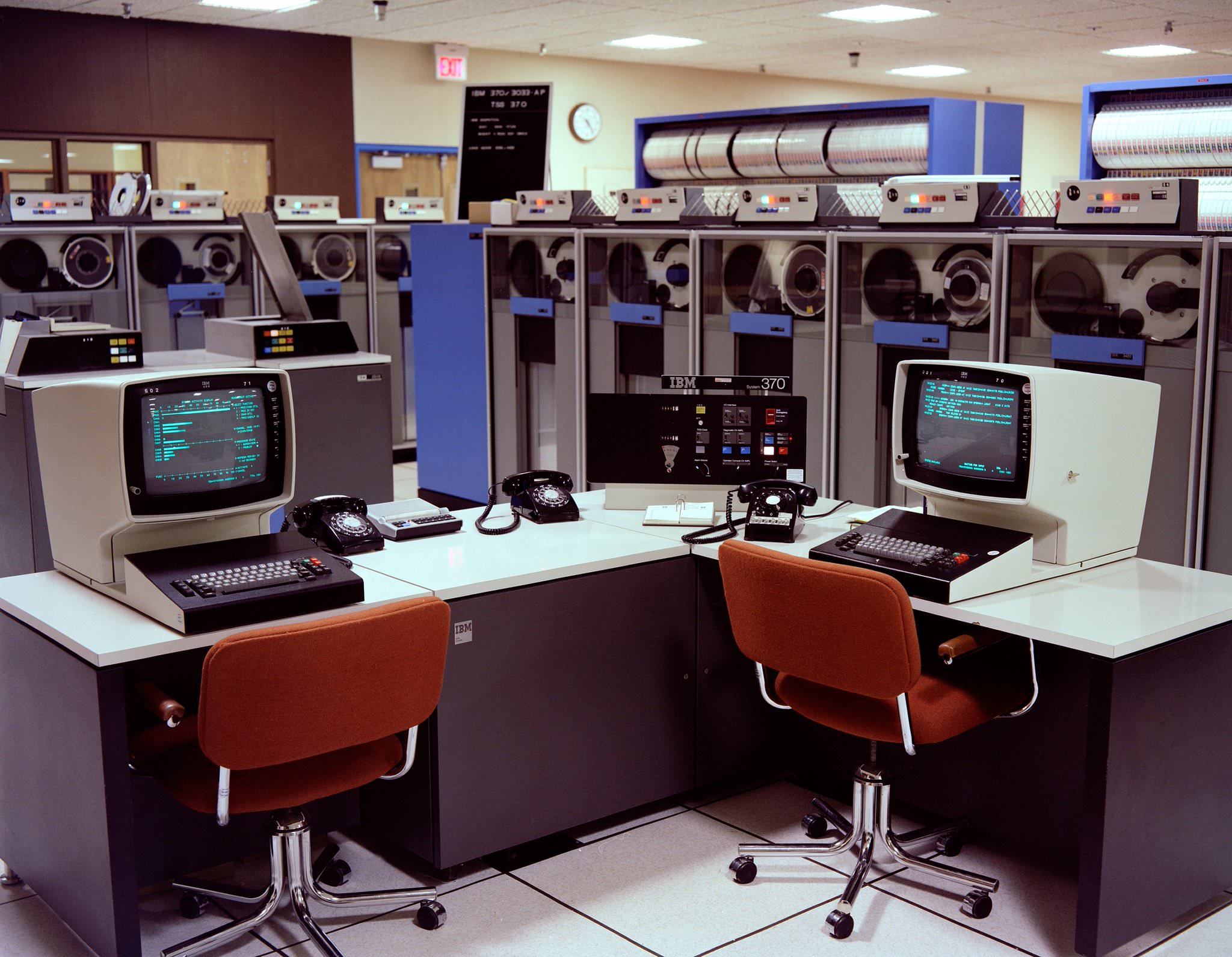
The image depicts a vintage IBM mainframe system from the late 1980s, prominently displaying the text 'System 370' on the monitors and 'IBM 370 / 3033-AP TSS 370' on the control boards. This text serves as the punchline, highlighting the specific technology from that era, acting as the 'Meme' of this category. The image showcases the unique aesthetic of the time, with the specific hardware and text clearly visible, ensuring the content is understood by anyone who cannot see the image itself.
simple-description (llama3.2-vision_11b)
I couldn't find any information on a meme that matches the description "Papes." It's possible that it's a made-up or obscure reference. If you could provide more context or information about the meme, I'd be happy to try and help.
detailed-analysis (gemma3-27b-vision)
Okay, let's break down this image through the requested lenses. It's a fascinating picture, steeped in the history of computing and hinting at larger socio-technical dynamics.
Visual Description
The photograph depicts an early computer operations room, likely from the 1960s or 1970s. The focal point is a series of identical workstations arranged in a symmetrical, almost sterile pattern. Each workstation features a bulky, dark-colored mainframe console with numerous blinking lights, switches, and dials. In front of each console is a small, green-screen CRT monitor displaying a dense stream of alphanumeric code. A keyboard and what appears to be a simple pointing device sit before the monitor.
The chairs are bright orange and adjustable, providing a splash of color against the predominantly gray and black color scheme. Overhead, thick conduit runs containing wiring and cables add to the sense of a tightly controlled, highly technical environment. The room is clean, but utilitarian. The floor is a raised panel floor, common in data centers to manage cabling and airflow. A wall display with some numbers and labels is visible in the background. The lighting is fluorescent, typical of such spaces. It evokes a sense of intense focus, specialized expertise, and early technological ambition.
Foucauldian Genealogical Discourse Analysis
This image is ripe for a Foucaultian interpretation. The space is a manifestation of power/knowledge relations.
- Discipline & Surveillance: The uniform arrangement of workstations, the visible (and likely audible) operation of the machines, and the very nature of the work performed all contribute to a highly disciplined environment. Operators are not simply "working," they are monitoring and controlling complex systems, acting as nodes in a network of control. The blinking lights and the constant flow of data could be read as a form of panoptic surveillance - the potential for being observed (and the inherent self-discipline this creates), even if direct supervision is not always present.
- Genealogy of Control: The room represents a specific stage in the genealogy of data processing and control. Before GUIs, cloud computing, and the ubiquitous digital world, this space represents the birth of a new form of power. It's the physical embodiment of the shift from human calculation to automated processes, and from localized knowledge to centralized data control. Tracing the history of this technology shows how the capacity to collect, process, and analyze information became increasingly interwoven with the exercise of power.
- Subjectivation: The operators in this space are subjectivated by the system. They are defined by their role within it, trained to interpret specific data, and expected to adhere to strict protocols. Their identity is tied to their function within this network of control. The very language and terminology of computing – code, algorithms, data – shape their understanding of the world.
Critical Theory
Applying a Critical Theory lens (think the Frankfurt School), this image can be seen as illustrating the “instrumental rationality” that Max Horkheimer and Theodor Adorno critiqued.
- Technological Rationality: The room is dominated by technology used as an end in itself, rather than as a means to human flourishing. The focus is on efficiency, control, and optimization, potentially at the expense of human agency and critical thought. The machinery is not inherently good or bad; it's the purpose to which it's put that's problematic. The constant monitoring and data processing could be linked to a broader trend towards social control and the quantification of human experience.
- The Loss of the Subject: The image subtly suggests the alienation of labor. The operators are somewhat removed from the ‘meaning’ of the data they process. They are not directly involved in the creation of the information, but rather in its maintenance and manipulation. This can lead to a sense of powerlessness and detachment.
- The Myth of Technological Progress: The image evokes the postwar belief in technological progress as an inevitable and inherently positive force. However, a critical perspective would question whether this progress is truly benefiting humanity, or simply reinforcing existing power structures and creating new forms of domination.
Marxist Conflict Theory
From a Marxist perspective, this image speaks to the relations of production and the division of labor.
- Means of Production: The mainframe computers and supporting infrastructure constitute the means of production. In the era depicted, access to this technology was limited to large corporations and governments. This concentration of capital created a power imbalance.
- Class Structure: The operators are part of a growing class of "knowledge workers" whose labor is increasingly centered around the manipulation of information. They are, however, still wage laborers, subordinate to those who own and control the means of production.
- Alienation & Exploitation: While not physically arduous, the work itself could be seen as alienating. The operators are disconnected from the final product or outcome of their labor. Their skills and knowledge are exploited by the owners of the technology.
- Control & Surveillance as Class Control: The intensive monitoring inherent in this system can be seen as a form of class control, ensuring the productivity of the workforce and suppressing dissent.
Note: A Queer Feminist Intersectional Analysis is less directly applicable to this image, as it doesn't directly depict gender, sexuality, or race. While those dimensions certainly influenced who worked in these spaces (historically, overwhelmingly white men), the image itself doesn’t show those dynamics. It would require further contextual information to develop a meaningful analysis along those lines. However, one could argue that the very rationality and control embodied in the space are historically linked to patriarchal and colonial power structures.
Let me know if you'd like me to elaborate on any of these analyses or apply other theoretical frameworks!
simple-description (llama3.2-vision)
The meme is an image of a 1970s-era computer room, with several old computers and terminals on a desk. The image is captioned "When you're trying to meet a deadline but your terminal is on a 10-minute delay".
tesseract-ocr
ee t _— : a ae * Ee soa Oi ast ( oe oa tame , “On me i. y, o == )@ son = ,)|O.2) Vole nica scla| ' . ’ ‘ F ~ . . \— s q 6 ‘ \ y | |e a — —_———— Sd : aa ra r= Sez : _ 3 ke i — , ; 2 a Z pe ee v ; “ P a ae) EM 0 fe (33 —— e ae L PA | Pd . 7 ee ee eel ea ; * 5) 7 ‘ } et, _ =n . \e™ sk = . YW We > ’ ie OX 9 _