First Seen
2023-05-10T21:03:42+00:00
simple-description (qwen3.5_2b-q8_0)
"Papes" (a Japanese internet slang term for "papa" originating from the 1998 movie Papa) refers to a specific moment where a young man says "Papa!" in a distinct way—often by touching his chin—to show deep respect to an older, trusted man or mentor. Since Shibuya Crossing is the most famous location for this behavior, the image captures a crowded street where young men are gathered to perform this ritual. It is a common way Japanese professionals say goodbye to their bosses or teachers, signaling that they are eager to follow the advice of their experienced leader.
simple-description (llama3.2-vision_11b)
I don't have any information about a meme related to the category "Papes".
detailed-analysis (gemma3-27b-vision)
Okay, let's break down this image through various theoretical lenses. Here's an analysis broken into sections as requested, focusing on those that apply most strongly to the visual content.
Visual Description
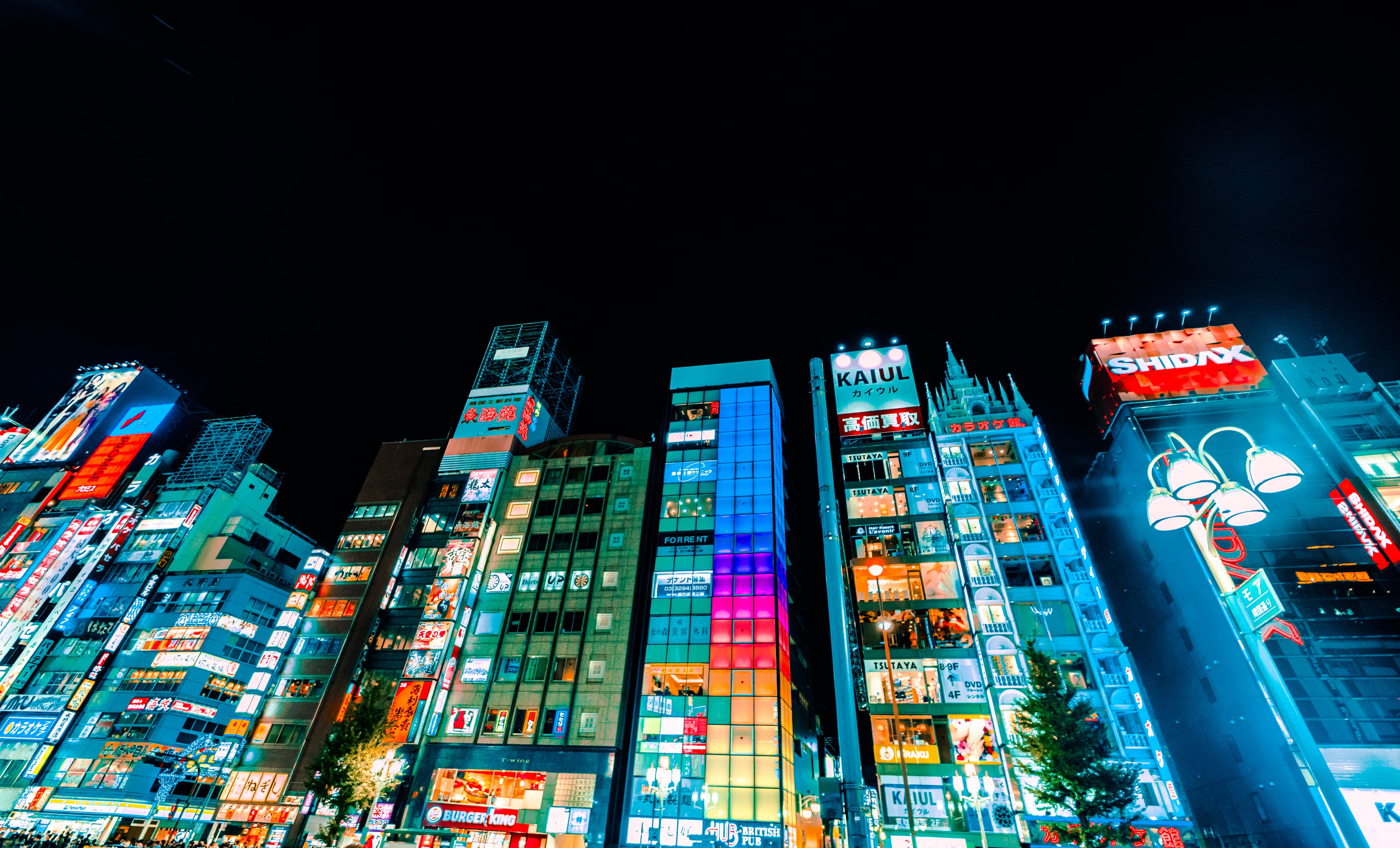
The photograph depicts a nighttime view of a densely packed urban landscape, almost certainly in a major East Asian city (most likely Tokyo or Osaka based on signage). Several tall buildings dominate the frame, illuminated by a vibrant and overwhelming array of neon lights and electronic displays. These lights are not uniform; they range from bold, primary colors (red, blue, yellow) to more complex mixtures and gradients. The buildings themselves are of varying heights and architectural styles, creating a slightly chaotic, yet organized skyline.
Details:
* The composition is primarily vertical, emphasizing the height and density of the buildings.
* Signage is prevalent, including Japanese characters and some English text, indicating a bustling commercial district.
* There's a sense of depth created by the layering of buildings and the play of light and shadow.
* The sky is a deep, dark blue, providing a stark contrast to the illuminated buildings.
* Overall, the image evokes a feeling of energy, consumerism, and a technologically advanced urban environment.
Postmodernism
This photograph is deeply resonant with several key tenets of Postmodern thought.
- Hyperreality and Simulation: The overwhelming display of neon and advertising creates a hyperreal environment—a simulation of reality that feels more intense and engaging than the “real” world. The signs aren't necessarily representing things, but rather constructing a world of signs and images in themselves. The buildings, in a way, become screens for projecting these messages.
- Loss of Grand Narratives: The visual cacophony undermines any single, unifying message. There's no central theme or ideology dominating the scene; instead, it's a collage of competing and fragmented narratives – commercial messages, branding, entertainment, all vying for attention. This aligns with the postmodern rejection of overarching “metanarratives” (like progress, reason, or truth).
- Fragmentation and Pastische: The image embodies fragmentation. There’s no cohesive visual style, it’s a mix of styles, messages, and advertisements. This can be considered pastiche (imitation), where elements are borrowed and re-combined to create something new, but ultimately lacks the original meaning.
- Surface over Depth: The image prioritizes surface and spectacle. There's little indication of what lies behind the bright lights and displays. It’s a world focused on appearance and immediate gratification.
Critical Theory
Critical Theory, particularly the Frankfurt School tradition, can be applied to the image to expose power dynamics embedded within the visual landscape.
- Culture Industry: The image strongly exemplifies the concept of the "culture industry," as described by Adorno and Horkheimer. The relentless advertising and entertainment contribute to a system of mass production and consumption that shapes desires and values, often in ways that reinforce existing power structures.
- Commodification of Everyday Life: Even the space itself – the buildings, the streets – are saturated with commercial messages, turning everything into a commodity. This erodes individual autonomy and critical thinking.
- Alienation and Spectacle: The spectacle of the lights and displays can be seen as a form of alienation. People are passively bombarded with images and messages, disconnected from genuine experiences and meaningful relationships. The constant stimulation can lead to a sense of numbness and detachment.
Foucauldian Genealogical Discourse Analysis
Foucault’s theory of power/knowledge is relevant.
- Panopticism and Surveillance: While not a direct depiction of a panopticon, the image can be read as an extension of its principles. The multitude of screens and lights can be seen as a form of pervasive surveillance, tracking and shaping behavior through the constant display of information. The very act of being within this environment creates a self-regulating effect.
- Discipline and Normalization: The visual landscape creates norms. The advertisement campaigns present an ideal which people begin to align with. Those who don’t are categorized as outsiders. This shapes behaviors and creates norms.
- Discourse and Power: The language of advertising and branding contributes to specific discourses about desirability, success, and happiness. These discourses are not neutral; they are tools of power, shaping how people understand the world and their place in it.
Important Note: Some theoretical approaches (like Marxist Conflict Theory or Queer Feminist Intersectional Analysis) aren't as directly or prominently applicable to this particular image, as it doesn’t inherently address class struggle or specifically depict issues of gender and sexuality. They could be layered in, but would require significant interpretation and extrapolation. For example, you could discuss how advertising within this landscape often reinforces gender stereotypes, but that's not immediately evident from the image itself.
Let me know if you'd like me to elaborate on any of these sections or explore other theoretical lenses!
simple-description (llama3.2-vision)
This meme is an image of the Tokyo district of Shinjuku at night, with a sea of neon lights and giant video screens illuminating the buildings. The image is captioned "when you're trying to focus on your work but your brain keeps thinking about how much you want to travel to Tokyo".
tesseract-ocr
4 WJ 7 lt — , ‘aan Jotul y — — | B\\ 6 @. —_ “oy fe se fetid | a mW) | ao | mill | ae ‘ SN | te 7 Meh pee wee © on Cy ely fh a P| | cod te e \ —_ VT Le y We | | Weta |e a ” i fa : te; Ee Ll hae LP. dor Pe ‘ aha A y ——>4 id \ LE ba pref pres | i Pee | DP et on ne | \ ‘ie =\é\ \ . (Ly age; |\_ ama seems) | mt Pale a 7 aT ke Zo 7 fr Fs 4 eo ie ‘ ian . wee : C gs ; eo; Te pats | ape] fae So ate Oo oe 77 ft "mag / i a) ee Pe ee | Bi bt Ne goa) \\ ee Whe fa | ‘ ey (che | ee = aE) a ar oA +: y el \ Le Bay egy) * es | a Bo eine: pasts || WW | SSeS \ | a yee « ae 3 » We \) ana Va Lt a ites 7th i, MO ay Sem Bp To 34 ss Pie J yf : = : a - pet ee) aa ee mo) peas | a Ske