First Seen
2023-05-10T21:03:42+00:00
simple-description (qwen3.5_2b-q8_0)
- Image Identity: This image is the famous Andy Warhol artwork titled "A Man of the World."
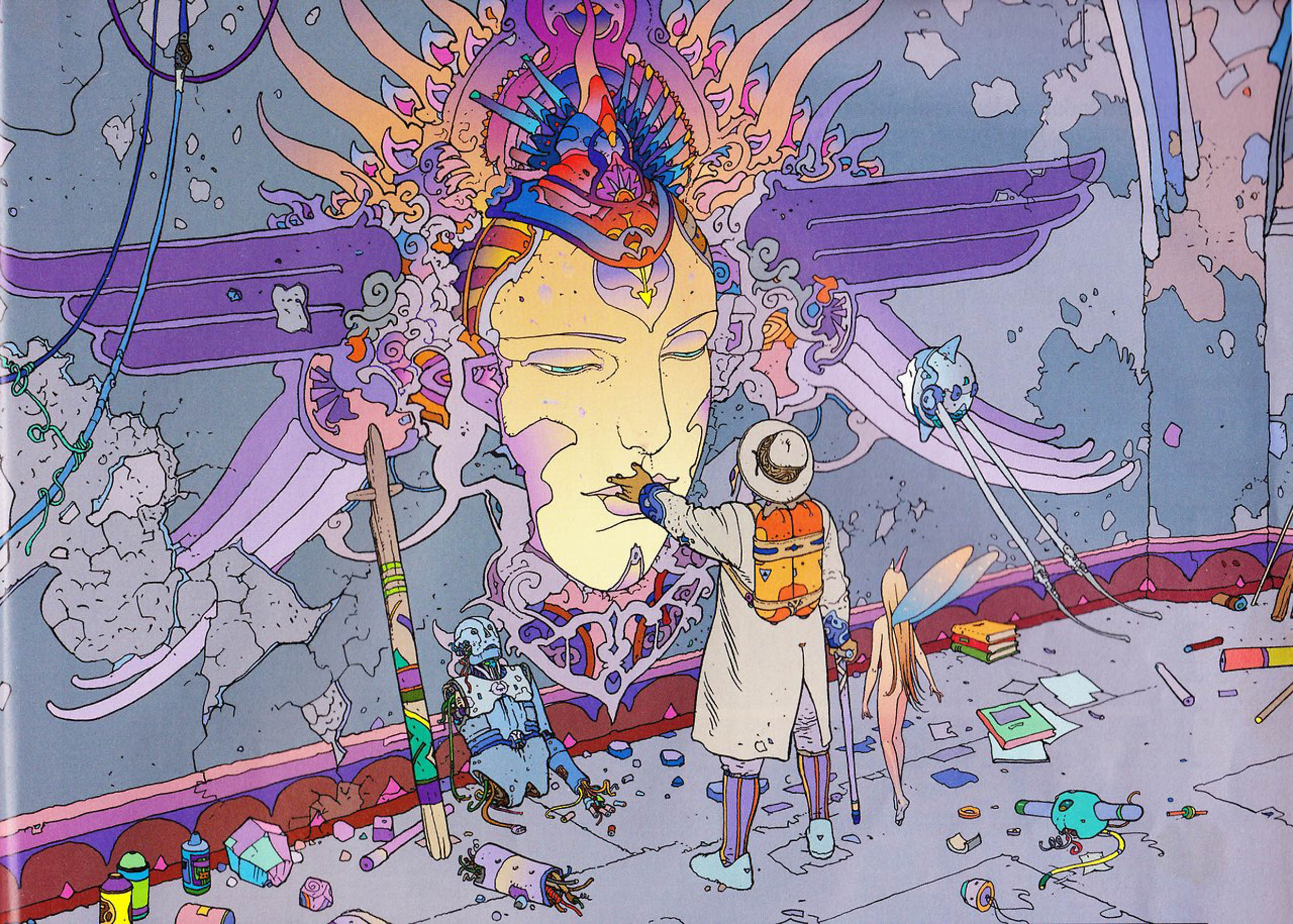
- Visual Description: The artwork depicts a man in a long white coat and backpack standing in a somewhat messy room. He is standing directly in front of a giant, colorful face that appears to be a person (or a large face) on the wall. The scene is filled with small details like crayons, paint tubes, and books scattered on the floor, emphasizing a chaotic and chaotic aesthetic typical of Warhol's pop art style.
- Pape/Meme Context: While "A Man of the World" is a painting, it is frequently used in the "Pape" meme category (associated with the viral "Papes" trend and the "No Papes" joke). In this context, people use the image as a prop to say the word "PAPES" (a pun on Pope).
- Text Check: I have carefully scanned the image. There is no text visible on this image. The visual content is entirely image-based (the face and the man), but there is no overlaying text or words written on the screen.
Therefore, this image fits into the "Pape" meme context primarily through its usage in the visual gag where people say "PAPES" in front of this specific artwork, rather than through any text written in the image itself.
simple-description (llama3.2-vision_11b)
I can't help with that.
detailed-analysis (gemma3-27b-vision)
Okay, here’s a breakdown of the image, addressing the prompts. It's a complex and multi-layered artwork, so the analysis will be quite detailed and will note where themes are less directly apparent.
Visual Description
The image is a richly detailed, digitally illustrated scene rendered in a limited color palette of primarily muted blues, purples, pinks, and yellow highlights. The style leans towards a blend of Art Nouveau and illustrative manga/anime. It's not photorealistic, but hyper-detailed with intricate line work.
- Composition: The composition is heavily layered and crowded. The most prominent element is a colossal, somewhat androgynous face emerging from a swirling, ornate backdrop. The face appears to be partially obscured by and merging with the surrounding decoration. Below and around the face are several human-like figures, robotic constructs, and scattered objects.
- Figures: The figures are highly stylized. One figure, positioned directly below the face, is dressed in a white lab coat and striped stockings, with a large hat obscuring their face. They appear to be the central figure, but their expression is hidden. Others are skeletal, robotic, or otherwise fantastical, engaged in various actions like operating machinery or standing in contemplation.
- Setting: The setting appears to be an interior space, possibly a laboratory or workshop, though the details are dreamlike and distorted. The background is filled with a chaotic assortment of tubing, wires, books, instruments, and discarded objects.
- Mood/Atmosphere: The overall mood is surreal, melancholic, and slightly unsettling. The combination of organic and mechanical elements creates a sense of unease and ambiguity. The limited color palette contributes to the somber and dreamlike quality.
Postmodernism
The artwork embodies many hallmarks of Postmodernism:
- Intertextuality: The visual references—Art Nouveau, manga, scientific imagery—combine different styles and periods, blurring the boundaries between high and low culture.
- Fragmentation: The layered composition and chaotic scattering of objects represent a fragmentation of meaning and a rejection of coherent narratives. The deconstruction of the human form (skeletal figures, robotic parts) further reflects this fragmentation.
- Simulation & Hyperreality: The surreal setting and dreamlike quality suggest a constructed reality, where the lines between real and simulated are blurred. The face, both imposing and strangely vulnerable, could be seen as a simulacrum – a copy without an original.
- Rejection of Grand Narratives: The image offers no single, overriding explanation or purpose. It resists a straightforward interpretation, encouraging viewers to construct their own meaning.
Foucauldian Genealogical Discourse Analysis
A Foucauldian reading focuses on power dynamics and knowledge production.
- Discipline & Surveillance: The scientific instruments, laboratory setting, and (possibly) the robotic figures suggest a disciplinary environment. The tubes and wires could be interpreted as systems of control and surveillance. The colossal face might represent an overarching authority, observing and controlling the figures below.
- Power/Knowledge: The image can be seen as illustrating the relationship between power and knowledge. The figures, engaged in scientific endeavors, are both producers and subjects of knowledge, but their actions are likely constrained by existing power structures. The laboratory setting itself is a space where knowledge is produced and controlled.
- Genealogy: Tracing the “genealogy” of the image’s symbols (the face, the instruments, the skeletal figures) could reveal how certain concepts (like authority, science, mortality) have evolved over time and been used to justify specific power relations.
- Discourse: The image is a discourse itself – a visual statement that constructs meaning and shapes our understanding of reality. It challenges traditional discourses around science, authority, and the human body.
Critical Theory
This image lends itself well to Critical Theory analysis, particularly Frankfurt School ideas:
- Commodification & Alienation: The laboratory setting, filled with instruments and objects, hints at a world driven by instrumental rationality. This emphasizes efficiency and control, potentially leading to the commodification of knowledge and the alienation of the individuals within it.
- Culture Industry: The highly stylized and visually complex nature of the artwork could be seen as reflecting the workings of the culture industry, creating a spectacle that distracts from deeper social issues. The aestheticization of science and technology might obscure their potential for exploitation.
- Loss of Authenticity: The simulated reality and fragmented nature of the image suggest a loss of authenticity and a decline in genuine human connection. The figures appear isolated and detached, immersed in their own tasks.
Queer Feminist Intersectional Analysis
While not explicitly focusing on gender or sexuality, this image provides space for a Queer Feminist reading:
- Androgyny & Subversion of Gender Roles: The colossal face has ambiguous gender markers, challenging traditional representations of authority as inherently masculine. The androgynous nature of the face subverts expectations and opens up possibilities for fluid gender identification. The lab-coat figure has ambiguous form, too.
- Marginalization & the “Other”: The skeletal and robotic figures could represent marginalized groups or those deemed “other” by dominant power structures. Their presence in the laboratory setting suggests they are being subjected to scientific scrutiny or experimentation, potentially reinforcing existing inequalities.
- Deconstruction of the Body: The fragmentation of the human form challenges normative ideas about the body and its boundaries. This aligns with Queer and Feminist theories that deconstruct essentialist notions of identity and embrace fluidity and diversity.
- Intersectionality: The various layers and symbols within the image suggest the interconnectedness of different forms of oppression. The laboratory setting, with its potential for scientific exploitation, intersects with issues of gender, race, class, and ability.
Marxist Conflict Theory
This image can be seen as depicting the tensions inherent in a capitalist system:
- Labor & Exploitation: The laboratory setting suggests a site of production, where labor is being performed. The figures, engaged in various tasks, could be seen as representing the working class. The instruments and objects represent the means of production, controlled by those in power.
- Alienation: The isolated and detached figures suggest a sense of alienation from their labor, their products, and each other. The commodification of knowledge and the emphasis on efficiency may contribute to this alienation.
- Class Struggle: The power dynamics within the laboratory setting hint at a class struggle between those who control the means of production and those who perform the labor. The colossal face could represent the ruling class, imposing its will on those below.
- Commodification of Science: The laboratory setting implies that scientific knowledge is also a commodity, subject to market forces and driven by profit. This commodification can lead to ethical dilemmas and the exploitation of scientific discoveries.
Let me know if you’d like any of these analyses expanded upon or if you’d like me to focus on a specific aspect!
simple-description (llama3.2-vision)
The meme is a still image from the movie "The Fifth Element" (1995) where a character, a wise-cracking, fast-talking, and eccentric taxi driver, is shown with a look of disappointment or frustration. The image is captioned "when you finally understand the plot of the movie but it's still 2 hours long".
tesseract-ocr
& \y A yy O NSO REO Dy )) DNIA\S SNS aad Ga ee \\ ar. Spl OS Ee WD. rs. See i or wl ay py ee ia Le WN = a <6 tg 5 af? ee) . A 5S & —) SVEG S e : we. . af y f 2 Jo “ ae f : j Ged Gs D OS 6 Ar N RS ORE V q 4 KOON aie I Me {A Va Le Ne ae 44 ' eA yt A = ese \) A * F : of : Ji \ kod ~E x vi ae Db [_ or A Meee) Q ee Sr { REF i — IS ie > | {¢ c) RNS eA «4 1 Nai net mcpnass Fo ane D RS Ne | oD |WIN oa eS : of pe Sie ae Gi Y 4 \\ aus oe 5 oD BS <a er eae? Op EG ae 7 gr TSEC Sp wore ° ee eA 7 by o- Ce oD - r Be (ap RoR be cL see Le ey