First Seen
2023-05-10T21:03:42+00:00
simple-description (qwen3.5_2b-q8_0)
This image is a stylized variation of the "Pape" meme, which typically features a pixelated, high-contrast face of the character Pape (the alien from The Simpsons) against a pixelated background. In this specific instance, the meme is presented as a futuristic space station, maintaining the same iconic pixelated aesthetic as the original character art. The text "DEPARTOZK 37H" likely refers to a specific location, game level, or event code associated with this internet culture subculture, though it doesn't change the core character or meme identity.
simple-description (llama3.2-vision_11b)
The meme appears to be a still image from the science fiction comic book series "The Incal" by Jean "Moebius" Giraud and Alejandro Jodorowsky. The image shows a futuristic cityscape with a large, domed building in the center, surrounded by flying cars and pedestrians. The text "Papes" is written in a bold, futuristic font at the top of the image, likely referencing a fictional city or organization in the comic book series.
detailed-analysis (gemma3-27b-vision)
Okay, here's an analysis of the image, broken down into sections as requested. Note that not every section is deeply applicable, and some interpretations are speculative given the image's inherent ambiguity. I'll attempt to provide nuanced analyses where possible.
Image Description
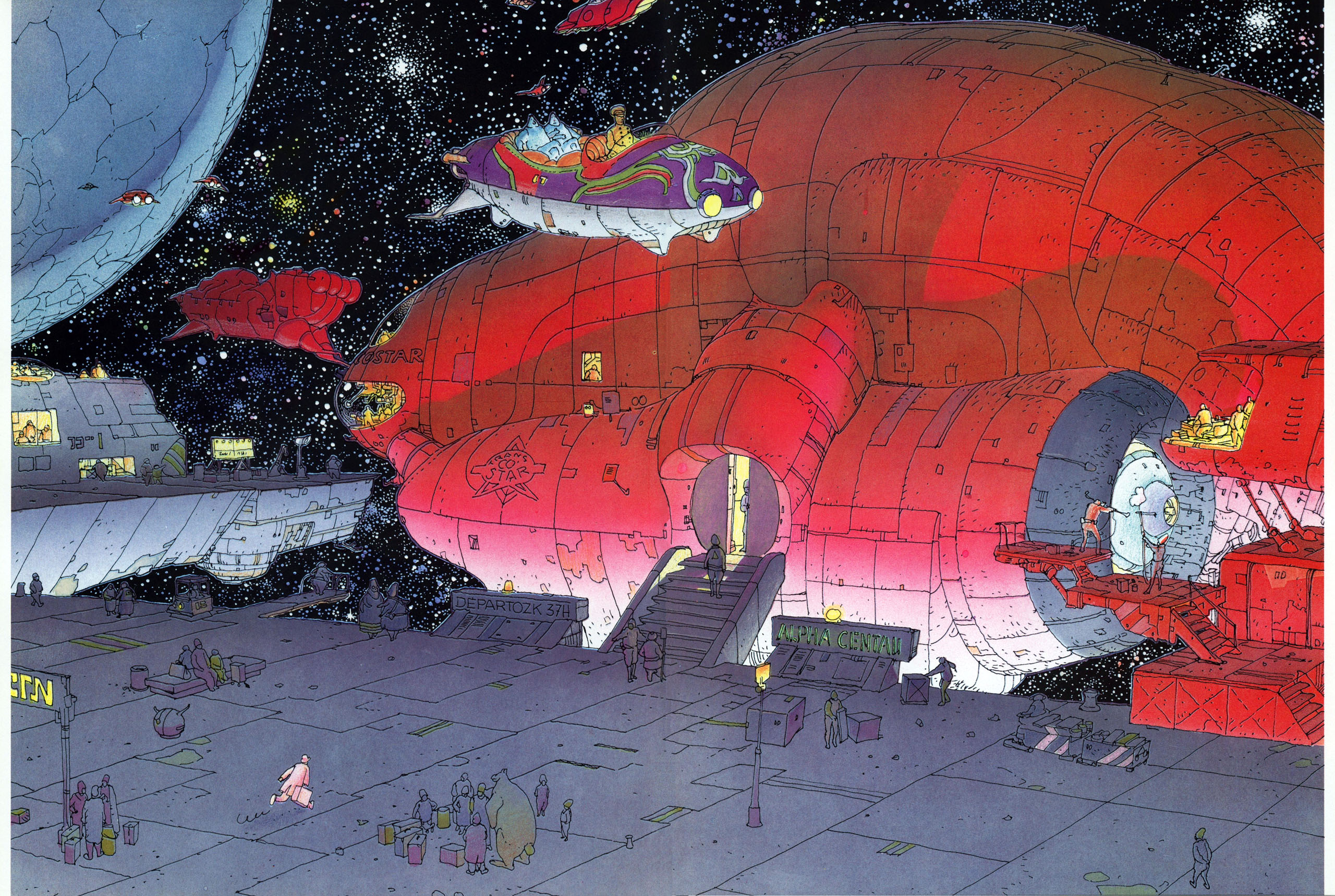
The image appears to be a panel from a science fiction comic book or graphic novel, reminiscent of Moebius or European bande dessinée. It depicts a bustling, futuristic space station or complex.
- Composition: The scene is a wide shot, with a massive, cylindrical, predominantly red structure dominating the foreground. This cylinder seems to be the central hub of the station. Numerous smaller structures, resembling ships or modules, are docked or nearby. A staircase leads up to the cylinder’s entrance.
- Color Palette: The color scheme is vivid and striking. Red is the dominant color of the central structure, contrasting with the blues and whites of the surrounding station and the dark background of space. This creates a sense of drama and draws the eye to the red structure.
- Figures: Numerous small, stylized figures populate the scene. They seem to be engaged in various activities, suggesting a functioning society. Their clothing suggests a variety of roles and levels of status.
- Details: The scene is rich in detail. The red cylinder is covered in intricate patterns and symbols. There are signs in an unfamiliar language, hinting at a complex culture. The overall aesthetic is highly detailed but somewhat flat, emphasizing graphic style over realistic rendering.
- Atmosphere: The atmosphere is busy and lively, but also slightly unsettling. The large scale of the structure, combined with the vastness of space, gives a sense of alienation and insignificance.
Foucauldian Genealogical Discourse Analysis
This image invites a Foucauldian reading, as it presents a constructed space with implicit power dynamics.
- Discourse and Power: The station itself is a discourse—a system of thought, knowledge, and practice that constructs reality. The architectural layout, the signage, and the activities of the figures all contribute to this discourse. The red cylindrical structure, as the focal point, can be interpreted as a symbol of dominant power.
- Panopticism: The layout, with potential for surveillance from within the central structure, subtly hints at panoptic control. While not explicitly visible, the scale suggests that observation and regulation are possible. The figures, even as they engage in "normal" activities, are potentially under observation.
- Genealogy of Control: A genealogical approach would ask how this system of control came to be. What historical and social forces shaped the design of the station and the norms of its inhabitants? The unfamiliar language and symbols suggest a unique history and culture, raising questions about its development.
- Disciplinary Practices: The very organization of space within the station—the pathways, the entrances, the areas of activity—can be seen as enacting disciplinary practices. The layout dictates how people move and interact, reinforcing certain norms and behaviors.
Critical Theory
Critical theory, particularly influenced by the Frankfurt School, can reveal latent critiques within the image.
- Alienation and Instrumental Reason: The station, as a highly rationalized and technological construct, can be seen as embodying the principles of instrumental reason—a focus on efficiency and control at the expense of human values. The small figures, dwarfed by the vast structure, appear alienated from their environment and from each other.
- Technological Determinism: The image seems to suggest that technology has taken on a life of its own, shaping the lives of its inhabitants. The station is not simply a tool for human use, but rather a system that dominates and controls.
- Culture Industry: If the station represents a larger society, it could be interpreted as a microcosm of the culture industry—a system that produces standardized products and experiences that pacify and control the population.
- Loss of Authenticity: The stylized and artificial nature of the scene suggests a loss of authenticity. The figures seem to be playing roles rather than living genuine lives.
Marxist Conflict Theory
A Marxist reading would focus on the potential for class conflict and exploitation within the station's society.
- Means of Production: The station itself represents the means of production—the infrastructure and technology that allows society to function. The ownership and control of this infrastructure would likely be concentrated in the hands of a ruling class.
- Class Division: The different roles and activities of the figures suggest a division of labor and, therefore, class stratification. Some figures may be engaged in managerial or technical roles, while others are performing manual labor.
- Exploitation: The ruling class may be exploiting the labor of the working class to maintain its power and privilege. The station's infrastructure could be used to monitor and control the working class, ensuring its continued exploitation.
- Ideology: The unfamiliar language and symbols could be interpreted as ideological tools used by the ruling class to legitimize its power and maintain social control.
Postmodernism
The image exhibits several characteristics associated with postmodernism.
- Hyperreality: The scene is highly stylized and artificial, blurring the line between reality and representation. The station is not simply a representation of a real place, but rather a constructed world that exists as its own reality.
- Simulacra and Simulation: The station could be seen as a simulacrum—a copy without an original. It is a constructed world that simulates a real place, but has no inherent connection to reality.
- Fragmentation and Pastische: The image is composed of various elements and styles, creating a fragmented and pastiche aesthetic. There is no single unifying style or vision.
- Deconstruction of Grand Narratives: The image challenges the idea of a single, overarching narrative. It suggests that there are multiple, competing interpretations of reality.
Queer Feminist Intersectional Analysis
While less overtly present, a queer feminist intersectional lens could still reveal interesting interpretations.
- Spatial Politics: The layout of the station, and the ways in which figures move within it, can be seen as enacting patriarchal and heteronormative power relations. Certain spaces may be reserved for specific genders or social groups, while others are excluded.
- Gendered Labor: The types of work performed by the figures may be gendered, with certain roles assigned to men and others to women. This could reflect broader societal inequalities.
- Visibility and Invisibility: Certain figures may be more visible than others, reflecting their social status and power. The invisibility of marginalized groups could be a form of social control.
- Subversion of Norms: It is possible to interpret some of the figures as subverting traditional gender or sexual norms, challenging the dominant power structures.
Let me know if you would like me to elaborate on any of these sections or explore other theoretical perspectives.
simple-description (llama3.2-vision)
This meme is an image of a comic book-style illustration of a futuristic cityscape with a large, red, dome-shaped building in the center. The text "I'm not arguing, I'm just explaining why I'm right" appears in a speech bubble above a character's head, implying that the character is being obstinate and refusing to listen to others' perspectives. The image is a humorous commentary on the tendency to become overly confident in one's own opinions.
tesseract-ocr
\ Nv Of See ee ce ’ DOR ee oe eR Ons me ee tat ocge aaee peg Z >— a! Seba See eee LU : [ee A Pa co MN i a ka eS Ne AS 7 SN ee ee Le ay) ee tse ey eg i ane ogy @ ed ae ‘ CN Fi 4 ee eee te © ae Sf 7 eee ee Soe a ae SS a Re |e —— Selle eae Soe Gide = ‘ ‘- a | Bi By ae B ff 7 Se Vis é “ 7 pts i J ee i en ro. ne ae s aes me ee if « i ‘ LAP 3 : ° \ i\ ie \eres : pe > ig l L coal a ee a ASS a Rae: ~ a Brean Lf Ley Oy, Op ri a ere ish eer “f O7 Oe 3 Vie a aT) aS ee ak eae 2 eS oat Set et [7 NJ To a Ave} pn One << Mee i/o i I\V bs ad EG) = || woe |e Be Les, a, af oo ad _ : eee ae / EG ie a : DS / € | / a ie te oe be | A Ye. Lae NNT : . g Wig % ce Tk | Suit ee e Save F i" ; ae = Te ee Ae oe eae 2 Mae LT Pee, WU fA a | ins Tees cs Vane = p é Raat ees e ae fF pa \ “Ma Se Vv. — ae ? — tee ae a al : Ses oe = Oy — é SS Ng r. / SA CNT L Bee te eo \ _ 24 D eX cu i 2 a De UN Ly eee ee Ey, ) es a oe acd Ne y os AP re . S (AS : e oe . 3 ee ane d Rodeo yaaa Si So ee S p oe sf 5 ae ae Ze & eS: ee x ee : s eee ee NN RE ee tin alae