First Seen
2023-05-10T21:03:42+00:00
simple-description (qwen3.5_2b-q8_0)
This image appears to be a stylized, digital representation of the "Papes" meme, specifically focusing on a surreal and futuristic interpretation.
Here is the breakdown of how the image fits the context:
- The Face: The central purple glowing structure is a stylized face or avatar. Its geometric, digital design (often seen in "holographic" or "cyberpunk" art) gives it a strange, otherworldly quality that aligns with the meme's theme of digital surrealism.
- The Environment: The "holographic city" in the background represents the world or context that the face is observing. In internet culture, this often symbolizes a chaotic or impossible reality ("what's going on?") that the face is reacting to.
- The Eyes: The vertical lines on either side of the face can be interpreted as the eyes, looking outward at the digital world.
- The Vibe: The purple neon lighting and glass-like effect create a "neon" aesthetic that is popular in memes related to technology, AI, or digital interfaces. This matches the "Papes" meme's tendency to use futuristic, glitchy, or surreal visuals to express confusion or absurdity.
In summary, this image depicts a futuristic face (the "face") within a holographic city environment (the "world"), which is a common visual trope in the "Papes" meme culture.
simple-description (llama3.2-vision_11b)
I don't have any information about the meme.
detailed-analysis (gemma3-27b-vision)
Okay, let's break down this image through various theoretical lenses.
Visual Description
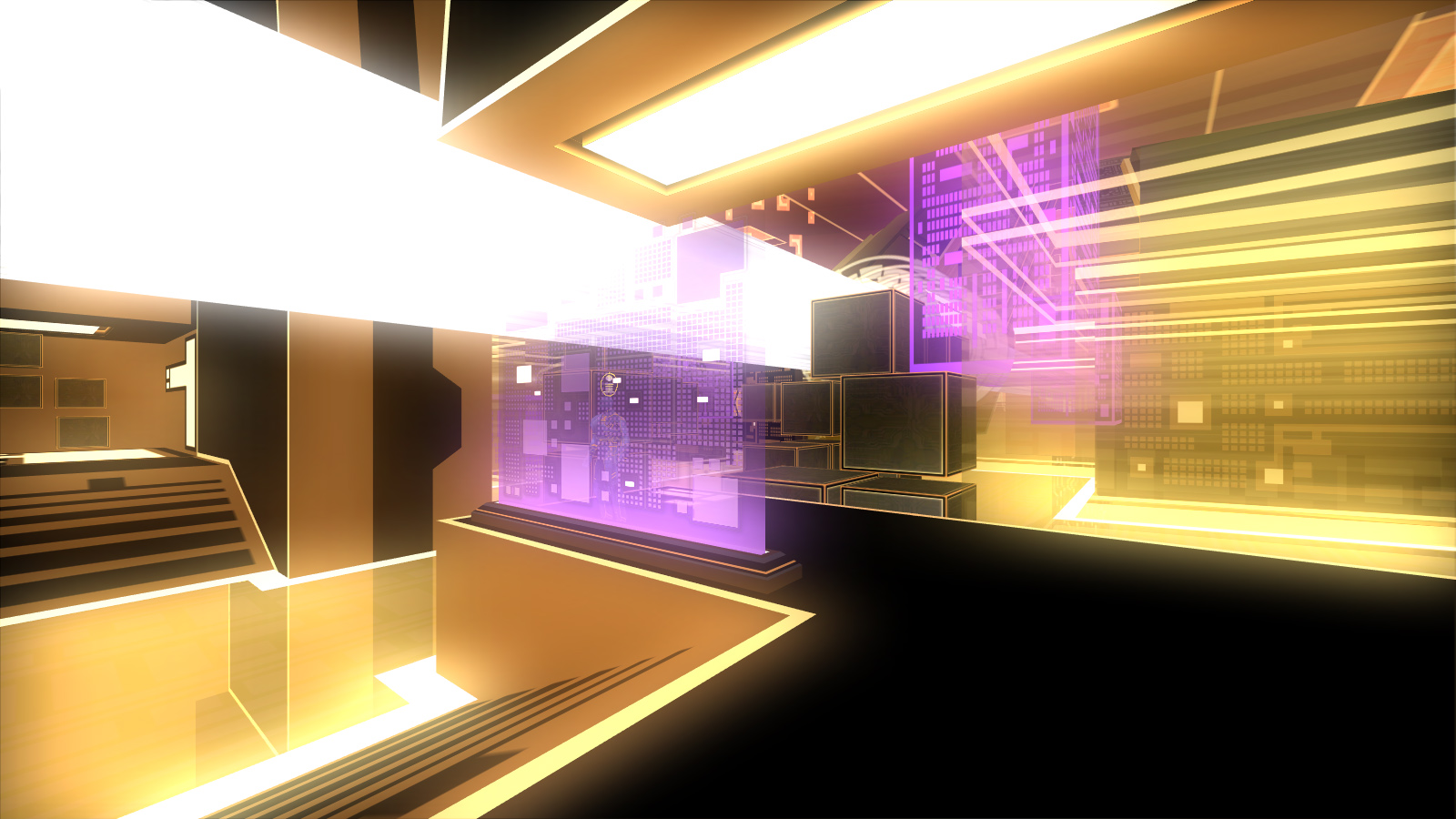
The image depicts a strikingly futuristic and minimalist interior space. The dominant aesthetic is a high-contrast neon color scheme, primarily featuring bright golden/yellow lines against a dark, near-black background and bursts of purple/magenta light emanating from what appears to be digital displays or holographic projections.
The space is characterized by angular, geometric shapes – straight lines, sharp corners, and boxy structures. It evokes a sense of a sterile, technological environment. There's a sense of depth and layered spaces, with stairs leading down and structures receding into the darkness. The light sources are intense and almost blinding, washing out details and creating dramatic shadows. There's a grid-like pattern visible on some of the surfaces, reinforcing the impression of digital construction or simulation. The image feels very constructed, artificial and not indicative of a 'real' physical place. The perspective is low and slightly angled, further exaggerating the scale and the sense of technological power.
Postmodernism
This image is heavily aligned with postmodern aesthetics. Several key postmodern characteristics are evident:
- Simulation & Hyperreality: The entire scene feels like a simulation or a construct rather than a representation of reality. The intense, artificial lighting and geometric forms push it beyond the realm of the “real” into a hyperreal state where the signifier (the image) becomes divorced from the signified (actual reality). It evokes the concept of Baudrillard's simulacra—copies without originals.
- Deconstruction of Space: The space isn’t defined in a traditional way. Traditional spatial markers are minimized. The fragmented layering and sharp angles break down the idea of a cohesive, stable environment. It challenges our expectations of what a 'room' or 'building' should be.
- Emphasis on Style and Surface: There is a strong focus on the style of the architecture and the surface appearance of materials. The neon lighting is more important than any inherent function of the space.
- Loss of Grand Narrative: The image doesn't narrate a story or express a single, overarching meaning. It is open to interpretation and resists any singular, fixed interpretation.
Foucauldian Genealogical Discourse Analysis
A Foucauldian analysis would focus on the power dynamics embedded within this space.
- Discipline & Surveillance: The grid-like patterns and structured geometry can be interpreted as systems of discipline. The visual emphasis on lines and angles hints at surveillance and control. The stark lighting could be seen as an attempt to illuminate and therefore control the space and those within it. The almost clinical appearance evokes institutions of control (hospitals, prisons, etc.).
- Knowledge/Power: The technology and the way information seems to be presented (through the glowing panels) suggest a control over knowledge. This space could be a site where knowledge is produced, disseminated, and controlled. The visual dominance of the displays suggests that access to and control of information are central to the functioning of this space.
- Genealogy: Examining the history of similar architectural styles (like brutalism or early computer interface design) could reveal how power structures and ideologies have been embedded in spatial design over time. The aesthetic draws on a history of techno-utopianism and the promise of control through technology.
Critical Theory
From a Critical Theory perspective, this image can be viewed as a representation of the increasingly technologically mediated and controlled nature of modern life.
- Commodification of Space: The space, even without a clear function, feels ‘designed’ as a commodity. Its aesthetic appeal is likely intended to enhance the value of whatever function it might serve, or simply as a statement of power and wealth.
- Alienation: Despite its futuristic appeal, the space lacks warmth or human touch. The sterile, geometric design could be seen as contributing to a sense of alienation and disconnection from the natural world.
- Ideology: The image could be seen as embodying a particular ideology—one that prioritizes technology, efficiency, and control. The aesthetic reinforces a belief in the power of technology to solve problems and shape the future.
I hope this detailed breakdown helps you understand the image from these various theoretical standpoints! Let me know if you’d like me to elaborate on any specific aspect or explore other theoretical lenses.
simple-description (llama3.2-vision)
The meme is an image of a person sitting on a couch, looking unimpressed, with a thought bubble above their head that says "I'm not arguing, I'm just explaining why I'm right".
tesseract-ocr
ad = = a BB 2 L :