First Seen
2023-05-10T21:03:42+00:00
simple-description (qwen3.5_2b-q8_0)
The 'Papes' meme is a reference to the character 'Pappy' from 'Bored to Death'. It is used when someone wants to say 'I love this' or 'I am happy' without saying the words, often showing a picture that is just a scene. Since the image shows palm trees against a blue sky, it could be used as a background for this meme.
simple-description (llama3.2-vision_11b)
The meme is a photo of a group of palm trees with a caption "I'm not lazy, I'm just on Palm Time". The image is meant to be humorous, implying that the person is not being lazy, but rather is just taking a break in a tropical location surrounded by palm trees.
detailed-analysis (gemma3-27b-vision)
Okay, here's an analysis of the image, broken down into sections as requested. Note that certain theoretical frameworks won't be entirely applicable or would require significant stretching to apply to a simple image of palm trees, so I'll indicate those limitations.
Visual Description
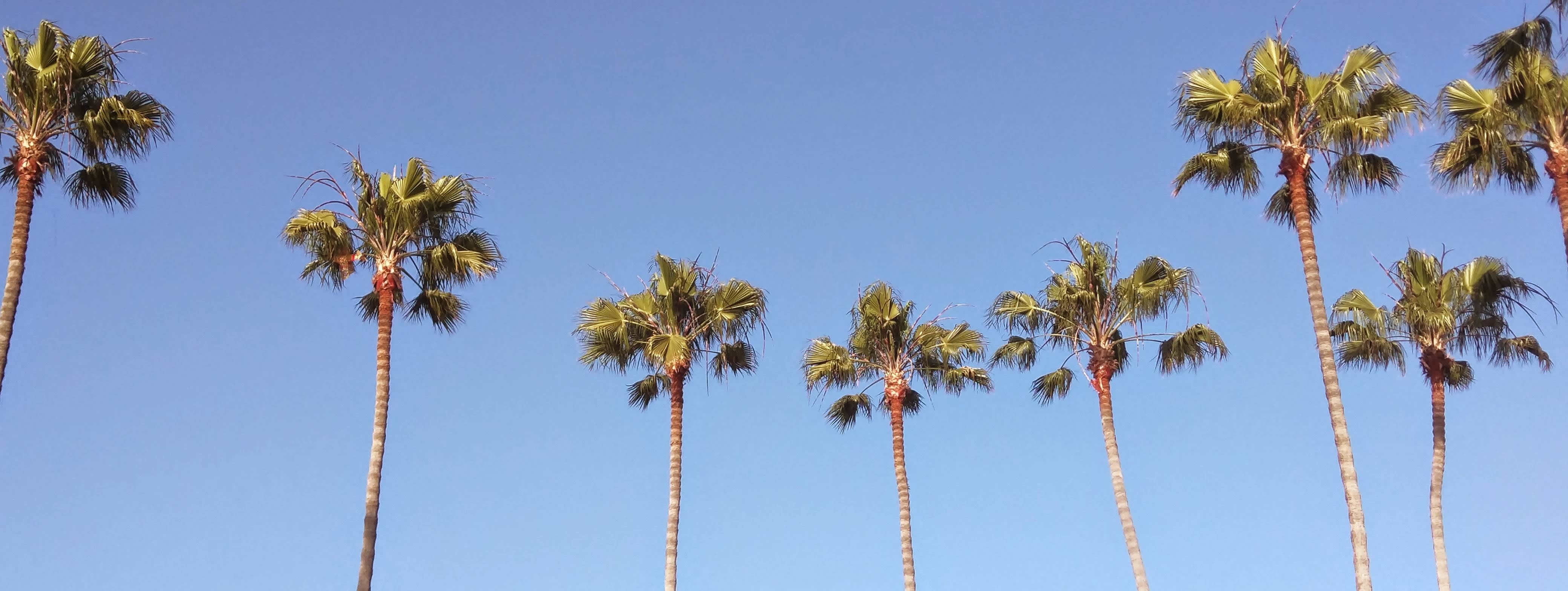
The image presents a line of tall palm trees against a brilliant, cloudless, deep blue sky. The trees appear to be mature, with thick, rough trunks that display natural patterns and textures. The fronds at the crowns are full and green, creating a sense of lushness. The composition is taken from a low angle, emphasizing the height and verticality of the trees. The overall impression is one of warmth, tranquility, and possibly a tropical or desert location. The lighting is strong and direct, highlighting the textures and forms. The trees are fairly uniformly spaced, creating a rhythmic, almost repeating pattern.
Foucauldian Genealogical Discourse Analysis
This section focuses on how the image represents power dynamics and the evolution of knowledge around the idea of "the tropical" or "the exotic."
The image, seemingly innocuous, participates in a discourse on "paradise" and "vacationing," historically constructed through colonization and the Western gaze. The palm tree, as an icon, isn't merely a botanical feature; it’s a signifier of leisure, escapism, and often, the appropriation of land and cultures.
- Historical Construction: The 'palm tree as paradise' imagery didn’t spring up organically. It was actively produced through travel writing, marketing, and colonial representations. Colonial powers often constructed the tropics as exotic, "other," and readily available for exploitation, associating the landscape with a carefree lifestyle enjoyed by colonists and denying it to indigenous populations.
- Disciplinary Power: The image implicitly promotes a certain way of seeing and experiencing the world – one defined by relaxation and consumption. This contributes to a form of disciplinary power by encouraging participation in a specific leisure culture.
- Genealogy of the "Vacation": Tracing the historical development of the modern vacation—its roots in elite travel, its commodification, and its spread to mass tourism—reveals how this seemingly natural desire for escapism has been intertwined with power relations and economic forces.
Critical Theory
Critical Theory seeks to challenge and critique societal structures and power dynamics.
The image, at first glance, might appear to be merely a pleasant landscape. However, from a Critical Theory perspective, it can be viewed as contributing to a kind of reification of a specific lifestyle.
- The Illusion of Nature: The image subtly obscures the fact that even these "natural" landscapes are often heavily managed and maintained. The trees might be non-native species, planted for aesthetic effect, and require significant water and resources in an environment where those resources may be scarce.
- Ideology & Consumption: The image functions as an ideological tool, promoting a particular vision of happiness linked to material possessions and leisure activities. It contributes to a culture of consumerism where experiences are valued as commodities.
- Critique of "Progress": The seemingly idyllic scene could be a facade for larger issues of environmental degradation, social inequality, and the impacts of tourism on local communities.
Marxist Conflict Theory
This lens analyzes power dynamics in terms of class struggle and economic relations.
The image can be interpreted as reflecting the commodification of landscapes and the uneven distribution of leisure time and resources.
- Land Ownership & Capital: The presence of palm trees, often cultivated in planned landscapes, implies land ownership and the ability to invest capital in aesthetic development. This access to land and capital is not evenly distributed, creating social inequalities.
- Tourism & Exploitation: The image suggests a destination for tourism. This can lead to the exploitation of local labor, the displacement of communities, and the appropriation of cultural resources for profit.
- Commodity Fetishism: The image presents a romanticized view of the landscape, obscuring the labor and resources required to maintain it, and the social conditions of those who depend on it for their livelihoods.
Postmodernism
Postmodernism questions grand narratives, emphasizes subjectivity, and deconstructs meaning.
A postmodern reading might focus on the image as a simulacrum—a copy without an original.
- Hyperreality: The image represents an idealized version of "paradise" that often bears little resemblance to reality. This hyperreality, created through media and advertising, becomes more real than the actual experience.
- Deconstruction of "Nature": The idea of "natural beauty" is deconstructed. The landscape is revealed to be a constructed and mediated phenomenon, shaped by human intervention and cultural values.
- Loss of Meaning: The image's meaning is unstable and open to interpretation. The iconic palm tree has become so saturated with meaning that it has lost its original referent, becoming merely a signifier in a network of signs.
Queer Feminist Intersectional Analysis
This lens considers how multiple forms of oppression (gender, sexuality, race, class, etc.) intersect and shape experiences.
While the image itself doesn't explicitly depict marginalized groups, a Queer Feminist Intersectional analysis can examine the underlying assumptions and power dynamics it reinforces.
- The Male Gaze & Exoticism: Historically, the depiction of tropical landscapes has been linked to colonial power dynamics and the exoticization of non-Western cultures. This can intersect with gender and sexuality, with the "exotic" often being used to reinforce stereotypes and objectify marginalized bodies.
- Access to Leisure & Privilege: The ability to experience leisure and travel is not equally distributed. Factors such as race, class, gender, and sexual orientation can limit access to these opportunities, reinforcing social inequalities.
- Environmental Justice: The exploitation of natural resources for tourism and development can disproportionately affect marginalized communities, leading to environmental degradation and displacement. Considering who benefits from this "paradise" and who bears the costs is crucial.
Important Note: These are interpretations. The image itself is open to multiple readings, and the applicability of each theoretical framework is limited by the lack of specific context. It’s important to remember that theory is a tool for analysis, not a rigid set of rules.
simple-description (llama3.2-vision)
The meme is an image of a palm tree with a long, thin trunk and a few fronds at the top. The image is captioned "I can smell the desperation" and is likely referencing the idea that palm trees are often planted in areas with high humidity and are known for their ability to thrive in such conditions.
tesseract-ocr
<. = 7 ‘ A = eae cn \ Gian PSA — a \/ i » Lan yy A Wiis WY gor. : Ss A? - s » Lu hs Z\ ‘ g Be a f “1 \\ af Sd ( i ’ > Me yh We PAZ Ag 2 Ci aera =< ASX 1 A. FR ink aS “5 a oy Jamas TAM . oe ies a 2D. ro os ts AEN . TANS DA oN eee i= SST) 4\\. ee ES Y/R ee SN te ( “beh A ty Se = a f REN Mi ea wit \\ ir ‘ i AP ee TS OS mr? A ied Wh Ate) WG As ' ay ae aah ay ARS - \ , A SEEN NAR ONCAN e o we (/ ¥ \ YI iN Sy, NK AG AOR TOR ip Ra 7 aN AE ie ’ » i ne m\ } i ta YS Zin ie eas. — mae tee NN yi / ss . d ' =) Shah r rs —— S ‘" A. Fi bn Wim 7 —\ = Apa MOR pon Zoe ie \ pat ez eh "aa The DA, \\ x may “Ta Ox ee Re V , ‘l 1 SSN Vi np a Wee TYAN i . las Fae YP 7A RINT 277 Na eC is ark NY ' Je PA a 1. ANS q at a TA ei aie. ORs IW yy 2st NY Ses 1H ( fh ; PEC GR De ILA Re ee ie i iM Th) ' rT a Z\ , ; OM ie. | oo when) eS el | ORS = be.) f ARN: 1). as I MS 7 RN Poe aN f Pi. ee An) = 1 ne” (pe VIDYA TRAN |} . f, . Wp f aN fe cS cd AN i He Bi . ‘ Z y Mh nN ) ay , A Ces cy ip aps iz iy 4 Ria \i as fi - A \ & NM) ys aN | ’ ¥ ; . iY PA Yo Za oN IR ly ae Na AT ia Sig NY he) as Wie Ze NS. Ake. Fa EASON SS aS 5 (ys TRS A i] a < Se Na) eee £3 PAR fea N PA: wy \ S gs \@ (aN = N R\ Gy / ' => of JW TAA SS | mn JN fe ee tre Vee VNSA a Pen / \ | are ee we A BY NWS = Rey WN ind Say, YS. \ te ATER Ma Ue AN Vay a SENT > us wi) , ee a Re A I) CIS Migs. pNP VOR ADSI IZ /.49) | | i f A Sara aura Vic Wl es ‘i fe! ES RA os Ae Py Wx. Y wn NR jae RS YY antl | I aN th te AWS 1 mos | : 7) NN ee RN ~ rs IN WAN oe ' 1 EAS aR ‘i ~~ ZAM ih SS =\ SS aR NW ES Wi UD A oc ai . win i | Pe We, (Mad MUANWWAre ie = ENN 2 EN ZA u ar NN VM NON TA ys By INNS ear. Kan Sig TN a eS . pia AN 78 AF? wy . ee i g i Lega Sa re TM Mie: \ s v 7 ; Y 4 ! vA AA peed | VNR RE nat i ss “ iy Ho] AS Na TINS ; |] aS ‘ ay { Wf : | gees ff ct x \ Be y fe WY 4 a py ‘ Wy NN Y s es y 4 a aM \ . : = | ¥ . é = B4 | ° ~ ‘i > | = . t| E ig = t | * | 4 e 4) 7 4 } i, 4