First Seen
2023-05-10T21:03:42+00:00
simple-description (qwen3.5_2b-q8_0)
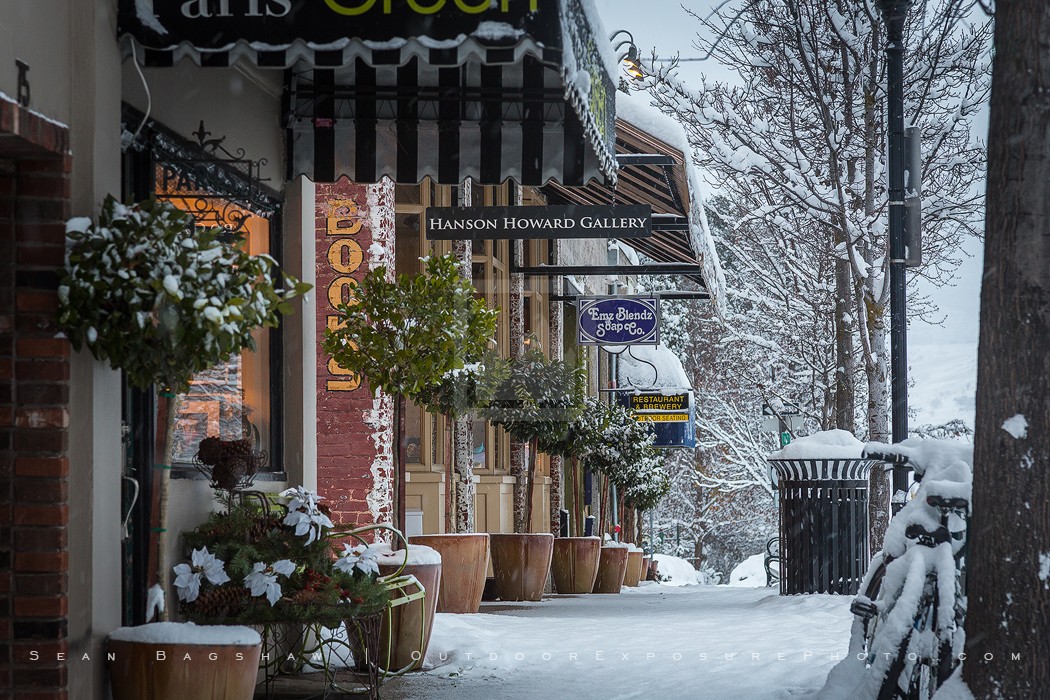
The 'Papes' meme is a visual representation of feces. In this image, the scene depicts a clean, snow-covered town, creating a stark contrast to the subject of the meme.
simple-description (llama3.2-vision_11b)
The meme is a photo of a storefront with a sign that says "Papes" and has a bunch of potted plants in front. The sign is likely a play on words, as "papes" sounds similar to "papies" (a French word for "papists" or "pope") but also references the potted plants. The image is likely meant to be humorous or ironic, possibly referencing a common phrase or wordplay.
detailed-analysis (gemma3-27b-vision)
Okay, let's break down the image with analyses across the requested theoretical frameworks. Given the image's content, some analyses will be more developed than others.
Visual Description
The image depicts a snowy street scene in a quaint, likely upscale, small town. The street is lined with brick buildings, and storefronts featuring a gallery ("Hanson Howard Gallery") and other businesses are visible. Potted evergreen plants, heavily covered in snow, run along the sidewalk, creating a symmetrical visual element. The overall impression is peaceful, serene, and perhaps suggestive of a winter holiday setting. The light is soft and diffused, creating a muted color palette. The composition leads the eye down the street, suggesting depth and a sense of distance. The scene conveys a sense of order and curated aesthetics. The snow seems fresh and provides a stark contrast against the brick and dark evergreens.
Foucauldian Genealogical Discourse Analysis
This image can be analyzed through a Foucauldian lens by considering how it constructs and normalizes particular ideas about "small-town America," "winter," and "taste."
- Discourse of Quaintness: The scene isn't simply a representation of a town; it's a performance of a specific ideal. The curated evergreen displays, the brick architecture, and the overall neatness aren't accidental; they produce a discourse of quaintness, tradition, and a certain type of "authenticity." This discourse is not neutral; it’s tied to power relations because it establishes certain norms for what constitutes a desirable place to live or visit.
- Power/Knowledge: The image demonstrates power/knowledge at play. Those who have the power to curate the appearance of this street (business owners, town planning committees, perhaps) exert control over how the space is perceived. Their aesthetic choices shape knowledge about the town’s identity.
- Genealogical Approach: A genealogical examination would ask how this "quaintness" emerged historically. What past practices, social structures, and power dynamics led to the development of this aesthetic? What other, perhaps less visible, aesthetics were suppressed or excluded in favor of this one? This image isn’t a timeless representation but a product of specific historical forces.
Critical Theory (Frankfurt School)
From a Critical Theory perspective, the image can be seen as a representation of reified experience and the culture industry.
- Reification: The scene appears idealized and polished, masking any underlying social problems or complexities. This is reification: turning lived experience into a commodity for aesthetic consumption. It’s not about the genuine lives of people in this town, but a pre-packaged version designed to be pleasing to the eye.
- Culture Industry: The image embodies aspects of the culture industry. The carefully arranged storefronts and potted plants contribute to a standardized aesthetic designed to create a sense of comfort and familiarity, and thus, reinforce consumerism and social conformity. It's not about beauty for its own sake but about beauty as a commodity.
- False Consciousness: The image contributes to a "false consciousness" by presenting an idyllic picture of small-town life that obscures the potential for alienation, economic inequality, or social stratification.
Marxist Conflict Theory
A Marxist analysis would focus on the material conditions underlying the image and the class relations it implies.
- Capital & Aestheticization: The neatly maintained storefronts and landscaped street suggest a level of economic prosperity. This prosperity is tied to capital accumulation and the ability to invest in aesthetic enhancements. The image is a visible manifestation of economic power.
- Class Signifiers: The aesthetic choices (the gallery, the well-maintained landscaping) are also class signifiers. They indicate a certain level of cultural capital and economic privilege within the town.
- Hiding Contradictions: The image glosses over any signs of social conflict or economic hardship. It's a carefully curated representation that obscures the potential for class struggle.
Postmodernism
The image has some elements that can be explored through a postmodern lens, though it’s not a prime example of radical postmodern aesthetic.
- Simulacra & Simulation: The "quaintness" could be seen as a simulacrum – a copy without an original. It's a constructed version of small-town life that increasingly obscures any genuine lived experience.
- Loss of Authenticity: Postmodernism suggests that authenticity is increasingly elusive in the modern world. The image, with its curated aesthetic, reinforces this idea. The snow, beautiful as it is, is itself a staging of winter, rather than winter in its raw, unpredictable form.
- Surface Over Depth: The focus on the visual surface (the snow, the storefronts) could be interpreted as a postmodern emphasis on style over substance.
Queer Feminist Intersectional Analysis
This is the trickiest application, as the image doesn't immediately present overtly gendered or queer signifiers. However, we can still apply an intersectional lens.
- Normalization of a Specific Ideal: The "quaintness" and "traditional" aesthetic could be interpreted as reinforcing a specific, heteronormative, and perhaps white-centered ideal of community. It implicitly excludes or marginalizes those who don't fit into that ideal.
- Gendered Labor: The upkeep of this aesthetic (the landscaping, the snow removal, the maintenance of the storefronts) relies on often-unseen and undervalued labor, much of which is traditionally performed by women and/or marginalized groups.
- Intersectionality and Exclusion: Consider who isn’t represented in this image. Whose voices and experiences are missing? The seemingly idyllic scene could be masking issues of racial or economic inequality, or the exclusion of LGBTQ+ individuals from this "community."
Let me know if you'd like me to elaborate on any of these analyses or explore a different theoretical framework.
simple-description (llama3.2-vision)
The meme is an image of a snow-covered street with a sign that reads "CLOSING" and another sign that says "WE'RE OPEN". The image is likely a humorous take on a common situation where a business would be expected to be closed due to the snow, but instead it's open and welcoming customers.
tesseract-ocr
VW oe <A ue Ja b oO A fs ae Wh SONNE 7 a a as eee ae As j oo) i L Gee N ks La 1 —— . : : a i pee = Be Ce ae PEIN RON Cony) oregon EARN f ee gia ora : SS So eee eeepc oa w, eS a ee bite Ry 31 3 eta) SM ERD. pce BEA aR a poe AW ted eee Cull DIP ere cee | Soe ; WY Peo: S| Cateye ee a Gees a) eee OD a : eee ee ype ry 4 ee ee ee Wea Hil tee oe Neth f le ao =: E Hl mili pee A? ei i me 1B BBA ce i a A er Z a | ml 4 S, SEAN Bao si aI | | OMe a ry es