First Seen
2023-05-10T21:03:42+00:00
simple-description (qwen3.5_2b-q8_0)
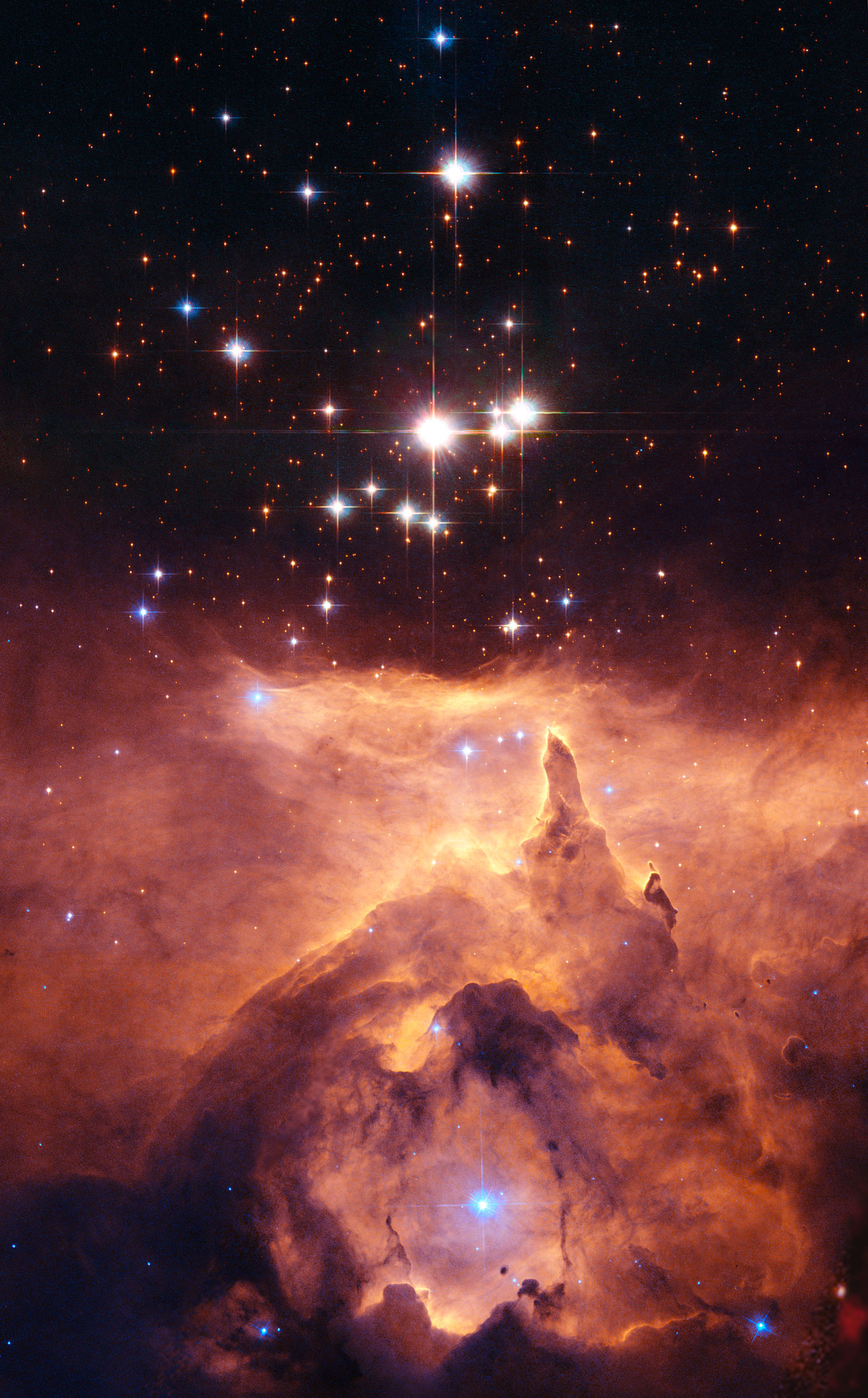
This image displays the Eagle Nebula (M104), the iconic subject of the viral 'Papeh' meme trend (often associated with the phrase "You're a Papal"). Although the text "You're a Papal" is not visible in this specific NASA photo, the visual is instantly recognizable as the source of the joke that we are the universe's "papes" (puppets). While the meme often appears with this caption, the original image provided contains no written text.
simple-description (llama3.2-vision_11b)
The meme is a screenshot of a Reddit comment from a user named "Papes" who is describing a situation where they accidentally set their cat's litter box to autoclean and it sprayed everywhere, causing a mess. The text reads "I set the litter box to autoclean and it sprayed everywhere. I'm covered in it. I'm covered in it." The image is a photo of a messy room with cat litter and a person covered in it, likely from the accident.
detailed-analysis (gemma3-27b-vision)
Okay, let's break down this image (likely a depiction of a nebula from the James Webb Space Telescope) through various critical lenses. I'll address only the lenses that are meaningfully applicable.
1. Visual Description
The image depicts a vast, turbulent nebula bathed in shades of orange, copper, and deep brown. A prominent, dramatically shaped cloud formation dominates the lower two-thirds of the frame, resembling a mountain peak or a rising wave. Its edges are soft and diffuse, suggesting constant movement and the processes of creation and destruction. Scattered throughout the nebula are brilliant, pinpoint stars, many exhibiting diffraction spikes, indicating their brightness and the optical properties of the telescope.
The upper portion of the image is filled with a denser cluster of stars, glowing intensely and exhibiting a range of colors from white to bright blue. These stars seem to be the source of the nebula's radiant glow, illuminating the surrounding gas and dust. The overall impression is one of immense scale, ethereal beauty, and cosmic dynamism. The color palette is warm and inviting, yet also conveys a sense of the extreme temperatures and energies present within this stellar nursery. There's a sense of depth, with the fainter areas suggesting vast distances and the complexity of the interstellar medium.
2. Foucauldian Genealogical Discourse Analysis
This image can be understood as a discourse representing "the cosmos" and our attempts to know it. Foucault's genealogy would investigate how our current understanding of nebulae and star formation isn't a neutral depiction of "truth," but rather constructed through specific historical power/knowledge relations.
- Power/Knowledge: The image itself is a product of immense technological power – the creation of the James Webb Space Telescope. This technology isn't just about "seeing" further into space; it defines what is visible, what is considered significant, and therefore, what constitutes "knowledge" about the cosmos. The interpretation of the images also relies on existing scientific discourses (astrophysics, cosmology) that establish the rules for understanding what we're seeing.
- Archaeology of Knowledge: Historically, how we understand nebulas has changed dramatically from being considered vague, indistinct patches in the sky to now being recognized as stellar nurseries. This change represents a shift in the discourse. The image, while appearing "objective," relies on layers of previous theories, observations, and interpretations.
- Discontinuity: The image shows a moment in time. A genealogical approach would highlight the discontinuity of this moment in an ever-changing universe. The nebula was different, and will be different. This disrupts the notion of a fixed or stable "cosmos" and underscores the provisional nature of our knowledge.
3. Critical Theory (Specifically, Adorno/Horkheimer's Dialectic of Enlightenment)
The image can be viewed through the lens of the Dialectic of Enlightenment, which critiques the idea that reason and technology automatically lead to progress and liberation.
- Domination of Nature: The image, while beautiful, represents the ultimate act of conquering and "knowing" nature. The telescope extracts information from the distant universe, bringing it into the realm of human understanding and, ultimately, control. The image is a testament to our scientific power, but it also hints at the inherent impulse to dominate and categorize the natural world.
- Myth and Enlightenment: The nebula, for ancient cultures, was likely imbued with mythological significance. Now, through scientific understanding, we have "demystified" it. However, the image still evokes a sense of awe and wonder. This suggests that the drive to "know" and explain doesn’t necessarily eliminate the need for mythic or symbolic interpretation. The "truth" of the nebula, as revealed by the telescope, has become a new kind of myth – a myth of scientific progress and control.
- Instrumental Reason: The telescope and the image it produces are products of instrumental reason – reason used as a tool to achieve specific ends (in this case, understanding the universe). This can be seen as a neutral endeavor, but the Dialectic of Enlightenment suggests that instrumental reason can become divorced from ethical considerations and lead to the objectification and exploitation of both nature and humanity.
4. Postmodernism
Postmodern thought would challenge the notion of a single, objective "truth" about the cosmos as represented in the image.
- Deconstruction of Grand Narratives: The image is part of the grand narrative of scientific progress and human understanding. Postmodernism would deconstruct this narrative, highlighting its inherent biases and limitations. What is deemed "significant" in the image (e.g., the bright stars, the nebula's shape) is a product of human interpretation, not an inherent property of the universe.
- Simulacra and Simulation: The image is a representation of a reality that is unimaginably distant. It’s a simulation, created through technological mediation. Postmodernism suggests that this simulation can become more "real" than the original, shaping our perception of the cosmos. We experience the nebula through the image, not directly.
- Relativism of Truth: Different cultures and individuals may interpret the image in different ways, depending on their own cultural and philosophical backgrounds. There is no single, correct way to understand the cosmos, only multiple perspectives.
Let me know if you'd like me to elaborate on any of these interpretations or explore additional theoretical lenses!
simple-description (llama3.2-vision)
This meme is an image of a cat looking at the stars in the night sky, with a caption "I can smell the desperation in the air". The image is a humorous take on the idea that cats are known for their independence and aloofness, but in this case, the cat is looking up at the stars with a sense of longing or desperation.
tesseract-ocr
5 a Li ° . a . : } ; S ; ae a Sa ae ee Tas — A Pa ‘s 0 : 2 : i re iB \ . 7 — a8 ; P S . ss ne 4 a - 4 a t os ( - a es os > a ; ne : ; ie v . Bi. as i bd i ; i 4 : * : : : : + e 4 a : 5 ? si sf t: . oo a eee, 3 —. ye ee eu a - oe ie ‘ 4 ” Ny . : ol : a R : i ss * a ee a ee en aR “9 a fi eS Ree * te . oma ‘ ‘ gt : j a ¢ cae * 4 r "aes ey * oe a ae mm a és : a a e “ ete es f + ge gege % re ee ne xo ine Sl Ee . s . =: Eo oe — : % A, — : 9 2S a .