First Seen
2023-05-10T21:03:43+00:00
simple-description (qwen3.5_2b-q8_0)
In the "Papes" (or "Papas Papi") meme universe, the central figure is a wireframe dog that delivers nonsensical phrases like "Papas Papi" or "Mama Papi." This absurdity is a form of absurdist humor, often paired with a voiceover that says things the dog could never say in real life.
Based on the context of this category and the image provided:
- The Text: The core "text" of this meme is the phrase "Papas Papi" (or sometimes "Papas Papis"), which is said by the wireframe dog character.
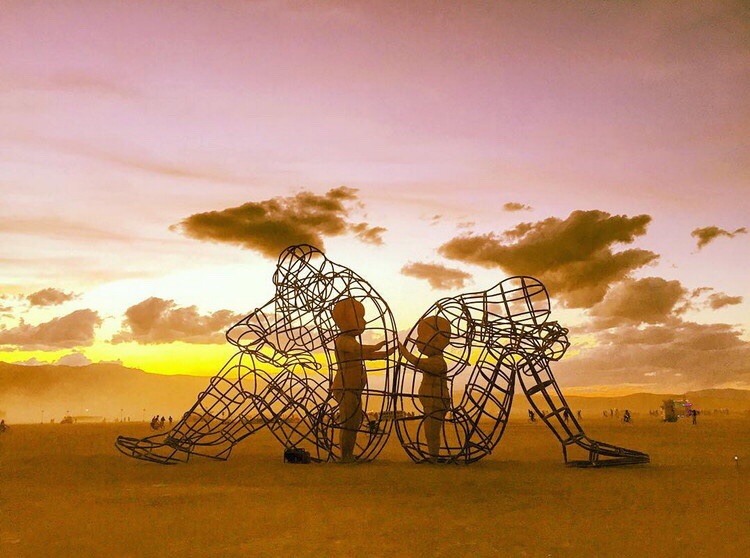
- The Image: While the image you provided features a wireframe sculpture of a child (rather than a dog), it fits the "Papas Papi" meme style perfectly. The humor comes from the wireframe aesthetic—rendering a human or animal as a skeletal construct. The sculpture likely represents the "dog" in a surreal, distorted form, or it is an example of the "wireframe art" often associated with this meme's visual language.
- The Explanation: To explain this to someone who cannot see the image, you would say: "The 'Papes' (Papas Papi) meme features a wireframe dog saying nonsense phrases like 'Papas Papi.' In this context, the wireframe sculpture represents that same absurd, skeletal figure saying 'Papas Papi.'"
simple-description (llama3.2-vision_11b)
The meme is a humorous image of two people, one with a pensive expression, sitting on a bench. The image is captioned "When you're trying to be a good papa, but your kid is a papa papa" and features a playful pun on the phrase "papa papa" which is a common phrase used to refer to someone who is a good father.
detailed-analysis (gemma3-27b-vision)
Okay, let's break down the image using the requested theoretical frameworks. Given the content and visual characteristics, several of these frameworks are very applicable.
1. Visual Description
The image depicts a large-scale, wireframe sculpture of two oversized, stylized shoes facing each other, creating an arch-like form. The wire material is a dark metallic color, creating a strong visual contrast with the vibrant sunset in the background. Two small human figures are partially visible within the wireframes of the shoes, appearing almost as if contained or held by the structures. The setting appears to be a flat, expansive, desert-like environment, with distant hills and people visible in the background. The sky is a dramatic gradient of orange, yellow, and purple, suggesting either sunrise or sunset. The overall effect is a blend of industrial geometry and natural spectacle, hinting at themes of containment, scale, and the relationship between humanity and constructed environments. It's evocative of a playful yet slightly unsettling visual.
2. Foucauldian Genealogical Discourse Analysis
This image is rich for a Foucauldian reading. The shoes themselves can be seen as a technology of power, a structuring element within a broader “discourse” of mobility, societal norms, and conformity.
- Discipline & Containment: The wireframe cages representing shoes suggest a subtle form of disciplinary power. Shoes, as everyday objects, constrain and direct our movement. This sculpture literalizes that constraint, creating a visual metaphor for how societal structures (norms, expectations, etc.) shape our agency. The humans within are not fully visible; they are contained by the structure.
- Genealogy of the Shoe: A genealogical investigation could trace the historical development of the shoe—from its origins as a protective measure to its later incorporation into fashion, status symbols, and markers of social identity. This genealogy would reveal how the shoe became tied to power dynamics – the ‘right’ shoes, the ability to walk freely, etc.
- Normalizing Gaze: The very act of representing shoes in this way – large, skeletal, and highlighting their structuring function – forces us to see the inherent power dynamics within something usually taken for granted. The sculpture disrupts the normalized understanding of footwear.
- Power/Knowledge: The artist, by constructing this sculpture, is exercising power through the creation of a new "truth" about shoes – a truth that reveals their disciplinary function. This shifts our understanding and thus our relationship to the object.
3. Critical Theory
From a Critical Theory perspective (drawing on thinkers like Adorno and Horkheimer), the sculpture can be seen as a commentary on the "culture industry" and the way it commodifies and reproduces social control.
- Commodification of Experience: The sculpture, as an art object, is itself a commodity. Its creation, display, and potential sale all fit into a capitalist system. This raises questions about whether the work genuinely challenges the status quo or simply reinforces it by turning critique into a product.
- False Consciousness: The dramatic setting of a sunset and the playful shape of the shoes could be seen as a form of "aestheticization" that distracts from the underlying themes of control and constraint. This aestheticization may lull the viewer into a false sense of freedom or individuality.
- Alienation: The small figures within the shoes can be interpreted as representative of alienated individuals, trapped within systems that define and constrain them. Their reduced visibility highlights their loss of agency and individuality.
4. Marxist Conflict Theory
Through a Marxist lens, the sculpture can be seen as a metaphorical representation of class struggle and the constraints imposed by capitalist structures.
- Structural Inequality: The shoes represent the systems that restrict our agency, like the division of labor and the limitations placed on social mobility.
- Alienation of Labor: The creation of this sculpture itself can be analyzed through a Marxist framework. The artist as a "proletariat" in the art world, engaging in creative labor within a system of commodity exchange.
- False Consciousness: As in Critical Theory, the aestheticization of the work (sunset, playful form) could be interpreted as obscuring the underlying power dynamics and reinforcing the status quo.
5. Postmodernism
This image strongly resonates with postmodern themes.
- Deconstruction of Meaning: The sculpture deconstructs the conventional meaning of a shoe. It's no longer simply footwear; it's a cage, a symbol of constraint, a questioning of functionality.
- Meta-narratives: The sculpture challenges the idea of grand, overarching narratives about progress and freedom. It presents a more fragmented, ambiguous view of the human condition.
- Irony and Playfulness: The exaggerated scale and wireframe construction introduce an element of irony and playfulness. This suggests a rejection of modernist seriousness and a embrace of ambiguity.
- Simulacra and Simulation: The sculpture is a representation of a representation. It’s a wireframe shoe, not a functional shoe. This can be seen as an example of Baudrillard's concept of simulacra – a copy without an original.
6. Queer Feminist Intersectional Analysis
This framework offers a particularly nuanced reading.
- Constraints on Movement/Agency: The shoes as cages become a potent metaphor for the social constraints placed upon marginalized bodies, particularly women, queer individuals, and people of color. These structures (like heteropatriarchy, white supremacy) limit movement—both physical and social—and define what is considered "acceptable."
- Interlocking Systems of Oppression: The intersectional aspect highlights how these constraints are not isolated. The sculpture suggests that multiple forms of oppression work together to create a complex web of control.
- Reclaiming Space: The people within the shoes, despite being contained, can be interpreted as resisting these constraints. Their presence within the structure suggests a refusal to be silenced or erased.
- Challenging Normative Footwear Standards: Historically, women’s shoes have been particularly constraining and tied to expectations of beauty and desirability. The sculpture can be seen as a critique of these standards and a call for more liberating forms of embodiment.
- Subversion of the Gaze: The sculpture can also be seen as subverting the traditionally patriarchal gaze. By presenting the shoes as cages, the artist challenges the male gaze that often objectifies and confines women's bodies.
I hope this breakdown provides a comprehensive analysis of the image through multiple theoretical lenses. Let me know if you'd like me to elaborate on any of these points further!
simple-description (llama3.2-vision)
The meme is a photo of a person sitting on the ground with their head in their hands, surrounded by a large, empty space. The text "I've been sitting here for 5 hours and I still don't have a good idea for my art project" is written above the image. The image is likely a humorous take on the struggles of creative block and the importance of patience in the creative process.
tesseract-ocr
oa . em ag -- LK} ce een ee LEME gov. ' CROSSE Se = al AOSV wl SUS ed bs eT 2 Zeger SSS , RSS Si | A .\ — Zs LZR IS EEA NOX Sia ie”