First Seen
2023-05-10T21:03:43+00:00
simple-description (qwen3.5_2b-q8_0)
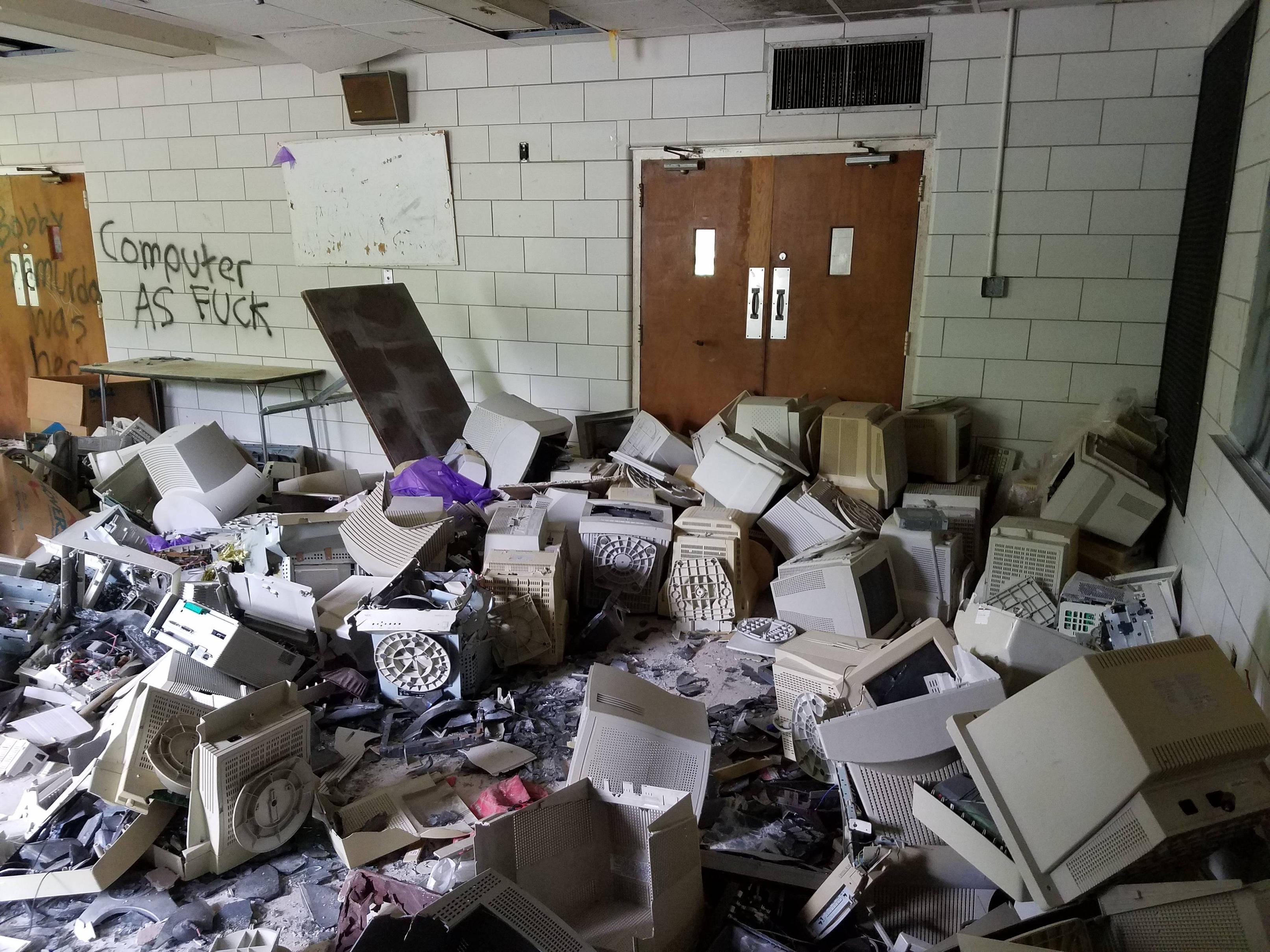
This meme depicts a room littered with piles of old, discarded computer hardware. The text "Computer AS FUCK" is scrawled in black marker on the whiteboard, while the date "Bobby Tamura was here" is written on the double doors. This internet reaction image is used to express extreme frustration and despair, typically when someone feels overwhelmed by a delay or a difficult situation.
simple-description (llama3.2-vision_11b)
The meme is a screenshot of a computer room with a sign on the wall that reads "Papes". The image is likely a joke about the room being a mess, with the sign implying that the "papes" (a colloquialism for "papers") are scattered all over the floor.
detailed-analysis (gemma3-27b-vision)
Okay, here's an analysis of the image, broken down into the requested sections. I’ll address only the applicable sections, as some may not be strongly represented in the image.
Visual Description
The image depicts a dramatically cluttered interior space, seemingly a former computer lab or classroom. The floor is completely covered in dissembled computer monitors, their plastic shells and internal components strewn in a chaotic pile. The monitors are predominantly beige or off-white, suggesting they are from an earlier era of computing. A partially visible chalkboard in the background has graffiti scrawled upon it, reading "Computer lab AS F*CK".
The room’s walls are tiled in white, showing wear and tear. The ceiling is also tiled, with some damage and possibly water stains. A closed, dark brown door is visible in the background. There’s a general sense of decay and abandonment. The lighting is dim, emphasizing the sense of neglect. The sheer volume of discarded technology suggests a recent decommissioning or perhaps a prolonged period of disuse. A stray blue object (possibly fabric) is visible amongst the debris. The overall impression is one of digital wreckage and institutional failure or collapse.
Foucauldian Genealogical Discourse Analysis
The image can be analyzed through a Foucauldian lens as a manifestation of power/knowledge regimes surrounding technology and education.
- Genealogy of the Computer Lab: The image tells a story of the historical emergence of the computer lab as a specific space of discipline and learning. The room was a site where certain forms of knowledge (computing skills, programming, digital literacy) were produced and normalized. The current state reveals the shifting power dynamics; the computer lab has ceased to be a central locus of those norms. The dismantling of the technology is not merely a physical act but a deconstruction of that particular apparatus of power/knowledge.
- Discipline and Panopticism: Historically, the computer lab was a place of surveillance (both actual, through monitoring software, and perceived, through the presence of instructors). This created a panoptic effect, where students self-regulated their behavior in anticipation of being observed. The absence of functioning technology disrupts this disciplinary structure.
- Discourse and Technology: The image implicitly questions the dominant discourse surrounding technology. We are often presented with narratives of technological progress and innovation. This image presents a contrasting picture—one of technological obsolescence, waste, and the deconstruction of the ‘digital age’ ideal. The “AS F*CK” graffiti can be interpreted as a rejection of that discourse, a kind of ironic or angry statement about the life cycle of technology.
- Archaeology of Knowledge: The dissembled monitors represent the "archaeological layers" of computing history. Each component reveals a particular stage in the development of the technology and the associated forms of knowledge and power.
Critical Theory
From a critical theory perspective, the image can be read as a critique of the relationship between technology, capitalism, and education.
- Commodification & Planned Obsolescence: The pile of discarded monitors is a visual embodiment of the capitalist drive for constant innovation and planned obsolescence. The computers were likely replaced not because they were broken, but because newer, more profitable models became available. This highlights the wasteful and unsustainable nature of consumer capitalism.
- Alienation: The breakdown of the technology within the educational setting can also be interpreted as a symbolic representation of alienation. The students, who presumably used this equipment to learn and connect, are now separated from it, highlighting the estrangement that can occur between individuals and the tools they use.
- The Institution & Control: The state of the room suggests institutional failure or abandonment. This can be seen as a critique of the ways in which educational institutions are often subject to economic pressures and political agendas, leading to a neglect of fundamental resources.
- Critique of Rationality: The chaotic arrangement of the monitors challenges the notion of a rational, orderly educational environment. It suggests a breakdown of the systems and structures that are designed to facilitate learning.
Marxist Conflict Theory
Applying a Marxist lens, the image highlights the inherent contradictions within a capitalist system and the conflicts that arise from them.
- Class and Access to Technology: The obsolescence of these computers can be seen as a manifestation of class inequality. While newer technologies are readily available to privileged groups, those in underfunded schools or communities are left with outdated equipment or no access at all.
- Exploitation of Labor: The production of these computers involved the exploitation of labor in various parts of the world. The discarded monitors represent the material consequences of this exploitation, highlighting the hidden costs of technological advancement.
- The Contradiction of Production: Capitalism drives the continuous production of goods, but also creates inherent instability through the forces of obsolescence. This image is a direct result of this contradiction: the computers were produced to generate profit, but they were eventually discarded as waste, becoming a symbol of the system's inherent contradictions.
- Surplus Value: The discarded tech represents unrealized surplus value. The computers were created for their productive capacity, but once replaced, they are no longer contributing to the accumulation of capital, becoming essentially worthless from a capitalist perspective.
Note: A Queer Feminist Intersectional Analysis doesn't strongly resonate within the image, as the composition doesn't display overt representation of marginalized gender and sexuality within the frame. It could be subtly addressed as relating to access to education and digital literacy, which can be unevenly distributed across gender and sexuality, and by class/race, but is not prominent from the image itself.
I hope this detailed analysis is helpful! Let me know if you'd like me to elaborate on any of these points or explore other theoretical frameworks.
simple-description (llama3.2-vision)
The meme is an image of a chaotic and cluttered room filled with broken computers, wires, and other electronic debris. The text "Computer as f**k" is scribbled on the wall in a messy, graffiti-like font, implying a sense of frustration or anger towards the state of the room. The overall tone is one of chaos and disorganization.
tesseract-ocr
Rees Pe ail Tee Rie ee 4 i . rat NS ___—__ i Se ne, = a ai 2 se — ee ee sa ie . = =p i a nS a ts 5 ae a | _y “ee SE ea Te eT | ee aoe po Eat | aa | | —_— se iS ora saa aus y ee: | £ Salers ors epee — ; op eee peas ie: Bes | LSS ey S albeit SSS __ & / ‘oe i, 2 a a las ; | — — / JS SB | oS cee —_—_—- pone | ae eet ay i ae P./j . tf \ x : As r Baise ; E Z : | ee | A ie . ee ey 5 ' eal gge a ee e ee ; re Shs dg Se = | ; yelalte 4 hest f le aa § : : A — ¥ ==—— =e <2 ’ a fee = ¥ rs ee ™ — i es ms Ey 4 i ; H Ea a ae pees ’ | | | : | 18 an er | eee oN a —— ieee) a5 EE: aE eae ee | | a DD : —— oe + 1 eo a | /, i “Be i = a | ’ S i ( : pF rs | \ (Ve -y Ae eS a. aa. as y \ R <j \\ Ww , sy" ae, | ; a “= oa \ ‘ Le \\’ ~~ f aN ~ | ty RS 3 1 x Tale, Mu i q j 1\ 4 Ag 3 ete = ’ i a eM! AS am ee , C “eae D Nw) | _ oS Vo > - (\ ; = 7 ae ee . Hes. - \ : or en | NSS SSS heck i )) a a = Ra \ =" .° Ge NS — cays 3 ISK ; mi eee Cah cae: a Ke : = | cn yo od : gs ~~ - eae tees ———’. SSE Serer : y ‘I eee lint ae Le : j i i > a eT -s ¥. ———| IN 4 * ’ oS indir s SVEOEIO : y BS 5 pa cae a! \ ‘ - a y fae 1) ee \ A ete. a Wee Coney im | YS cue tae: (yy \ ~ 7 | ES e ( * ~ O _ gh ¥ “sie 1 ' ¢) - y) } é SbG tl “ 5: \ J SE 43 a — e ay a eG 3 \ y ee. 3 ms he 4 ; a” <z (> = p oe . xy i Le “> & ~ ° <a oF o aw — | 2 eats : A ga 2 : ae : = ? A Cron Pore \ Ee ee Ne 9 a \ a aii Be => nif, * ie ES a 3 a er - We 2 4 f >: = J 4 I | A ae bj <2 iy ord =, os ew f ee te PS b i a - ee 7 mt Ets Qi Se we = § — i al =a Pe -_ i Bye ee <= | is ~ we C2) mies |. > Ee 7 gales x _ 6 ee) Vee Way eeaence ei gsss23 ri - Up 2 Sa a tS Ee Oe, Glee NN | q . I if i ~~ c i S ar | | 7 P AN . 2 IS Gd > | | > \ 2 i a ' ‘Ss i * Fon J at ty at e ge ea fi = ng est dy i Fenn a on | i/ oe ee i > Pa Cae 4 y i | | ; e BUF oS. p Hi 4 P ici P NE 4 Y SF il # a \ eS, teh e ; SG i Wo ‘7B: ye - Ae SF: —— | } Hl X < Bs! AD oe 4 ; ij || / : oe SS > : y a a CG Sig | f a Se — \ . ‘ | ; F ewe a rr \ i) hd Me if Pe ; pie IES = e >. my, ig ea GP 5 =u y ~ Tf oe? Z ~ fe € OS SS ; 5 a ne : Pere 4 We 2: : i... Y