First Seen
2023-05-10T21:03:43+00:00
simple-description (qwen3.5_2b-q8_0)
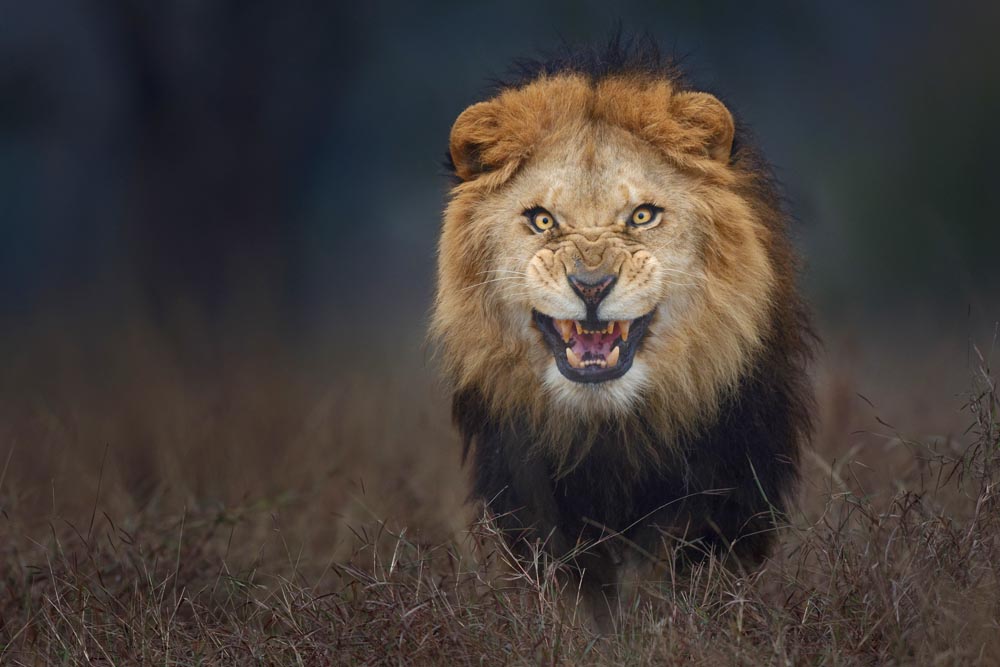
This image actually features a lion roaring, rather than the subject of the "Papes" meme. The "Papes" meme typically originates from a man (often associated with the phrase "I have to have the Pape" or similar internet culture references involving a man eating food), but this image clearly depicts a male lion with a thick mane and open mouth in a grassy field. Additionally, there is no text visible in the image.
simple-description (llama3.2-vision_11b)
The meme is a picture of a cat with a speech bubble saying "I can smell the desperation emanating from your profile picture". The meme is likely referencing the stereotype that people who use cat pictures as their profile pictures are often lonely or desperate for attention.
detailed-analysis (gemma3-27b-vision)
Okay, here's an analysis of the image you provided, broken down into the requested theoretical sections, only including the sections where the theory is demonstrably applicable to the image.
Visual Description
The image is a close-up, head-and-shoulders portrait of a male lion. The lion appears to be roaring, with its mouth open, revealing teeth and tongue. It has a prominent, thick mane that is a mix of dark brown and golden hues. Its eyes are intense and focused, appearing to stare directly at the viewer. The lighting is dramatic, with a strong contrast between the bright face and mane and the dark, blurred background of dry grass or brush. The composition is centered, emphasizing the lion's powerful presence. The overall tone is intense, primal, and commanding.
Foucauldian Genealogical Discourse Analysis
This image offers potent material for a Foucauldian analysis. The lion, historically and culturally, has been a discourse steeped in constructions of power, royalty, and dominance.
- Power/Knowledge: The image exemplifies the connection between power and knowledge. The lion is power, and its representation reinforces this. Historically, kings and rulers have adopted lion imagery to legitimize their rule. The lion’s roar is a demonstration of power, constructed through cultural narratives. The gaze of the lion is an exertion of dominance—a power dynamic encoded through visual representation.
- Genealogy: Tracing the "genealogy" of the lion's image reveals a historical progression of meaning. From ancient Egyptian deities to medieval heraldry, and modern symbolic representations of courage and strength, the image has been reconfigured and repurposed, each iteration building on previous associations. This image taps into that rich historical lineage.
- Disciplinary Power: While not directly demonstrating discipline in the Foucauldian sense (like a panopticon), the image evokes a feeling of being "under observation" and potentially subject to the power the lion embodies. It creates a sense of being vulnerable within a power structure.
- Normalization: The image normalizes the idea of the lion as a symbol of strength and authority. This image reinforces pre-existing cultural expectations.
Marxist Conflict Theory
The image, when viewed through a Marxist lens, can be interpreted as a representation of the inherent conflict within the natural world, mirroring the class struggles inherent in human society.
- Competition and Survival: The lion's roar and open mouth can be seen as a visual representation of the "struggle for existence" Darwinian concepts tied to competitive capitalism. The lion is asserting its position as an apex predator, competing for resources (territory, prey, mating rights).
- Dominance and Exploitation: The lion, as a predator, exists through the exploitation of other species. This parallels the power dynamics in capitalist systems where one class (the bourgeoisie) benefits from the labor and resources of another (the proletariat). The image highlights the raw and unforgiving nature of resource acquisition and control.
- Hierarchical Structure: The lion is at the top of a food chain, representing a natural hierarchy. This can be analogized to the social stratification within a Marxist framework—a visible demonstration of dominance and subordination.
Postmodernism
The image, while seemingly straightforward, can be analyzed through a postmodern lens by deconstructing its assumed meaning.
- Simulacra and Simulation: The image of the lion is a representation of a lion, a simulacrum. It's not the lion itself, but a manufactured image, divorced from the "real" lion in its natural habitat. This image potentially becomes more about the idea of the lion—a cultural construct—than the animal itself.
- Deconstruction of the "Wild": The image participates in the construction of the "wild" as a concept. However, it does not offer the complete picture. The lion is an animal shaped by its environment, and the image omits details about the impact of human activity, conservation efforts, or other complexities of its existence.
- Loss of Grand Narratives: The image doesn't necessarily tell a grand story of survival or dominance. It exists as a visual moment, open to multiple interpretations. This challenges the notion of a single, overarching "truth" about the lion or the natural world.
Let me know if you'd like any of these sections expanded upon, or if you'd like me to explore other theoretical frameworks!
simple-description (llama3.2-vision)
The meme is a picture of a lion with its mouth open, revealing sharp teeth, and its eyes are wide with a mix of anger and surprise. The text "I can smell the desperation" is written above the lion's head. The image is meant to be humorous, implying that someone is being overly enthusiastic or desperate about something.
tesseract-ocr
- We a | \ oe a | ta "hi 4; i & x ‘ ij Pee 3 y AG Y ; : t ; ‘ i a EZ f Ke : 4 ie Oe oN a i | Tie +4 ; N bv < : i N 5 ae Vs . AG y WI 5 32 ¥ Way 4 mS <A ay: es a ai ‘i oe if ‘ QU yA Ss VY NO GO NIAS rating: ie Naas y US a a eat i i aN te ee ¥ Sa A WA Oa NES Page aa Sabet OS gl SN TUAW Yoel BN ‘Rade: A Se Sa NSW DE ae BAGS a ' ahs a ae y Y eae Peps D4 Aan SSG Ser a eaae “ iF Fag