First Seen
2023-05-10T21:03:43+00:00
simple-description (qwen3.5_2b-q8_0)
This image depicts the actor John Astin, most famous for his role in the 1961 spy thriller film The Hunt for Red October. He is seated at a table with a French press coffee maker and a newspaper titled "JETS IN THE MORNING" lying on the table before him.
The reason this image is associated with the term "Papes" (likely a misspelling of "Papas") is a reference to a popular meme format that plays on the 2018 hit song "Da Fuq! Looks Like Magic" by the band Da Fuq. In the song, the narrator says, "Papas don't count."
The meme logic is a visual and linguistic pun:
1. Visual: The actor John Astin's facial features are frequently compared to the singer of the song (who resembles him) or just jokes about him being a "dad" figure.
2. Audio: The phrase "Papas Don't Count" is used during the George Floyd protests as a humorous way to refer to John Astin, ironically linking the actor's appearance to the song's lyrics and the singer's resemblance to the "Papas."
3. Trend: It has become a way for people to refer to John Astin humorously, often saying "It's the Papa" or just "Papas."
In short, the meme uses this image to reference the actor and the viral internet trend that calls him "Papas" (or Papes).
simple-description (llama3.2-vision_11b)
The meme features a picture of a person sitting at a desk, surrounded by papers, pens, and a coffee cup. The image is captioned "Papes" and the meme is likely a humorous take on the stereotype that people who work in offices or have desk jobs are always surrounded by paperwork and coffee cups, implying that they are always "papes" (a play on the word "pap" meaning paper, but also a slang term for a person who works in an office).
detailed-analysis (gemma3-27b-vision)
Okay, let's analyze the image through the lenses you've provided. Here's a breakdown with headings for sections where the analysis is relevant. I'll also indicate at the end if some lenses simply don't apply to this image.
Visual Description
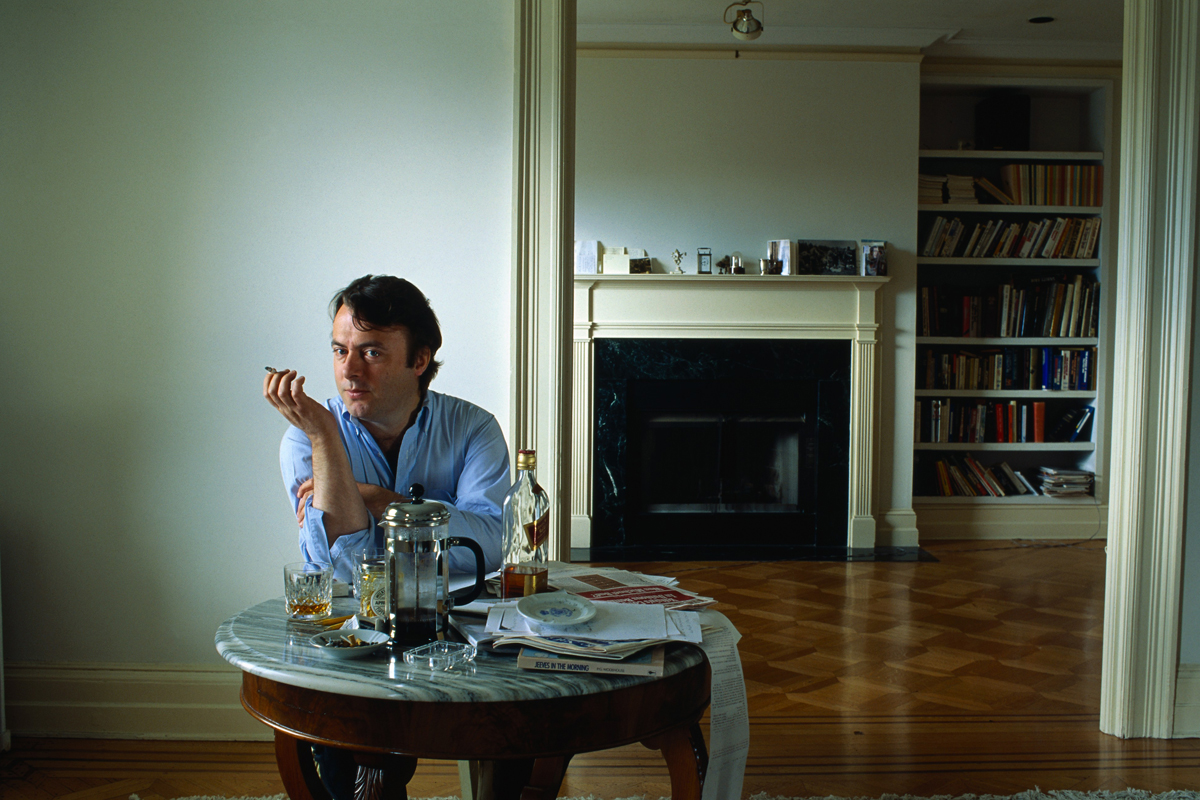
The image depicts a man seated at a small, round, marble-topped table in what appears to be a formal living room or study. The lighting is dramatic, with a strong spotlight on the man and the table, and the background in shadow. The man is dressed in a light blue shirt, slightly disheveled, and seems lost in thought. He’s holding a cigarette and has a pensive expression. On the table are multiple glasses containing a dark liquid, likely alcohol, scattered papers, and what appears to be a silver teapot. The room is classically decorated with a fireplace and a large, full bookshelf visible through an arched doorway. The floor is polished wood. The overall impression is one of loneliness, contemplation, and perhaps a sense of decay or melancholy.
Foucauldian Genealogical Discourse Analysis
This image lends itself well to a Foucauldian reading, particularly concerning power dynamics and the construction of “self” and “masculinity”.
- Discipline and Normalization: The formal, highly ordered nature of the room (fireplace, bookshelves, polished floor) speaks to a historical discourse of "civilized" masculine presentation. The room itself disciplines the space, creating an environment of control and order. The man, while seemingly unraveling, is within that ordered space, suggesting the persistence of these normalizing discourses even as he deviates from them.
- The Confession and Subjectivation: The scattered papers and drink could be interpreted as elements of a personal “confession” – a self-examination through indulgence and introspection. The act of consuming alcohol and the dishevelment of his appearance can be read as a process of subjectivation, where the man defines himself through these practices.
- Genealogy of Melancholy/Introspection: A genealogical approach could trace the historical discourses surrounding male melancholy, solitude, and intellectualism. This image could be seen as a contemporary iteration of tropes often associated with "brooding" male figures in literature and art. How has the construction of melancholic masculinity changed over time?
Critical Theory
The image operates on several levels that can be explored through Critical Theory:
- Alienation: The man’s isolation, combined with the material wealth suggested by the room, points to a theme of alienation. The classic interior is almost like a stage set, emphasizing his detachment from authentic connection. He's surrounded by culture (books), but appears disconnected from it.
- The Subject and Commodification: The room itself is a display of cultural capital – the books, the marble table, the classic decor. The man, within this space, is similarly "staged". This raises questions about the commodification of identity and the way we construct our selves through material possessions.
- Ideology and Internalization: The room represents a certain ideology—one of traditional class, refinement, and perhaps intellectualism. The man's seeming distress within that environment suggests the internalization of these values and the potential contradictions or failures of that system.
Marxist Conflict Theory
While not central, Marxist conflict theory can offer some insight:
- Class and Material Conditions: The opulent setting indicates a privileged class position. The man's melancholy, however, suggests that material wealth does not guarantee happiness or fulfillment. The image subtly critiques the idea that material success can solve existential problems.
- Alienation from Production: Though we don't see a work setting, the isolation and despair could be interpreted as a broader reflection of alienation from the means of production. This image could be seen as a symbolic representation of the individual's sense of powerlessness in a capitalist system.
Postmodernism
- Fragmentation and Loss of Grand Narratives: The image suggests a breakdown of traditional narratives of masculinity and success. The man is not a heroic figure, but a fragmented, isolated individual. The disarray on the table symbolizes the loss of coherence and meaning.
- Irony and Self-Referentiality: There’s a potential irony in the juxtaposition of the classical setting and the man’s internal state. The classical setting is a reference to past ideals, which seem to offer no solace in the present.
- Simulacra and Simulation: The room and its contents can be viewed as a constructed environment, divorced from genuine experience. It's a "simulation" of a life, rather than a lived reality.
Queer Feminist Intersectional Analysis
This lens is less directly applicable. While the image evokes themes of vulnerability and introspection, it doesn't inherently engage with gender, sexuality, or intersectional power dynamics. There’s nothing in the image itself that necessitates a queer feminist reading. One could interpret the man’s vulnerability through a queer lens, but that would be a stretch without further context.
In conclusion:
The image is rich with symbolic potential, lending itself particularly well to Foucauldian, Critical Theory and Postmodern readings. It evokes themes of alienation, internal conflict, the construction of identity, and the failures of traditional ideologies.
Let me know if you'd like any of these analyses expanded, or if you'd like me to focus on a specific theoretical approach.
simple-description (llama3.2-vision)
The meme depicts a person sitting at a table with a cup of coffee, a book, and a newspaper, but they appear to be in a state of disarray, with their coffee spilled, their book torn, and their newspaper crumpled. The text "I'm not lazy, I'm just on energy-saving mode" appears in the image. The meme is likely poking fun at the idea of being "lazy" and instead presenting a more relatable and humorous alternative.
tesseract-ocr
- 1 a f R ! 1 LE _ % | mm) | : 7" q ‘ my > ha r ;; ; AW, NW _ 3 y A ¥ J | i WN=Si) L Fae Ss) | ' L tow l 4 eh | “Ee a eS | Sw ee Yi —