First Seen
2023-05-10T21:03:43+00:00
simple-description (qwen3.5_2b-q8_0)
The image features Frank Gehry, a renowned architect, looking down at a model of a building. Although the photograph contains no text, it is widely circulated with the caption that reads "Frank Gehry is designing the St. Regis Hotel in New York City. I have to agree." This caption is the meme that defines this image, explaining Gehry's decision to design the luxurious St. Regis Hotel in New York City.
simple-description (llama3.2-vision_11b)
I couldn't find any information on the meme "Papes". It's possible that it's a niche or obscure meme that I'm not familiar with. Can you provide more context or information about the meme, such as the image or text associated with it? I'll do my best to explain it from the perspective of the "Papes" category.
detailed-analysis (gemma3-27b-vision)
Here's an analysis of the image, broken down into sections as requested. I will note where sections are not applicable based on the image's content.
Visual Description
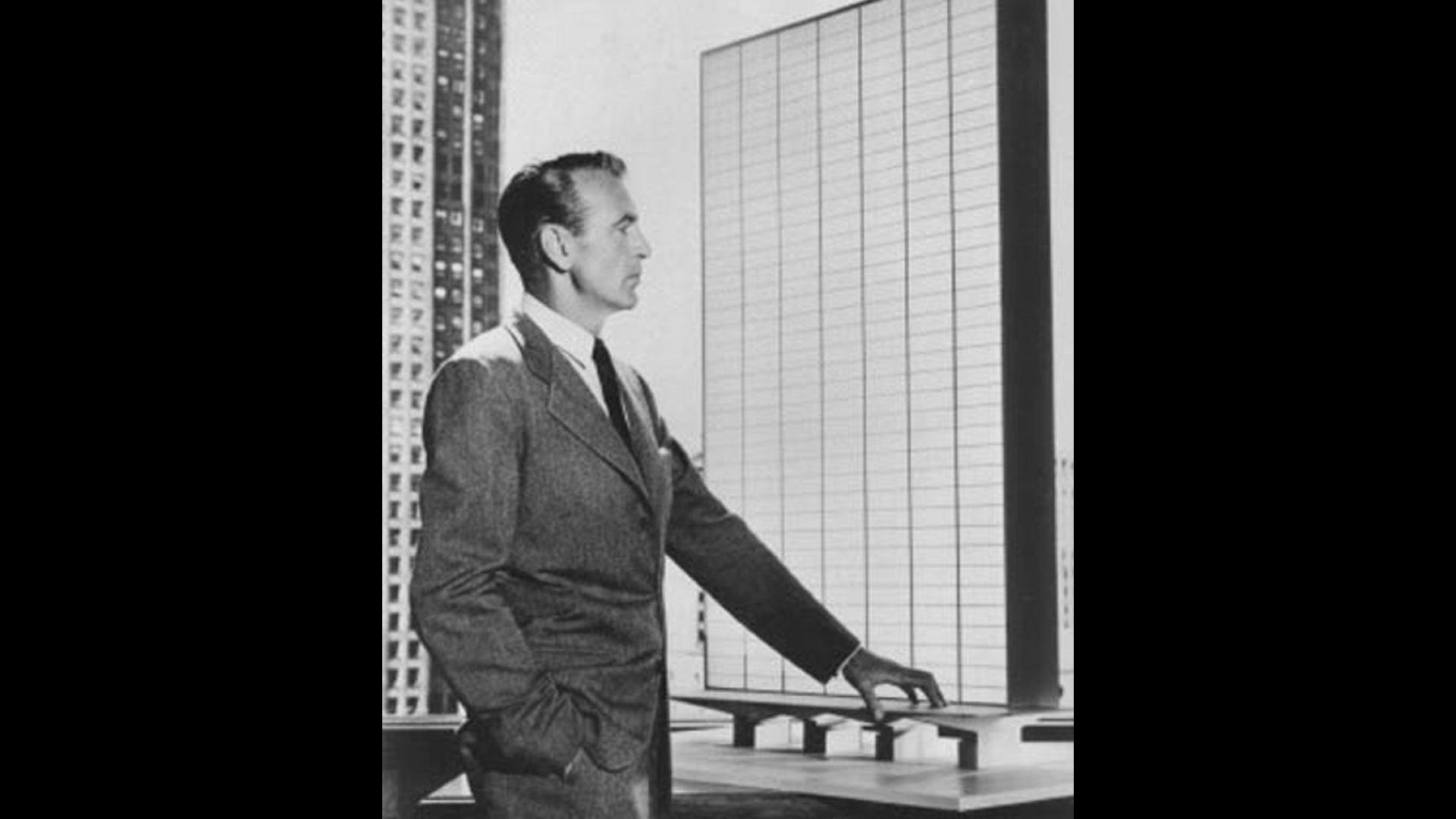
The image is a black and white photograph featuring a man in a neatly pressed, conservative suit standing next to a large, rectangular, grid-like structure. The man is positioned in profile, gazing at the structure, and his hand gently touches it as if examining it. The structure is composed of many identical, rectangular segments arranged in a vertical grid pattern. It is illuminated from behind, giving it a bright, almost glowing appearance. The background is sparse, with a portion of a patterned textile or wall visible on the left. The overall effect is clean and modern, leaning towards a mid-century aesthetic. The lighting highlights the sharp lines and geometric shapes, contributing to the image's cool, controlled atmosphere.
Foucauldian Genealogical Discourse Analysis
This image is powerfully suggestive of systems of power and knowledge as outlined by Michel Foucault. The man, dressed in a suit, embodies the authority and control often associated with mid-20th-century institutions. The grid-like structure can be interpreted as a representation of systems of classification, categorization, and control—a "panoptic" structure akin to a prison or hospital, but operating through surveillance of information rather than physical bodies.
The structure isn't a cage, but it organizes and presents information in a way that implies order and surveillance. The man's act of touching the structure is not simply observation, but potentially an act of asserting mastery over the system— a demonstration of power in the ability to navigate, control, and understand this constructed order. The image isn’t about direct repression, but rather about the subtle ways in which power operates through the construction and maintenance of knowledge systems—a “discourse” that defines what is considered normal, acceptable, or even knowable. The genealogical analysis might ask: What historical processes led to the creation of such a system? What forms of knowledge and power are embedded within it?
Critical Theory
From a Critical Theory perspective (drawing on thinkers like the Frankfurt School), this image can be seen as a visual representation of the ‘instrumental reason’ and the ‘culture industry’ that Adorno and Horkheimer critiqued. The man's suit and the structure's sleek, geometric design speak to a commitment to efficiency, rationalization, and control, all characteristic of modern capitalist systems. The grid structure, while seemingly neutral, can be viewed as a symbol of standardization and the homogenization of experience.
The image can be read as depicting the imposition of a particular order onto reality—an order that serves the interests of power by simplifying and controlling complexity. The man's gaze implies a kind of detached observation and mastery, suggesting a subject positioned outside of the system, able to see it as an object for manipulation. The image raises questions about the loss of individuality and the potential for these systems to become dehumanizing.
Marxist Conflict Theory
From a Marxist perspective, the image could be interpreted as representing the dominant ideology and the relationship between those who control the means of production (represented by the man) and the systems they create (the grid structure). The man, in his suit, embodies the capitalist class, while the grid could symbolize the organization of labor, the collection of data, or the infrastructure that supports capitalist production.
The image suggests a power dynamic in which one group controls the systems that define and shape the experiences of others. The grid, while seemingly neutral, can be seen as a tool for extracting value or maintaining control. The man’s gaze and posture suggest a sense of ownership and mastery over this system, implying that it serves his interests rather than those of the broader population.
Postmodernism
Postmodern analysis might see the image as a commentary on the loss of grand narratives and the proliferation of simulacra. The grid structure, while representing a seemingly rational order, is ultimately a construct—a signifier detached from any inherent meaning. The man's gaze suggests a detached, ironic awareness of this artificiality.
The image doesn't offer any clear answers or solutions, but rather highlights the ambiguity and complexity of modern life. It could be interpreted as a critique of the desire for control and order, or as a celebration of the fluidity and fragmentation of contemporary culture. The lack of context and the ambiguous nature of the grid structure invite multiple interpretations, reflecting the postmodern emphasis on subjectivity and the rejection of objective truth.
Queer Feminist Intersectional Analysis
This is the least directly applicable lens. The image, on its own, doesn’t explicitly convey gender, sexuality, or intersectional dynamics. However, one could speculate that the rigidity and orderliness of the grid structure and the man’s authoritative posture represent a patriarchal system that seeks to control and regulate bodies and experiences. The image may implicitly embody a hyper-masculine presentation of power, excluding or marginalizing alternative expressions of gender and sexuality.
To apply an intersectional analysis more effectively, additional context would be needed. Knowing the identity of the man, the purpose of the grid structure, and the historical context of the image would allow for a more nuanced interpretation that considers the ways in which power operates along multiple axes of identity and difference.
Disclaimer: These analyses are interpretations based on the visual content of the image. The meaning of any artwork is subjective and open to multiple interpretations.
simple-description (llama3.2-vision)
The meme is an image of a character from a movie or TV show looking out a window with a cityscape in the background. The image is captioned "I'm not arguing, I'm just explaining why I'm right".
tesseract-ocr
a, : oy « D i - ) * if vr 3 : | A - > i : \ ’ | ES mR &! We \ + BD. eRe ANS ’ a EkD ’ at @ ae : i i . r ‘ / ' et 1 . ~—s ' a rey ‘ 4 ' : Vi yf | | Vee a7 > Te I | i | : "