First Seen
2023-05-10T21:03:43+00:00
simple-description (qwen3.5_2b-q8_0)
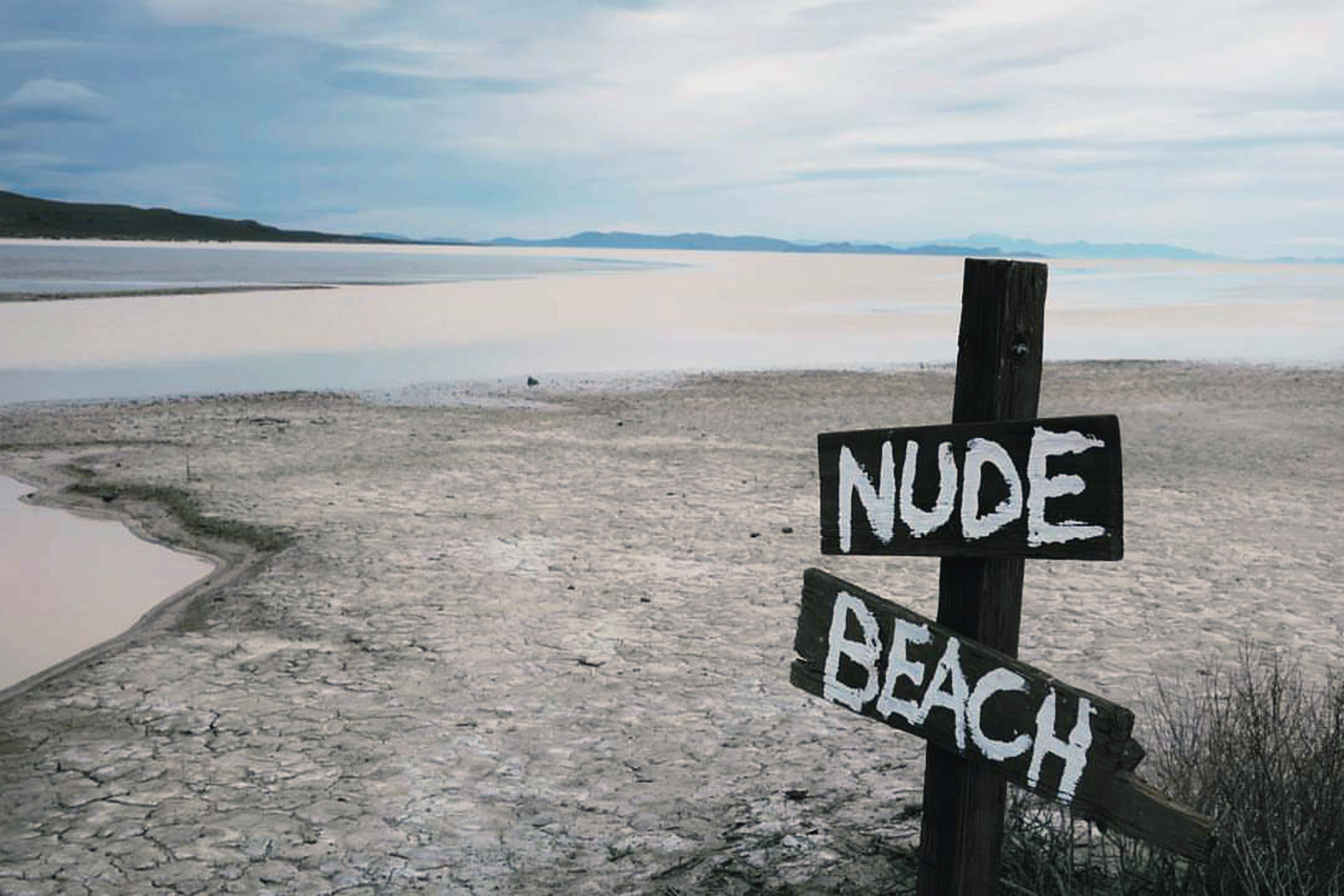
This image displays a wooden signpost in the foreground with "NUDE" painted on the top sign and "BEACH" on the one below it. The background shows a vast, dry, and cracked landscape that looks like a dried-up riverbed or desert, serving as the visual context for the joke. The meme is a playful comparison to the beach where people swim nude in the Mediterranean, even though the landscape is arid and dry.
simple-description (llama3.2-vision_11b)
The meme is a photo of a sign at a beach that says "Papes" instead of "Papies". The sign is in a humorous and ironic tone, implying that the beach is for people who are comfortable with being naked, but in a way that's not explicit or suggestive.
detailed-analysis (gemma3-27b-vision)
Okay, here's an analysis of the image, broken down into sections according to the requested theoretical frameworks. I'll note where a framework doesn't strongly apply.
Visual Description
The image depicts a weathered wooden signpost prominently displaying the words "NUDE BEACH" in white, somewhat crudely painted letters. The sign stands in the foreground of a stark and desolate landscape. This landscape consists of cracked, dry earth, giving way to a broad, flat expanse of water or mudflat. In the distance, blurred mountain-like forms are visible under a hazy, overcast sky. The color palette is muted—grays, browns, and whites—reinforcing the sense of barrenness and isolation. The lighting is flat and diffused. The angle appears to be roughly at eye level, offering a direct, slightly confrontational view of the sign. The photograph is generally stark and minimalistic. The contrast between the relatively crude sign and the expansiveness of the landscape is striking.
Foucauldian Genealogical Discourse Analysis
This image is very potent when viewed through a Foucauldian lens. The "NUDE BEACH" sign isn't merely a directional marker; it's a point where power operates to create and regulate a specific discourse around the body, sexuality, and the natural world.
- Power/Knowledge: The sign demonstrates how power is not just repressive, but productive. It doesn't simply forbid nudity elsewhere, it actively creates a space where it is sanctioned. This is power operating through knowledge – the knowledge of what's permissible, what’s ‘natural,’ and where.
- Discipline & Normalization: The existence of a "Nude Beach" inherently defines nudity as something that requires regulation. It separates it from other spaces, categorizing it and implicitly marking other spaces as "not nude." This categorization is disciplinary. It reinforces norms about where and when nudity is acceptable, thereby solidifying societal expectations around the body. The sign also implies a desire to control and manage bodies, even in the seeming freedom of a nude beach.
- Genealogy: Tracing the history of the nude beach would reveal shifts in societal attitudes towards the body, sexuality, and nature. It wasn't always acceptable, and the history of acceptance likely is tied to changes in broader cultural and political landscapes. The sign is a symptom of this genealogy, reflecting specific power dynamics at a particular time.
- The Panopticon: While the image doesn’t depict surveillance, the idea of the Panopticon is relevant. The sign suggests that bodies in this space are under a kind of potential gaze – both from other beachgoers and from the implicit understanding that behavior is regulated.
Critical Theory
The image lends itself to a critical theory interpretation focused on the social construction of nature and the body.
- Commodification of Nature: The "Nude Beach" can be viewed as a commodification of nature, transforming a natural space into a site for regulated leisure and spectacle. Nature is not simply experienced but managed for human consumption, even in this purportedly 'natural' setting.
- The Body as a Social Construct: The focus on nudity highlights how the body itself is a social construct. What constitutes a "natural" body, what is considered acceptable to reveal or conceal, is determined by cultural norms. The nude beach, then, becomes a stage for performing these norms or, potentially, transgressing them.
- Alienation: There is a sense of alienation in the image. The desolate landscape and the stark sign create a feeling of disconnect from both nature and the human body. This reinforces critical theory’s focus on the fragmentation and disaffection characteristic of modern society.
Marxist Conflict Theory
While not the most obvious fit, Marxist themes are present.
- Access & Exclusion: The very concept of a designated "Nude Beach" implies access is not universally available. Who can afford to travel to such a location? Who feels safe and comfortable frequenting it? The sign subtly highlights issues of privilege and exclusion.
- Control of Leisure: The management of leisure spaces, like a designated nude beach, is a form of social control. It dictates how people spend their free time and reinforces societal norms. This aligns with Marxist critiques of how leisure is often used to maintain the status quo.
- Commodification of the Body: The nude beach can be seen as participating in a broader system of commodification where bodies are treated as objects of spectacle and consumption.
Postmodernism
Postmodern elements are present, particularly around the questioning of essentialism and the construction of reality.
- Deconstruction of "Natural": The image challenges the idea of a “natural” state. What is natural about designating a specific space for nudity? The sign deconstructs the notion of a purely spontaneous or authentic connection with nature.
- Simulacra & Simulation: The "Nude Beach" can be seen as a simulacrum – a copy without an original. It's a constructed space representing freedom and naturalness, but ultimately divorced from any genuine state of being.
- Fragmentation & Loss of Grand Narratives: The desolate landscape and the isolated sign evoke a sense of fragmentation and a loss of overarching meaning. It reflects a postmodern skepticism towards grand narratives about nature, freedom, and the body.
Queer Feminist Intersectional Analysis
This framework is particularly illuminating:
- Regulation of Bodies: The sign immediately speaks to the policing of bodies. Historically, societal norms around nudity have been deeply connected to gender, sexuality, and race. The nude beach, while seeming liberating, still operates within a framework of control and expectation.
- Intersectionality: The experience of a "Nude Beach" will vary dramatically based on race, gender, class, ability, and sexuality. A white, cisgender, able-bodied woman may have a very different experience than a Black, transgender woman. The space is not neutral.
- Challenging Heteronormative Standards: A nude beach could be a site of liberation if it actively challenges heteronormative beauty standards and offers space for diverse bodies. However, it could also perpetuate those standards if it favors certain body types or sexualities.
- Power dynamics: The sign itself is a symbol of power and control. Who decided this was a nude beach? Who benefits from that decision? The absence of other people in the image suggests a power imbalance and a lack of representation.
- Gendered expectations: Nudity is often seen as more "natural" or acceptable for men than for women. This image could be interpreted as perpetuating this double standard.
I hope this breakdown is helpful. Let me know if you'd like me to elaborate on any particular point!
simple-description (llama3.2-vision)
The meme is a humorous image of a sign that says "Nudist Beach" with an arrow pointing to the left, but the sign is actually pointing to a dry, cracked lake bed with no water in sight. The text "Nudist Beach" is written in a playful, hand-drawn font, but the image is a stark contrast to the usual expectation of a beach. The joke is that the sign is pointing to a desolate, barren landscape instead of a beautiful beach.
tesseract-ocr
es | ee ‘cial 7 a 5° hom = tal ont © a Re = — TT ' Pear ¥ be wny EI = 7 5 le per ae in e . ne sly —_ 5 2 - > . . a . FS a a nea pam, os —h we poten Te et a ee <= tint Tigao ti tpt OO a ee ing ope xe OO eh Lae pps ru ee ee ON eam one 2 - SS —- epee oem Oh > : wane pea Pee AMO RS ae ae pie ge Se : ae <0) ewer 5. ia eee = oh cu Sas er ea é : eee a = ? - — a ened e. md 7 - » val P ae ~ . ~ os —— ne vue 2 = “« \ods ri tt eek we a nn ae, =. -4 os era i . be bag ot oe! Suds __ ms - = . = Fn st => ~ ee a. - bast ae? an . = . : ae aa Om hed a 4 iA - - ah _— 7 mK _— as so. ~= —-s, _— . — SS a ‘ ~ ee = Sa - 7 = - “ : = Nee? ak ~<a . Pe 7 a eS : —— ee a Hin See ae ~— -**- : =e —* . -. 7 4 ee " —_ . - » J , = : m . = = k ra Seas < mR L- i : e ~~ “= : 2 - > = ~~ = : 7 - JSF a Pee” ae : - - - a = . ; = <2 ae 3 A ¥ : a = > ce = a MeO: | es : Sa Z — ~ » * —3 =" ~ es - _ é ~ i - ee, ee ; : = = es ~ : ~ ~ eS ge vm ; ~ ~ : - ~ . er, - " ae oe oe —— —= ¥ See ~~ — : Se Stan _ ot Pe — a. —_ ‘ es etre i co - v4 ~ le —_ ae > a eg 2 ~~ <@ § thal fi a Sy a gil e E + = ~ : ~~ 7 be . as ~ ae » - ee —s et A /toda 5 Bee ep a a Ns et a : a oe ie . _— ah EON Ae ty sis ae sce ie Pa NEA ca Se ee by Peek ie a a ‘ Sa es vee al Fam Anat - 3 - x Sage ma a ~— Se: a <3 ea Pee = , ~*~ ty ’ Leen i i = -— et ea , << at NE: APR a P ‘Pa ee Y ae . =—- = S E oo , an Stee = arc ie. \ , D : Se eheias — 5 aM > ee eS eG gk PN ; = etl <— eae Ors ar Ft ; ans “3 i tgs =e nn . a oes ge & i oe a ee ee 3 — a ‘ 4 se + — ~s pat ra F ~ ae zn a ee ae ots —, ( tre —_- pm eer a en Sat ‘ ee z Fp. L a : >. = y = ns err a . ~s % > , ae eke o~ Rt 2: Lat <a 4 es fF no gem =. A nT pte ee Se ee ec oe ee ee OAs ee pm = os aR +¥ “wien *2 en et ee : = en >. - Vr hae Ae - = BEC RS phage Sb ee ox. te Fae . ey ~~ ns OS eee ~ - ae Pe ee aa a od Ie a! A nl gk AO a ~~ gall il a hn eget & ? ; Sant: on ee Fae 2 : od = ae Se Dee eee er = A ne ee eee or ae) “