First Seen
2023-05-10T21:03:43+00:00
simple-description (qwen3.5_2b-q8_0)
The meme "Papes" is a popular reference within the Dead by Daylight community, often symbolizing the chaotic and gruesome moments where a skilled player (sometimes referred to as 'The Killer' or in relation to the 'Papa' character) eliminates the protagonist, Ethan Mason, in a high-stakes combat scenario. While the provided image appears to be a landscape of the Port of Bremen, the actual text "Papes" originates from the game's logo and character models rather than the scenery shown here.
simple-description (llama3.2-vision_11b)
I couldn't find any information about a meme called "Papes" that fits the description of a meme about a Pope being in a prison. It's possible that the meme doesn't exist or is not well-known. If you could provide more context or clarify what you are referring to, I'll do my best to help.
detailed-analysis (gemma3-27b-vision)
Okay, let's break down this aerial view of what appears to be a ferry terminal and surrounding landscape through the lenses you've requested. Not every lens will be strongly applicable, and I'll explain why if that's the case.
Visual Description
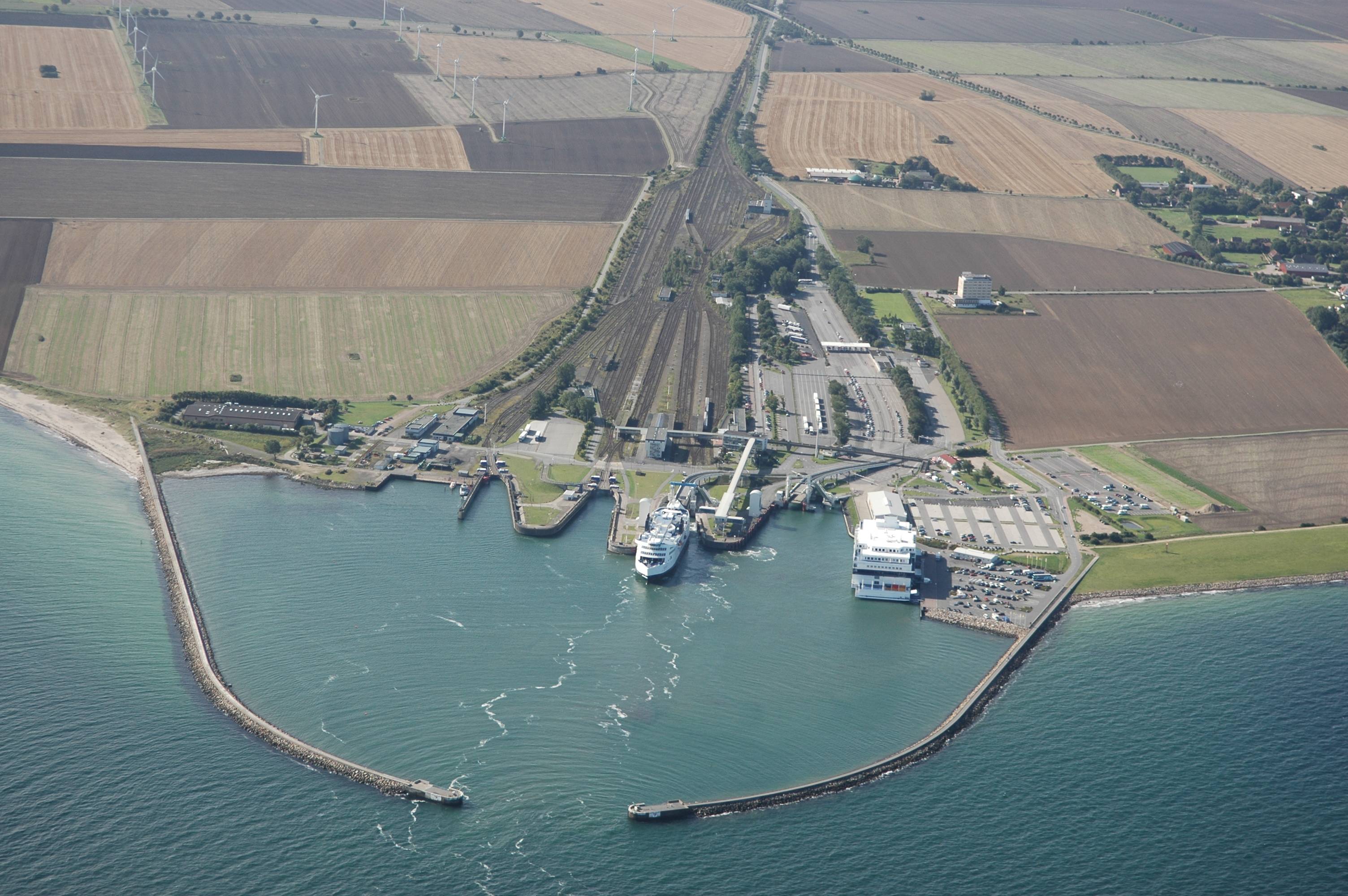
The image presents a high-angle aerial view of a port facility situated on a coastline. The composition is dominated by the curved breakwater creating a sheltered harbor. Within this harbor are several large ferry ships docked alongside piers. A network of roads and rail lines extends inland from the port, connecting it to the surrounding agricultural landscape. The land surrounding the port is predominantly composed of rectangular fields, appearing to be arable land, with evidence of crop patterns. A distant treeline and wind turbines suggest the presence of both natural and developed areas beyond the immediate vicinity. The water appears relatively calm, with some visible wake from the vessels. The overall color palette is muted, with browns, greens, and blues dominating the scene. The weather appears bright and sunny, casting minimal shadows.
Foucauldian Genealogical Discourse Analysis
This image is highly relevant to a Foucauldian analysis. The port facility is a site of power/knowledge. It's not merely a location for transportation; it's a node in the network of control over movement, goods, and people.
- Discipline & Control: The organized layout – the piers, roads, rail lines, and precise positioning of ships – embodies a disciplinary regime. This is a space where processes are regulated, timed, and categorized. Every aspect—loading/unloading, customs, passenger flow—is subject to surveillance and normalisation.
- Bio-Power: The port operates within systems of bio-power, managing the flow of bodies (passengers, crew) and the assessment/control of goods (potential vectors of disease, contraband). Border control, customs checks, and health protocols are prime examples.
- Genealogical tracing: A genealogical examination would investigate how this particular port configuration came to be. What historical contingencies, economic forces, and technological developments led to its present form? What previously different forms did it take, and how did these changes reflect shifting power relations?
- Discourse and Subjectivity: The port constructs subjectivities. Passengers are categorized, inspected, and expected to conform to specific rules. Border officers and port workers occupy positions within a discourse of security and control, shaping their own behaviours and perceptions.
Critical Theory
The image is a ripe subject for critical theory, specifically relating to the Frankfurt School's concerns about instrumental reason and the domination of nature.
- Instrumental Rationality: The port exemplifies instrumental rationality – the application of logic and efficiency to achieve specific goals (transportation, commerce). But, this image also invites us to question the broader consequences. The focus on efficiency comes at the cost of ecological considerations (altering the coastline, emissions from ships, etc.).
- Domination of Nature: The construction of the breakwater, the dredging of the harbor, and the organized landscape surrounding it illustrate the human desire to control and dominate nature. The rectangular fields speak to a system of agricultural control that seeks to maximise yields, often at the expense of biodiversity and natural ecosystems.
- Reification: The port can be seen as a manifestation of reification, where social relations (commerce, travel) are embedded in material objects and infrastructure, obscuring the human labour and social processes involved.
Marxist Conflict Theory
While not immediately explicit, conflict theory is visible within the image:
- Control of Means of Production/Transportation: The port represents a critical node in the control of the means of transportation, and thus the flow of capital and goods. Those who own or control the port (a private company, a state entity, etc.) hold significant economic and political power.
- Class Relations: The presence of the port suggests a division of labour: Those who work within the port (e.g., stevedores, port authorities, ship crew) are likely part of the working class, while those who benefit from the commerce facilitated by the port are part of the owning class.
- Global Capitalism: The port is a key component of the global capitalist system, facilitating the exchange of goods and resources across borders. The rectangular fields around the port suggest that its commerce and labour likely impacts and is impacted by global agricultural supply chains.
- Potential for Exploitation: While not visible in the image, the port could be a site of labor exploitation or environmental degradation, reflecting the inherent contradictions of the capitalist mode of production.
Postmodernism
A postmodern reading of this image could focus on the following:
- Simulacra and Simulation: The port is a constructed reality, a simulacrum of a natural harbor. It's a highly organized, controlled space that bears little resemblance to the wild coastline that once existed.
- Fragmentation & Hybridity: The port represents a hybrid landscape, blending natural elements (the sea, the coastline) with industrial infrastructure. The image itself is a fragmented view, capturing a specific moment in time and space.
- Deconstruction of Metanarratives: The port challenges grand narratives of progress and efficiency. It reveals the complexities and contradictions of globalization, demonstrating how economic development can come at the cost of environmental sustainability.
- The Loss of Authenticity: The port is a site of constant flux and movement. It lacks a fixed identity or authenticity, representing the transient and fluid nature of postmodern society.
Queer Feminist Intersectional Analysis
This is the least obviously applicable lens, but a nuanced reading could reveal connections:
- Spatial Politics: Ports have historically been sites of male dominance, particularly in seafaring trades. The physical layout of the port (e.g., the design of facilities, the allocation of space) may reflect and reinforce patriarchal power structures.
- Gendered Labour: Certain roles within the port (e.g., manual labor, customer service) may be gendered, with men disproportionately represented in physically demanding positions and women in service roles.
- Intersectionality & Mobility: The port is a site where various forms of power (gender, race, class, nationality) intersect to shape individuals’ experiences of mobility. Who gets to travel, and under what conditions, is often determined by these intersecting factors.
- Environmental Justice: Ports can contribute to environmental pollution and health risks, disproportionately impacting marginalized communities living nearby. A queer feminist perspective would highlight how these environmental injustices are often intertwined with other forms of social inequality.
Hopefully, this breakdown provides a comprehensive overview of how you can analyze the image through the lenses you requested. Let me know if you'd like me to elaborate on any of these points!
simple-description (llama3.2-vision)
This meme is a picture of a ship in a harbor, with a caption that says "I'm not arguing, I'm just explaining why I'm right". The image is likely humorous because it's a common phrase used to deflect blame or justify one's own behavior, and the ship in the harbor is a clever visual representation of that concept.
tesseract-ocr
a !_ o es i =a = ~ = setey ~~ AN EE 2 e < 8s Saat. + Sees ee ee aA 3 Gag = 2k Op = a YS eee 5 Db : — a BROS Miia i RR he Se i i ee tia, , SEees Se 44 t ‘ se’ Settee = Vea eS See Oe i S Sa ee fee sea Botchose S a < Aenean A j a see. ESF i: Sa Boe Ss Mee Pea Bik e. ae ma ~ <a Be ee at | =i - Ld jes || ~e, > 7} ‘ a NS ae TR i a => ee: ‘ ! Hip Bit ; Pee . Pea aia SS oe = Bowe OS << es ae: 7 ‘ ; . oN Ss i 3 =e eS ~ ant = ices i ae > 4 He Pay i AS . ‘ —~_- S ~ EEE, | ti(<;ti‘CSé«CNN. SSS ~ SS SSS SS SS = YH Mest | yay Be aii RR oS ee \ " NT a ‘ Oo MENA TEN EE % SS os ere —— aa . bY a a ARR AERAN ay ——— . = STS AO AR \ Mie cca Bie Se ; is? a) as . = XS . ~ ~S os Se i re ere Sa eee ey Yee ie SS ss. gs comet ial PE i + SS SS ee eee ee FU een ee he = ee ee ee ee! — Se Ae a ee TSM Mie a ; eS sar eee ——————— Lp a eee Ae WY Wi ist = ia ae - sess, SD Spe eae = re rho ee Be 4 te ae eee a 4 ; ge Hoge v Jif yay, 3 =) Bf fe we , ji SAA i = — : *: ok a Ny ot a bn — a De sich Ce 5 ig ES i pag LLIOI aee henley e) Mi 4 We ite ae x ea ee . , bee bee Pe a He Wee ee lye er ae ; bh v/ is i) BH Bis yal a z oe A ae Se Sa a CRS wef pp ee Re AER af ee ey iy) hil, ede As: fsa ie =) / di) ay bors eS SS Sa Hck ete aR! 3 _ wae“ . hae OSG TRRE SFG MODE CELE E ESS SME LES DN SE LAG MOLE TET fo Pel 2 Sra : ogee eo = Ce en En = Pine BS lista So tent ib ie NIVEA)! pity. ir a ee 20 A ee eee nT Ss x Ree ot Ke NSE ihe Gey CEN RRS Ue ea YAY PURE TT Ue RS ON i ee a a = *% CS Pim eRe Sh x Sar ie 2 ae ape } fy! eran Pi } Hf eet \ REY SE NOSES EN i Ee 4. es . 3 = r = es : 4 Perma if it Pere a eA See CES KE INA WANs as te MUM Vea eae, Rete. hncie oe ai sansnins Lea a é x es paeee ih Hes ia betbd CeCe VG ead ay Mn A 8B 8 eng Shri : Rs, ee “a apes Oh ips hee Vic een. Whey wayne Wet AK ALAS Sey YW iil \ m/e » Soa : Se ‘ ate! 0 al eR Wah RY | yi ee ae Bea E as ; ‘ Peery? os The ae e Sodeeaheane: Whol vee Mi Ne eRe Head Tat I eee re : ts : l Hig i pea is EL VE ie Phi 1 OD he Ay Ne Pte = joe Wie ee te af as. th Pe Mibe ms: sie Wed oi aaa E & seers A ee Be gS off Eff yy / ee ae I | 3 > bi Ee Epo | | mond, i 4 i spate ahh \ rt nt Wane \ pels a) se // v4 / th af a ‘+ ae ret He) a aS liriial tas, ll tht lnc ah eet aa Soe” Sie oe Wi hg = dat. Ses | : Se ce : "mae >, ee Bienes. "== EE oe a Ty ee Bk aS - ¥4 , & RS a ae Sea a oy Ly ASR aa "Ree = |S One i ee emma eg S a he aa! ff ee SS ~e ie Se —— —— > gi Sas let el F- LY io z lias a asec, | Oa RE : =" 23 \ ae : Se = . 3 ee ae ee Ee [; 7/ ter iva as) Bi as oa: SS ae ee SS ae ia 2 ye za 2 sa — WR. ane 3 ee =< “= . Se ee 7 > ate Came se © Se | Fi - , fi i py ’ hig, ae ~ eee 7 Ra Re TRS ae ~ oP ere Bg a - “ny ile 1 = [= — = agree —S . a rere = un ge } ASS eT A BE 7 ee ae SSN ~ See ene &¥ cil ae iL LS es LA oe tig 4 a “ee ee pia see fe a =) ¥ : eS arg — BNE 8 eee ac SNS eh a = ae SL ons oN Ys \ eres \ : a a a a a = \ NT eee a —= + 40, ¥ ee : nee Picea a Bey: 4 ee = \ ae - z : : —— = m=, oe ee ee ee ae ———— = \ : a a 2 : — I ——aaeVeEV——- 2 te mee PTS a OY fn a a SSS Se ee - - Se a ee ae SSS <2, 8 i Z PO ae aS a j - eesti ee ee ag SS ee a = e z * 3 Saal Eee Se Se Ps ee SS ae ae = = i ae ee fe a ee tae ae : Seas eo ee a i eae oa a SSS ee ee eee 2 Te SS —— ee ep ae ee — eee ok, earaghee : Px Sg a Se Ey, fe a SS SSS SS oe ELE ae a are Ee ee mee <= 5 SS ee Se ee meee dhe — = ata ee — - a ee. es ee ees 3 —— eS = I ey Ss ee ese awe (ree : SS ee eee SS SRS ga ee = meets Cg St FP ag ee SSS SSS See. EEE $e Se Ee, es = ——* fi (CS re a See - Se Ze fg ee = - or I ee ee Se — 4 ee Foe og yp ee geo = A SSS SSS SSS eee re oe eS ge re peer mtn SSS SS SS ae ee ———- ae EIA: aD bi Se | Ee oy gs SS Sr: ge = =: —— EEA Ag Se eee rae - Png moog pe Bean in > aay Se pee ES ee SS aeeSe EE Joy oO Gn fe ig ast ala as a ee fn Spe AP rg Ziggy es Ze Gee2 ae ee Pn — et == = a = ¥ : —— EE gE Oil eee 8 Os eee ee Bag pee c = Sa a Ee. eS LE Fn gn eg gy re et a Fe ee = re Se Op me a < ; pg ar og gee eG igang SE icin pepe pn ao es ge SS ee : 7 GE pg sag ie rp re ag oto Swe 5 eee ga ope ge © ee = r are g Fe i a Fe eae Fs AAO GOI ne DD eae eae —— a - . z— =" . 7 c ~ Ze ae ot Peg re a aes Fae © ae OE ne a , = 5 LEFF ag ag Ea fl OoE Eg LE ge a S