First Seen
2023-05-10T21:03:43+00:00
simple-description (qwen3.5_2b-q8_0)
The image displays the roar of Niagara Falls National Park, where the text "Niagara Falls National Park" appears on the signs. A meme describing the sound of this falling water as "A lot of pap" refers to the continuous "Bap-bap-bap" sound of the waterfall. Another sign in the bottom right corner features the text "Niagara".
simple-description (llama3.2-vision_11b)
The meme is an image of the Pope riding a horse, but with a twist: the horse's legs are shaped like a pair of stilettos, giving it a feminine and fashionable appearance. The image is captioned "Pope of Fashion". This meme is likely poking fun at the idea that the Pope, a symbol of traditional Catholicism, is now embracing a more modern and stylish approach to fashion.
detailed-analysis (gemma3-27b-vision)
Okay, here’s an analysis of the image of Niagara Falls, broken down into sections as requested. I’ll only include sections where the theoretical framework feels relevant and allows for insightful discussion. Given the image, some lenses are more applicable than others.
Visual Description
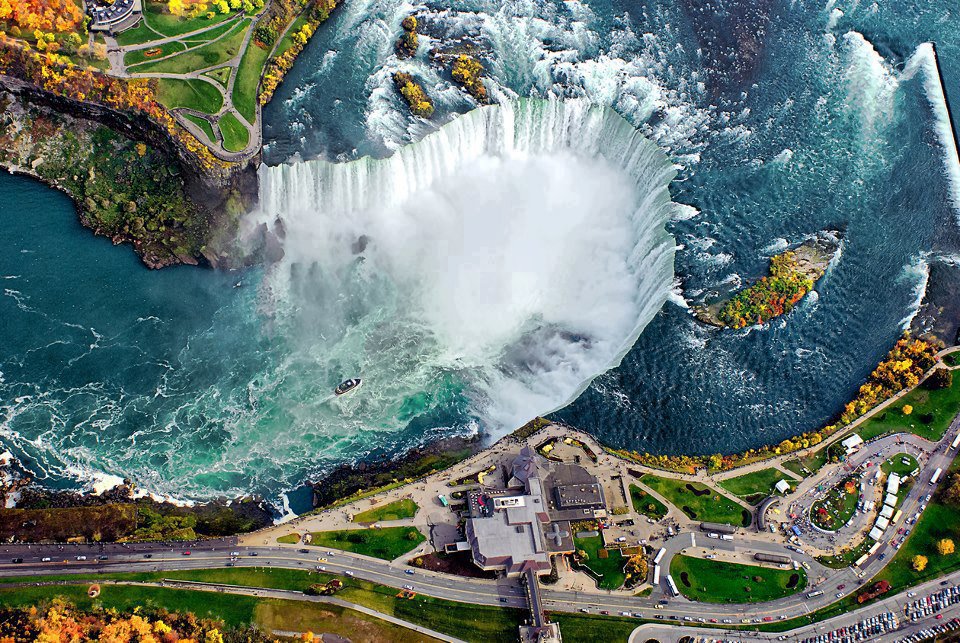
The image is a high-angle, aerial photograph of Niagara Falls. The view is almost directly overhead, capturing a dramatic, sweeping vista. The dominant feature is the immense volume of water cascading over the horseshoe-shaped falls, creating a foamy white torrent that contrasts sharply with the deep turquoise/teal color of the Niagara River.
On either side of the falls are banks densely covered in trees, exhibiting autumnal foliage—yellows, oranges, and reds. The surrounding landscape is extensively developed with infrastructure: roads, parking lots, buildings, and manicured green spaces, including walkways and landscaping around the observation points. These suggest a deliberate and considerable human intervention in the natural environment. Small boats, dwarfed by the scale of the falls, are visible in the turbulent waters near the base, providing a sense of scale. The image has good clarity and appears to be well-lit, showcasing a beautiful but heavily managed natural wonder.
Foucauldian Genealogical Discourse Analysis
Niagara Falls is not simply a natural landmark; it's a site steeped in discourses of spectacle, tourism, and power. A Foucauldian analysis would trace the historical construction of Niagara Falls as meaningful through various power/knowledge formations.
- Discipline & Panopticism: The carefully constructed infrastructure surrounding the falls (roads, parking, viewing platforms) functions as a disciplinary space. It channels and controls movement, guiding visitors to designated points for viewing, thereby managing the experience of the "natural." The control of the viewing experience is a subtle form of power.
- The 'Nature' Discourse: The very concept of "nature" as something to be experienced and consumed is not natural but a product of specific historical discourses. In the 19th and 20th centuries, Niagara Falls was framed as sublime spectacle, a place for romantic contemplation, and a symbol of American power and industrial progress. This framing continues today, driving tourism.
- Expert Knowledge & Control: The development of hydroelectric power at Niagara Falls, though seemingly harnessing nature, is an assertion of power over nature. Engineers, scientists, and corporations have shaped the river’s flow and established control over its energy. The infrastructure isn’t simply about viewing; it's about extracting resources.
- Genealogy: Tracing the history of how Niagara Falls has been defined reveals shifts in power relations. From Indigenous understandings of the falls as a sacred space to its commercialization as a tourist attraction and industrial resource, each era brings a different framework of meaning.
Critical Theory (specifically Frankfurt School)
The image of Niagara Falls lends itself to a Critical Theory analysis, particularly through the lens of the "culture industry" as theorized by Adorno and Horkheimer.
- Commodification of the Sublime: The falls, once a source of awe and potentially genuine experience, has been thoroughly integrated into the commodified world of tourism. The carefully managed experience – the curated views, the gift shops, the hotels – strips away any possibility of authentic encounter with the sublime.
- The Spectacle and Mass Deception: The image is the spectacle. It's a carefully constructed visual experience designed to distract and pacify. The scale of the falls is used to evoke a sense of wonder, but this wonder is ultimately empty because it's mediated through commercial interests.
- False Consciousness: Visitors are encouraged to consume the image of the falls—through photographs, souvenirs, and experiences—rather than engaging with the underlying ecological and socio-political realities of the region. This contributes to a kind of false consciousness, where the real power dynamics remain obscured.
- Standardization & Rationalization: The manicured landscapes and standardized tourist facilities around the falls exemplify the rationalization of nature. Everything is designed for efficiency and predictability, suppressing any sense of wildness or unpredictability.
Marxist Conflict Theory
From a Marxist perspective, the image of Niagara Falls illustrates the inherent conflicts between capital, labor, and the environment.
- Exploitation of Natural Resources: The development of hydroelectric power at Niagara Falls exemplifies the capitalist drive to exploit natural resources for profit. The river’s flow is controlled and diverted, and its energy is commodified and sold, often with little regard for ecological consequences.
- Class Division in Access: While the image presents a seemingly democratized view of the falls, access to the experience is often stratified by class. The costs of travel, accommodation, and tourist activities limit access for lower-income individuals.
- Labor and Infrastructure: The construction and maintenance of the infrastructure surrounding the falls require significant labor, often performed by workers who are subjected to exploitative conditions. The image obscures the hidden labor that makes the tourist experience possible.
- Commodification of Beauty: The falls itself, though natural, has become a commodity—a symbol to be sold to tourists. This commodification distorts our relationship with nature, transforming it into a source of profit rather than a source of intrinsic value.
Notes on Absence
It's worth noting what’s absent from the image. There is little-to-no visible evidence of the Indigenous communities who have a long history with this land and who were displaced by the development of the falls as a tourist destination. Also, the image doesn't show the industrial side of the hydroelectric facilities, hiding the environmental impact of energy production. The image is a curated, sanitized vision that actively obscures complex realities.
Let me know if you'd like me to elaborate on any of these points or explore other theoretical frameworks.
simple-description (llama3.2-vision)
The meme is an image of a famous waterfall, likely Niagara Falls, but with the water turned into a giant toilet bowl. The image is captioned "When you finally get to the bathroom after a 12-hour drive".
tesseract-ocr
TS ie % TA ae he ea E pee ae A® gg. Ae ee el tae <= Zi Ag po Sites. wa. fe Pe a 2 ae eee dae ee ay é Moe ie tl. a j Fe sige ee alee. if a , SS a Ss La oa r ' pee ee ae a oe geo . ean ey eet Ae oy Gs me shi ae. a 4 re Pre teen ae Fk ee 6 oe pS eR a PG See oe. ae oe a ce ee ee EO SER Miia oe eee es as Cc NO Ss kee a ae ee Ee eseas ee ae ee ee Pel AN ie 4 we ae ee ee ee ee ROLY fe ee el, r eS ay ® ay ce be : a aes Re i! tp ay OP Sea ge eae rey = See