First Seen
2023-05-10T21:03:43+00:00
simple-description (qwen3.5_2b-q8_0)
The robot standing before the map on the table is attempting to "pape" it, which is a surreal act where a robot tries to fix a small hole in its ego. In the context of the meme, the robot is depicted as the subject trying to repair a physical object or psyche. The image captures this moment amidst clutter, with visible text such as "TRANSPOSITIVE UNIT" on the wall and a bottle of "Jack Daniel's Old Fashioned Whiskey" sitting on the desk.
simple-description (llama3.2-vision_11b)
The meme is a picture of a "Pope" emoji, which is a humorous representation of a person in a high-ranking religious position. The meme is likely referencing a joke or irony about the Pope's role or behavior, but without seeing the image, I can only speculate. The text in the image is likely a witty remark or a quote from a Pope, but I don't have access to the image to provide a more detailed explanation.
detailed-analysis (gemma3-27b-vision)
Okay, let's break down this image through various theoretical lenses. Here's an analysis, section by section, applying the requested frameworks where relevant.
Visual Description
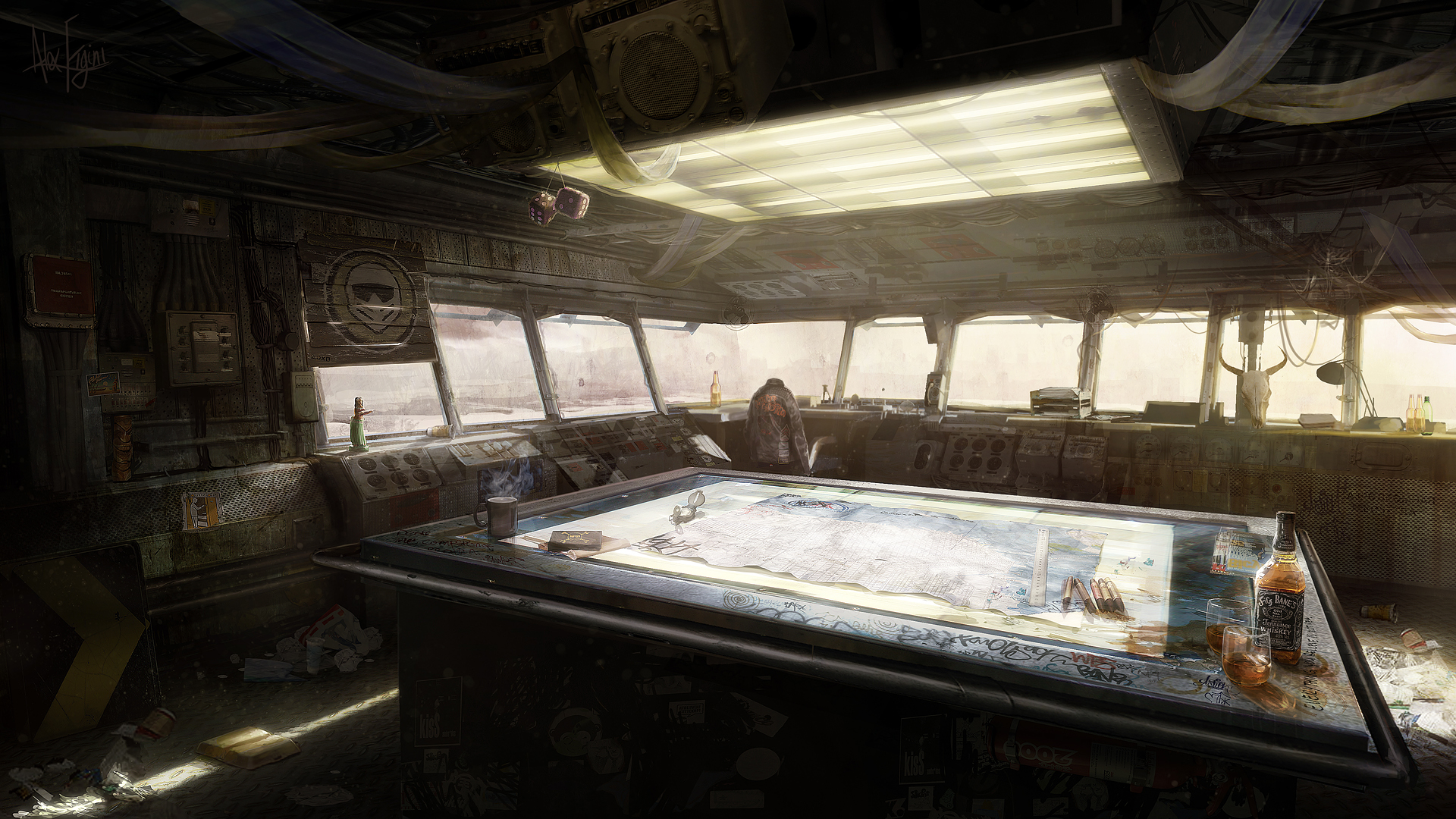
The image depicts the bridge of a large, possibly naval or cargo ship, heavily weathered and showing signs of disrepair. The scene is dominated by metal surfaces, rusted and textured, creating a claustrophobic and industrial atmosphere. Large windows offer a view of a misty, overcast seascape – a hazy horizon line blends with the pale, gray sky.
- Composition: The angle is a low-angle, wide shot, emphasizing the height and scale of the space. The bridge is cluttered with equipment, charts, and personal items. A large illuminated plotting table dominates the foreground, covered with a map and small model ships. A figure (presumably a person) in a dark coat stands near the window, seemingly observing the sea.
- Lighting: The lighting is a mix of stark, fluorescent illumination from overhead lights and the muted gray light from the outside. Shadows are deep and dramatic, highlighting the textures and the sense of age.
- Color Palette: The color palette is overwhelmingly muted – grays, browns, and dark blues. The only significant color comes from the warm tones of the wooden map table and a bottle on the table. This limited palette enhances the somber mood.
- Mood: The overall mood is melancholic, isolated, and slightly ominous. The combination of decay, fog, and emptiness creates a sense of abandoned purpose or a troubled voyage.
Foucauldian Genealogical Discourse Analysis
This image is ripe for Foucauldian analysis. The ship's bridge, as a site of power and control, embodies a network of discourses.
- Discipline & Surveillance: The bridge is inherently a space of panoptic control. It’s designed for observing and directing – surveillance of the sea, the crew, and the ship's trajectory. The layout, the instrumentation, and the elevated position of the bridge all facilitate this power dynamic. Even in its state of disrepair, the memory of this control is palpable.
- Knowledge/Power: The navigational charts, instruments, and communication systems represent specific bodies of knowledge. However, this knowledge isn't neutral. It’s historically constructed and serves particular power structures – national interests, trade routes, military strategies. The faded charts speak to changing knowledge, obsolete techniques, or contested histories of exploration and control.
- Genealogy of Naval Power: Examining the historical development of this bridge reveals a genealogy of naval technology, maritime law, colonial expansion, and the assertion of territorial control. The image invites a questioning of how this space came to be, what specific power relations it enforced, and who benefited from them. The decay suggests the erosion of this power, or a shift in its application.
Critical Theory
This image evokes themes present in Critical Theory, especially concerning alienation, rationality, and the failure of progress.
- Rationalization & Disenchantment: The ship’s bridge is a product of rational, bureaucratic organization, designed for efficiency and control. Yet, its derelict state suggests the failure of this rationality. The rusted metal and decaying equipment symbolize the limitations of technological “progress” and the inevitable entropy that undermines all systems.
- Alienation: The figure on the bridge, if one considers them alone, exemplifies alienation. They are isolated, surrounded by the tools of command but seemingly disconnected from purpose. The scene speaks to the dehumanizing effects of technological and bureaucratic systems. The figure isn't connected to others, and seems lost in thought.
- Instrumental Reason: The bridge has been constructed for a specific purpose (navigation, control, etc.). It embodies instrumental reason – the use of logic and technology to achieve a defined goal. The decay, however, exposes the limitations of solely focusing on means to an end. What was the end? Was it ever achieved?
Marxist Conflict Theory
From a Marxist perspective, this image speaks to the inherent conflicts within a capitalist system, even in a seemingly “neutral” setting like a ship’s bridge.
- Means of Production & Control: The ship itself, and the bridge as its control center, represent the means of production in a maritime context. Control over this technology and the resources it accesses generates wealth and power. The image could be interpreted as a scene of post-conflict or the abandonment of a failing venture.
- Class & Labor: The bridge is a space of command, occupied by officers and navigators (the ruling class within the ship's hierarchy). The unseen crew, who perform the manual labor of sailing the ship, are absent. The image implicitly highlights the power imbalance between those who direct and those who perform the work. The decaying state could symbolize the exploitation of labor.
- Crisis of Capitalism: The state of decay could represent a crisis within the capitalist system – perhaps a failed shipping venture, a decline in maritime trade, or the obsolescence of a particular technology. It evokes the idea that even seemingly stable systems are subject to contradiction and eventual collapse.
Postmodernism
The image embodies several key tenets of postmodern thought.
- Deconstruction of Grand Narratives: The ship and its traditional purpose (exploration, trade, military power) represent a "grand narrative" of progress and dominance. The decay, however, undermines this narrative. It suggests that such narratives are not monolithic or inevitable, but are historically contingent and subject to fragmentation.
- Simulacra & Hyperreality: The meticulously detailed instruments and maps could be seen as simulacra – copies that have become divorced from the "real" objects they represent. In a hyperreal context, the map becomes more important than the territory, the image of control more powerful than actual control.
- Loss of Meaning & Fragmentation: The dilapidated state of the bridge evokes a sense of loss of meaning and fragmentation. The image lacks a clear narrative or purpose, inviting viewers to construct their own interpretations. It represents a world where traditional values and structures have broken down.
Queer Feminist Intersectional Analysis
This is the most challenging application, as the image doesn't directly depict gender or sexuality. However, applying a queer feminist lens reveals potential subtexts.
- Space & Control: The bridge, traditionally a masculine space of command and authority, can be examined as a site of patriarchal power. The absence of visibly feminine presence reinforces this dynamic. A queer reading could critique the exclusionary nature of such spaces.
- Intersection of Power: The ship’s voyage might have involved colonial trade or military actions, which were often intertwined with the subjugation of women and marginalized groups. The bridge, as the control center, becomes implicated in these intersecting systems of oppression.
- Disruption & Subversion: The state of decay and abandonment can be interpreted as a form of disruption to the established order. A queer feminist reading might see this as a metaphorical “wrecking” of patriarchal structures, creating space for alternative possibilities. The absence of active control could be a moment of liberation.
I've tried to provide a comprehensive analysis, acknowledging the limitations of interpreting visual imagery through abstract theoretical frameworks. Let me know if you'd like me to elaborate on any of these points or explore additional theoretical lenses!
simple-description (llama3.2-vision)
This meme is an image of a dimly lit, abandoned control room with a large, worn-out control panel in the center. The text "I'm not mad, I'm just disappointed" appears on the panel, which is likely a reference to a common phrase used to express frustration or disillusionment. The overall atmosphere of the image is one of neglect and decay, which adds to the sense of disappointment and disillusionment.
tesseract-ocr
a —_— N a — = ee ies ————————r— eee > SS SS ee —— SSeS , i a \. \ fr. k is G = 5 i \ | n a \ A = Po a, : ee ———l a A. . : a oe ae A UY =. ————_ = = ct as N : = Se — : ANS a = Sr sae = —)2>7 \i — a “a, fl a c= S i es a ee ~ |e