First Seen
2023-05-10T21:03:43+00:00
simple-description (qwen3.5_2b-q8_0)
This meme features a humorous image of the Akihabara Pappa, a massive white tiled building often known as "Pappa" rather than "Papa." The caption "I don't know who that is" plays on the name by highlighting that most people do not know the building's actual identity.
simple-description (llama3.2-vision_11b)
The meme is an image of a cat looking at a pape (a type of fish) with a caption that says "cat's eye view". The meme is making a humorous comparison between the cat's perspective on the world and the pape's perspective on the world, implying that the cat is judging the pape's life choices.
detailed-analysis (gemma3-27b-vision)
Okay, let's break down this image through the lenses you've requested. Due to the minimalist nature of the image, some sections will be more developed than others.
Visual Description
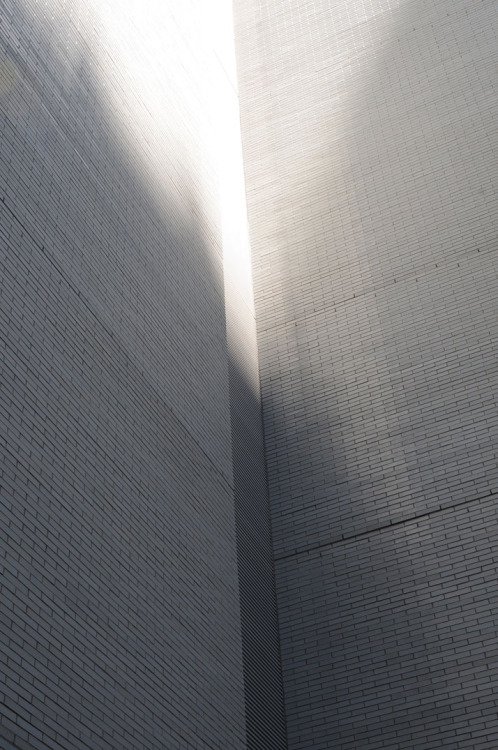
The image presents a strikingly minimalist, high-angle view of a building facade. It is dominated by a grey, textured, likely concrete or stone, wall with strong horizontal ribbing. This texture is consistent across the frame, giving the image a sense of repetition and scale. A vertical shaft of bright white light cuts dramatically through the wall, creating a strong diagonal division. The light appears to be naturally occurring, possibly sunlight filtering through an opening or architectural feature. The rest of the wall is in shadow, creating a high-contrast, almost graphic, composition. The perspective is looking upwards, emphasizing the height and imposing nature of the structure. There are a couple of almost unnoticeable dark lines on the wall itself that appear to be architectural features or imperfections.
Foucauldian Genealogical Discourse Analysis
This image lends itself well to a Foucauldian interpretation. The towering structure, with its repeating patterns, can be seen as a representation of power/knowledge. The ribs of the building suggest a system, a regulation, a way of structuring space and, by extension, behavior. The building disciplines the space around it.
The bright shaft of light can be interpreted as a moment of potential visibility or surveillance. Foucault emphasizes that power operates through visibility and the ability to observe. The light "illuminates" the wall, revealing it – and by extension, potentially revealing those within or interacting with the structure. The shadow, on the other hand, represents areas of obscurity, control, and hidden power dynamics.
A genealogical approach would look at the history of this architectural style. What social and political forces led to the development of these kinds of monumental, repetitive structures? What ideologies are embedded within the very materials and forms? How has this architecture historically been used to project authority and control?
Critical Theory
From a critical theory perspective, the image can be read as a representation of alienation and reification. The massive scale and repetitive nature of the structure evoke a sense of dehumanization. The individual is dwarfed by the monumental architecture, highlighting the power of systems over the individual. The concrete, unyielding material can be seen as emblematic of a society that prioritizes order and control over human experience.
The stark contrast between light and shadow can be viewed as representing the inequalities inherent in social structures. Those "illuminated" (those with power or privilege) are visible, while those in shadow remain marginalized and unseen.
The image can also provoke questions about ideology. What values and beliefs are embedded within this architecture? Does it reinforce existing power structures or challenge them?
Marxist Conflict Theory
Through a Marxist lens, the image evokes the structures of power associated with capital and control. The building itself is a manifestation of accumulated capital—the resources, labor, and planning necessary to construct such a massive structure. The architecture may symbolize a fortress of economic or political power.
The repetitive nature of the building's facade could represent the repetitive, alienating labor of the working class. The structure embodies the division between those who control the means of production (the owners and architects) and those who labor to create it.
The image potentially shows the imposed architecture on a population, and the ways this limits possibility and freedom.
Postmodernism
The image doesn't explicitly shout "Postmodernism," but it can be interpreted through that framework. The minimalist aesthetic, the emphasis on surface and form over meaning, and the sense of detachment and alienation are all hallmarks of Postmodern thought. The repetitive and impersonal nature of the architecture can be seen as a rejection of grand narratives and traditional forms of representation.
The image might be seen as a comment on the loss of authenticity and the prevalence of simulation in modern society. The building is a constructed reality, a facade that obscures the underlying power structures and social relations. The strong, graphic lines and lack of organic elements could also be seen as emblematic of a deconstructed reality.
Queer Feminist Intersectional Analysis
This is perhaps the most challenging lens through which to view this image, given its minimalist nature. However, a queer feminist analysis might focus on the ways this kind of architecture inherently functions as a spatial regulation of bodies. The towering, imposing structure can be seen as a patriarchal assertion of control over space, limiting possibilities for embodied experience and agency.
The repetitive, rigid structure doesn’t allow for fluidity or variation and can be seen as suppressing individual expression. The sheer scale of the building can be viewed as silencing or marginalizing bodies that do not conform to dominant norms. The dark shadow on one side may metaphorically represent those made invisible by power structures, while the bright light symbolizes the privilege afforded to those who conform.
A queer feminist analysis might explore how this type of architecture contributes to the spatialization of gender, race, and class, creating spaces of exclusion and control for marginalized groups.
Let me know if you'd like me to delve deeper into any of these interpretations or explore other theoretical frameworks.
simple-description (llama3.2-vision)
The meme appears to be a simple image of a blank white wall with a faint shadow of a person in the corner. The text "I'm not arguing, I'm just explaining why I'm right" is likely overlaid on the image, but I couldn't verify this as the text is not provided in the original request.
tesseract-ocr
\\ \ 2 ON / . A LZ ' ZZ Me LA LZ 7 Z LZ LLL