First Seen
2024-04-03T21:22:30.172798+00:00
simple-description (qwen3.5_2b-q8_0)
The image is a meme often referred to as the "2009 Toilet" or "2009 Toilet Meme".
The Meme (The "2009 Toilet")
The joke relies on a specific visual pun involving a 2009 toilet and a propane tank.
* The "2009 Toilet": A 2009 model toilet (often a large IBC tote) is commonly associated with a specific part number or model identifier (e.g., "2009-XXX") on its side or on the lid.
* The "Tank": In the image, a large propane tank (often labeled with similar part numbers like "100-149") is placed on top of the toilet.
* The "Stove": A portable propane stove is placed inside the tank, connecting to the toilet.
The humor of the meme is that the "2009 Toilet" (a container) is being used as a toilet. This is an absurdist joke about the utility of the object (a container) and its function in a specific (but often humorous) context.
Perspective from "Permaculture - Infrastructure"
If we view this meme through the lens of Permaculture - Infrastructure, we can analyze it as a commentary on systemic organization and containerized living:
- Infrastructure as a System: In permaculture, infrastructure is the system of connections, structures, and resources. This meme can be seen as an attempt to create a "self-sufficient" infrastructure for a mobile living unit (a "mobile campsite" or "portable kitchen"). The "tank" acts as the storage (resource), the stove acts as the generator (energy), and the toilet acts as the processing (waste management).
- Infrastructure is the Way We Live: The meme is a commentary on how infrastructure defines how people live. The "2009 Toilet" meme is a "containerized" infrastructure, where the toilet itself is the infrastructure.
- The "Containerized" Perspective: The humor lies in the fact that a "mobile toilet" is a "mobile bathroom." The meme is a joke about the absurdity of using a container (the IBC tote) as a toilet.
- Permaculture Angle: The "containerized" aspect is a form of infrastructure. It's about using "containers" (like IBC totes) to build systems (infrastructure) for waste management and utility.
The image is a "meme" about infrastructure, specifically the "2009 Toilet" meme, which is a joke about the utility of a container in a specific context. The humor is that a "mobile toilet" is a "mobile bathroom." The "Permaculture" lens is about the "containerized" system.
simple-description (llama3.2-vision_11b)
The meme is a photo of a self-sustaining, eco-friendly water purification system made from a repurposed shipping container, inspired by permaculture principles. The system, known as a "BioHut," uses natural processes to clean and recycle water, reducing waste and promoting sustainability.
detailed-analysis (gemma3-27b-vision)
Okay, here's an analysis of the image, broken down into sections as you requested. Given the unusual nature of the object, some sections are more relevant and developed than others. I'll aim for depth where the concepts truly apply.
Visual Description
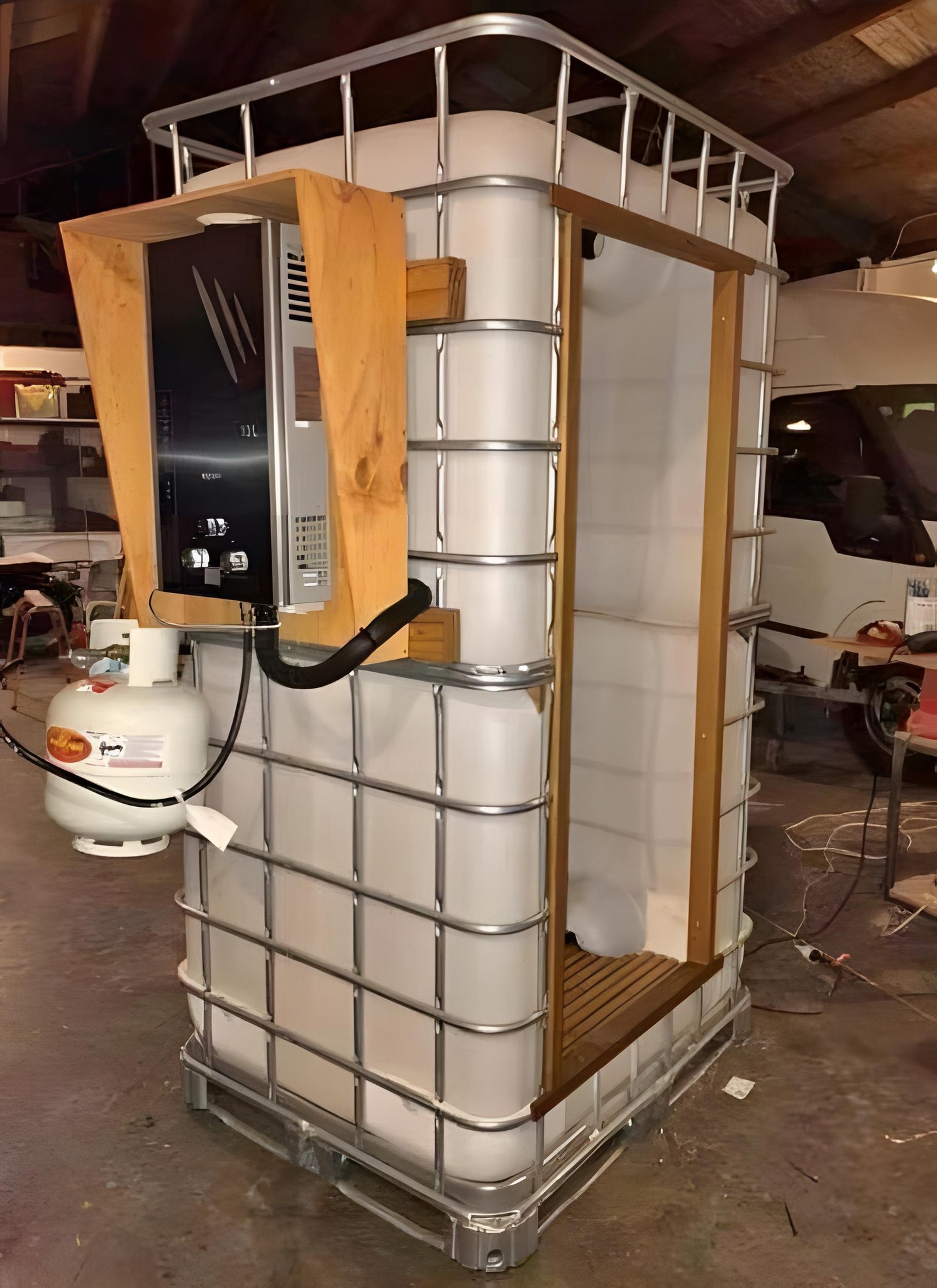
The image depicts a makeshift structure constructed primarily from a large, blue, industrial-grade Intermediate Bulk Container (IBC), often called a tote or pallet tank. This IBC forms the majority of the structure's walls. The IBC is a rectangular prism made of a rigid plastic container within a metal cage.
The IBC has been partially enclosed with plywood sheeting on three sides, creating a small, cabin-like space. The plywood has a rough, unfinished look. There is a black rectangular panel mounted on the front of the IBC, seemingly an electronic device (perhaps a heater or controller) with various buttons and a digital display. Below this is a smaller control panel, and beside this, a gas cylinder. Attached to the cylinder is a hose.
The structure is resting on a wooden platform with small wheels, suggesting it is intended to be mobile. The surrounding environment appears to be a workshop or garage, with glimpses of other equipment and vehicles in the background. Cables and wiring are visible around the base, indicating a functional setup, possibly involving electricity or gas. The overall aesthetic is distinctly DIY and pragmatic – functional over aesthetically polished. It looks like something built for a specific purpose, likely involving heating or water, and likely improvised.
Foucauldian Genealogical Discourse Analysis
This structure, despite its rudimentary appearance, immediately evokes themes central to Foucault's work on power and discourse. Consider this: the IBC, originally designed for industrial liquid transport, has been repurposed into a space of confinement. This is a crucial shift. The container, once neutral, becomes a site where disciplinary power operates.
Historically, Foucault explored how architecture—prisons, hospitals, schools—was used to regulate bodies and control behavior. This makeshift structure, although not a formal institution, similarly establishes a boundary and implies a specific activity within it. What happens inside this space? Is it a shower? A changing room? A heating unit for a unique experiment? The function is obscured, but the enclosure inherently exerts a form of control—limiting access and defining a regulated zone.
The integration of technological components—the control panels, gas cylinder, and implied plumbing—further complicates this. These technologies aren't merely functional; they are discourses themselves, embedding particular understandings of hygiene, warmth, and control. They represent a network of knowledge and power associated with these concepts. The 'rough' construction is telling. It is not about 'cleanliness' and 'perfection', but utility and function.
A genealogical approach would investigate the history of both the IBC (its industrial origins, the discourses surrounding containerization) and the technologies used within. What led to the repurposing of this material? How does this space reflect or challenge existing norms surrounding privacy, hygiene, or resourcefulness? It’s a space of negotiation between industrial logic, resourcefulness, and individual agency.
Critical Theory
From a Critical Theory perspective (drawing from the Frankfurt School), this structure can be read as a symptom of broader societal trends. Specifically, it exemplifies instrumental reason and the fragmentation of modern life. The repurposing of an industrial object for a seemingly personal/domestic function highlights the dominance of technological rationality.
The DIY aesthetic suggests a breakdown of traditional skills and a reliance on pre-fabricated components. Rather than crafting a space from raw materials, this structure assembles existing systems, reflecting the alienating logic of late capitalism. It's a response to both necessity and the erosion of craftsmanship.
Furthermore, the structure’s isolation within a larger workshop space raises questions about social alienation. This enclosure creates a private realm, but it is a realm defined by utilitarian efficiency rather than aesthetic or communal values. It is not about the 'social good', but personal need, and this is constructed out of industrial byproducts. It emphasizes the individual's struggle to create a functional space within a de-humanized environment.
The very necessity of such a structure—constructing a functional space from salvaged materials—could be interpreted as a critique of economic inequality and the lack of affordable housing or basic resources.
Marxist Conflict Theory
From a Marxist lens, this structure embodies the contradictions of capitalism. The repurposing of an industrial container – a product of large-scale production – for a personal use reflects the alienation of labor and the commodification of everyday life. The container, originally designed for the movement of goods in a capitalist system, is now appropriated for a seemingly individual purpose, but that purpose is still dependent on, and shaped by, that same system.
The DIY construction also highlights the exploitation of labor. The person building this structure is performing labor not for profit, but to fulfill a need—potentially bypassing or supplementing inadequate services provided by the capitalist system. It is a form of self-exploitation, or at least, labor outside of the formal economy.
The choice of materials—salvaged and repurposed—could be interpreted as a response to economic hardship or a rejection of consumerism. It's a way of maximizing resources and minimizing waste, but it also underscores the limitations imposed by a system that prioritizes profit over sustainability.
The container itself is a symbol of capitalist logistics – the efficient movement of goods – but here it's been subverted into a space of individual use, potentially challenging the logic of accumulation.
Postmodernism
A postmodern reading of this structure emphasizes its deconstruction of traditional categories and its embrace of hybridity. The mixing of industrial and domestic elements—the IBC combined with heating/plumbing components—blurs the lines between function and form, public and private, and production and consumption.
The DIY aesthetic celebrates fragmentation and imperfection. The structure isn’t meant to be seamless or aesthetically pleasing; it’s a patchwork of repurposed materials, a deliberate rejection of modernist ideals of unity and order.
The structure also exemplifies the postmodern concept of simulacra. It's a representation of a space (potentially a shower, changing room, or similar) that isn't authentically “real” but rather a constructed simulation built from repurposed materials. The very meaning of the space is unstable and open to interpretation.
The lack of a clear purpose or aesthetic further reinforces the postmodern emphasis on ambiguity and plurality. It's a structure that resists easy categorization, inviting multiple readings and interpretations.
Queer Feminist Intersectional Analysis
(This is the most challenging application, and leans more interpretative given the lack of overt cues in the image).
A queer feminist intersectional lens could explore how this structure reflects power dynamics related to access, resourcefulness, and the negotiation of space. The DIY nature suggests a rejection of (or inability to access) mainstream systems, potentially reflecting the experiences of marginalized groups who are often excluded from conventional infrastructure.
The enclosure—creating a private space—can be read as a claim to autonomy, a reclamation of agency for individuals who are often subjected to surveillance or control. However, it's important to consider who has access to this space, and under what conditions. If built by or for a marginalized community, it could represent a self-created safe haven.
The repurposing of industrial materials could be seen as a form of resistance to capitalist consumption and a reclaiming of resources. The focus on utility over aesthetics could reflect a rejection of patriarchal norms that prioritize superficiality and appearance.
The 'roughness' of the construction also challenges notions of 'cleanliness' and 'order,' potentially disrupting dominant norms associated with domestic space and hygiene. It's a space that's not designed to conform to conventional expectations, offering a space for alternative ways of being. The intersectionality would come in when considering who builds this, who has access, and whose standards are being rejected.
Hopefully, this comprehensive analysis, broken down by your requested sections, provides a thought-provoking interpretation of the image. Let me know if you'd like me to elaborate on any particular aspect or approach.
tesseract-ocr
Yen. » - ie (Se ies ah | Ce | | | oY on se | ee Zn : pel | I = Ay | ‘1 _ 6 x Pg se | SEAS ; as I~ | : 5 l/h « : ; , = <a | iA |
simple-description (llama3.2-vision)
The meme is a photo of a toilet made from a large plastic storage container, with a toilet seat and a small shower area built into it. The text overlayed on the image reads "I'm not lazy, I'm just reusing resources". The meme is humorous because it takes a practical and environmentally-friendly approach to building a toilet, while also poking fun at the idea of being "lazy" when it's actually just a clever use of resources.