First Seen
2023-05-25T22:52:10+00:00
simple-description (qwen3.5_2b-q8_0)
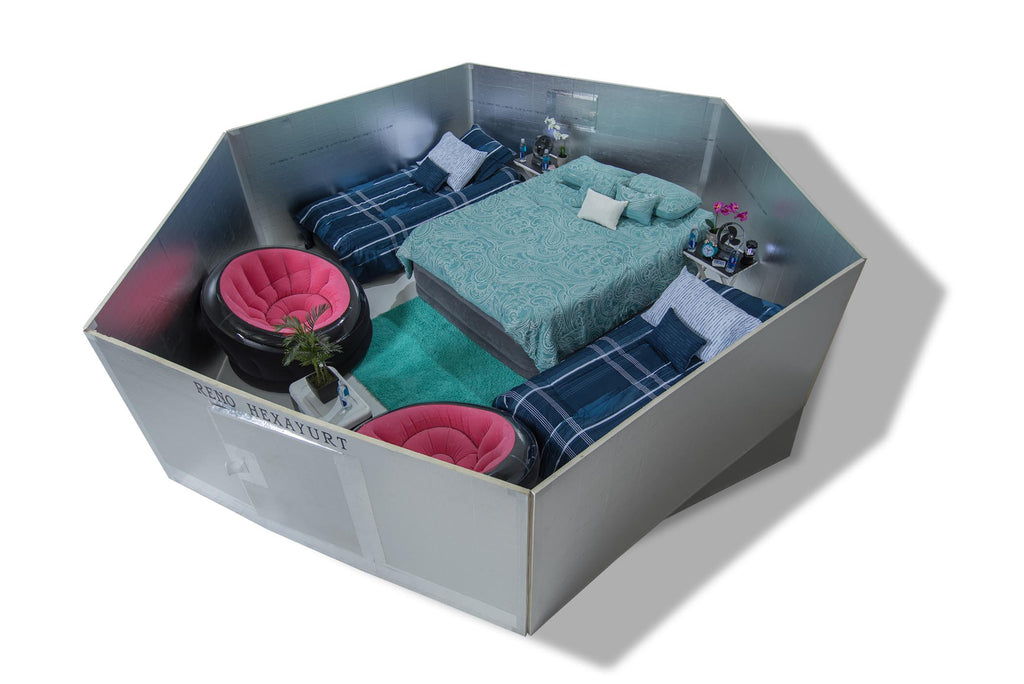
This image depicts a "Reno" meme, a popular internet humor format featuring a ridiculous or nonsensical scenario where a common object is placed in a strange setting. Here, a bedroom is humorously arranged inside a hexagonal box, suggesting a playful take on a shelter or a very unusual living space. The text "RENO HEXAYURT" is visible on the side of the box, which labels this specific version of the meme known for its exaggerated and funny imagery.
simple-description (llama3.2-vision_11b)
The meme is an image of a futuristic, sustainable, and cozy shelter, often referred to as a "Permaculture" shelter. The image depicts a small, eco-friendly dwelling made from natural and recycled materials, with a focus on self-sufficiency and minimal environmental impact.
detailed-analysis (gemma3-27b-vision)
Okay, let's analyze the image you provided, broken down into the requested sections. It's a fascinating and potentially layered piece, so the analyses will lean towards interpretation based on the visual cues.
Visual Description
The image depicts a miniature, hexagonally-shaped room or diorama housed within a larger box. The room is highly stylized, appearing to be a dollhouse-like representation of a living space. Key features include:
- Color Palette: The room is dominated by cool tones – turquoise/teal rugs and bedding, with navy blue accents on the furniture. There are contrasting accents of bright pink in the chairs.
- Room Layout: The space is divided into sections, suggesting separate areas for living/sleeping and a potential study.
- Furniture: Miniature furniture is present, including a bed, sofas, chairs, and a small desk/dressing table with a mirror.
- Materials: The diorama appears to be constructed from cardboard or similar material. The overall aesthetic is stylized and not attempting photorealism.
- Text: There is text on the side of the box/diorama that appears to read "RENO RE HAYYURT".
- Scale/Perspective: The high-angle, slightly above perspective emphasizes the small scale of the interior and its containment within the box. It almost feels as if we are observing a contained world.
Foucauldian Genealogical Discourse Analysis
The diorama can be interpreted through a Foucauldian lens as representing the construction of domestic space as a site of power/knowledge.
- Discipline and Panopticism: The diorama’s containment within a box suggests a level of control and containment. The layout, while not perfectly visible, implies organization and categorization, reflecting the ways in which domestic spaces are designed to discipline behavior. The limited and controlled view we have of the interior mirrors the panoptic principle – the idea of being constantly observed and self-regulating.
- Genealogy of the Modern Interior: The diorama suggests a particular genealogy of the modern interior: the idea of the home as a safe haven, a private retreat, and a reflection of status. The furnishings and layout point to the historical development of domestic norms and expectations.
- Power/Knowledge in Design: The choices made in the design of the miniature space (color palette, furniture arrangement, etc.) are not neutral. They reflect a specific set of power relations and knowledge systems that shape our understanding of "home," "comfort," and "beauty."
Critical Theory
Through a critical theoretical lens, the diorama raises questions about representation, ideology, and the constructed nature of reality.
- The Miniature as Metaphor: The miniaturization of the domestic space can be seen as a metaphor for the ways in which everyday life is often reduced and commodified. The diorama presents a simplified version of reality, raising questions about what is included and excluded.
- Ideology and the Domestic Sphere: The space can be viewed as embodying dominant ideologies about family, gender roles, and lifestyle. The presentation of the room, with its furniture and arrangement, subtly reinforces certain values and beliefs.
- Critique of Material Culture: The diorama invites a critique of material culture and the ways in which we define ourselves through possessions. The presence of furniture and décor highlights the importance we place on these objects in creating a sense of identity and belonging.
Marxist Conflict Theory
From a Marxist perspective, the diorama can be seen as representing the material conditions of life and the inequalities inherent in capitalist society.
- Commodification of the Home: The diorama, with its meticulously furnished interior, embodies the commodification of the home. The objects within the space are not simply functional; they are symbols of status and wealth, representing a particular level of economic privilege.
- Class and Domestic Space: The arrangement of the space may suggest a particular class position. The quality and design of the furniture, as well as the overall aesthetic, may reflect the material circumstances of the inhabitants.
- Alienation: While the space appears "comfortable" and "desirable", it can also be seen as representing a form of alienation. The focus on material possessions and the creation of a carefully curated environment may mask a deeper sense of social isolation and disconnect.
Postmodernism
The diorama displays several characteristics that align with postmodern concepts.
- Simulacra and Simulation: The miniature room can be interpreted as a simulacrum – a copy without an original. It is a representation of a representation, blurring the boundaries between reality and illusion.
- Deconstruction of "Home": The diorama subverts the traditional idea of “home” as a stable and authentic space. By presenting it in a miniature, contained form, it raises questions about its meaning and function.
- Playfulness and Irony: The diorama’s stylized aesthetic and miniature scale suggest a degree of playfulness and irony. It invites the viewer to question the seriousness with which we often approach the idea of “home.”
Queer Feminist Intersectional Analysis
This diorama, while seemingly simple, can be interpreted through an intersectional lens.
- Domesticity and Gender Roles: Historically, the domestic sphere has been heavily associated with women. The presentation of this space can be interpreted as a comment on the ways in which gender roles are constructed and enforced within the home. Is it a space of confinement or empowerment?
- Queering the Space: The layout and furnishings may hint at alternative family structures or relationships. The aesthetic could be seen as challenging traditional notions of "home" and family, offering a vision of domesticity that is more inclusive and fluid.
- Intersection of Class and Gender: The material conditions of the space (as indicated by the furnishings) intersect with gender roles. The level of privilege associated with the space may affect the experiences of those who inhabit it, and these experiences may be different for different genders.
- Containment and Restriction: A box is a metaphor for containment. Considering the historical restrictions placed on women and queer people, the box can be symbolic of societal constraints.
Note: The above analyses are interpretive, and the meaning of the diorama is open to individual interpretation. The artist's intention would be essential to fully understand the work. I hope this detailed breakdown helps you explore the complexities of this fascinating image. Let me know if you have any questions or would like me to elaborate on any specific point!
simple-description (llama3.2-vision)
The meme is a picture of a room with a bed, two chairs, and a small table in the center, but the entire room is a giant, inflated, inflatable "room" (like a large, plastic bubble) that's meant to be a "bed in a box" type of situation. The text "I can sleep in a room the size of a car" appears on the image.
tesseract-ocr
L : =. @ . “ae oy SS ' Hf