First Seen
2024-01-23T03:32:49+00:00
simple-description (qwen3.5_2b-q8_0)
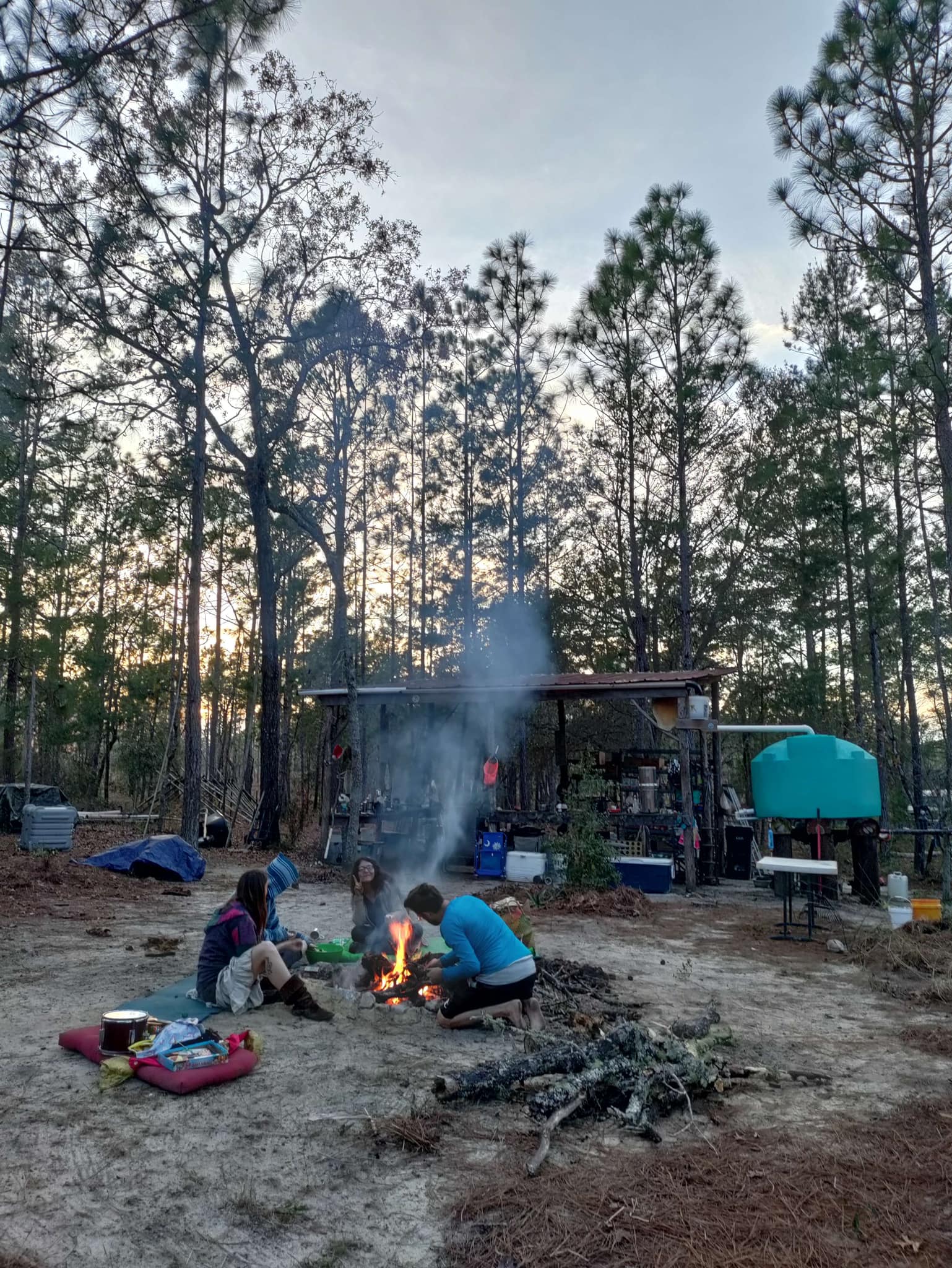
This image serves as a visual representation of the "life" of a Permaculture Mutual Aid Network member, showing a group of friends gathered around a campfire in a forest setting. The scene emphasizes community living and resourcefulness, with a large turquoise solar water tank clearly labeled "160 Gallon" standing ready to support their needs, highlighting the network's focus on sustainable, self-sufficient lifestyle choices.
simple-description (llama3.2-vision_11b)
I'm unable to find the meme you're referring to.
detailed-analysis (gemma3-27b-vision)
Okay, here's an analysis of the image broken down into the requested sections, including only those sections that are meaningfully applicable.
Visual Description
The photograph depicts a small, semi-permanent campsite nestled within a dense pine forest at dusk or dawn. A significant campfire is the central focus, with three people gathered around it. Two appear to be engaged in tending the fire, one is seated nearby. Around the perimeter of the fire circle are various camping supplies - food, containers, and personal items. Behind the campfire, a makeshift shelter constructed from tarps and found materials is visible. The shelter has a slightly cluttered, lived-in quality. Further back, partially obscured by the trees, is a possible utility trailer. The ground is covered in pine needles and appears relatively bare. The sky is a muted, pale color suggesting the edges of sunset or sunrise. The overall atmosphere is one of rustic simplicity and perhaps a degree of intentional living outside conventional norms. The light is soft and diffused, creating a contemplative mood.
Foucauldian Genealogical Discourse Analysis
This image lends itself to a Foucauldian analysis through its representation of a heterotopia. The campsite can be seen as a space existing outside the normalized spaces of everyday life – a place structured differently from typical homes or urban environments. The constructed shelter is a key element – it is not simply housing, but a site of production of a different way of life.
The discourse around camping and "roughing it" historically frames it as a temporary escape from civilization. However, this campsite seems to suggest a more permanent, alternative lifestyle. The makeshift structure, the abundance of supplies, and the apparent long-term occupation indicate a deliberate rejection of or renegotiation with dominant societal norms.
Genealogically, we could trace the evolution of "camping" from its origins in military exercise and exploration to its current association with leisure and "getting back to nature". This campsite, however, represents a divergence from that trajectory – a space where the discourse of simplicity and freedom is lived, but also constructed through material practices and the rejection of mainstream modes of dwelling. The fire itself, a foundational technology, becomes a site of power – a generator of warmth, light, and social interaction, but also a reminder of human’s relationship to nature and its capacity to alter it.
Critical Theory
From a Critical Theory perspective, this image challenges notions of "home" and "settlement" as purely architectural or economic constructs. The campsite isn't a house in the traditional sense, but it functions as a living space. This begs questions about the social forces that define what constitutes “acceptable” or “legitimate” dwelling.
The construction of the shelter, the improvised living arrangements, suggest a potential rejection of consumer culture and the demands of capitalist production. Is this a conscious act of resistance? Or is it simply a pragmatic response to economic constraints?
Further, the scene evokes questions of agency. Who built this camp? What are their motivations? What challenges do they face? The image prompts us to examine the power structures that determine who has access to secure housing and the resources necessary for a stable life. The very visibility (or lack thereof) of this camp in the surrounding landscape raises questions about the boundaries between public and private space, and who has the right to occupy them.
Queer Feminist Intersectional Analysis
The campsite provides a potent, if subtle, space for thinking about how traditional concepts of home, family, and social belonging can be disrupted. The image suggests a community assembled outside of conventional societal structures. Is this an intentional act of forming alternative kinship networks?
The lack of clearly defined roles or traditional domestic arrangements is notable. The people around the fire seem to be collaborating and sharing tasks, potentially challenging patriarchal norms around labor and caregiving.
An intersectional analysis would also consider the possible intersections of race, class, and gender in shaping the lives of the people inhabiting this space. Are they marginalized or disenfranchised groups who have been excluded from mainstream society? Is this camp a form of resistance to systemic oppression? The image, while lacking specific details, invites us to consider the complexities of lived experience and the ways in which individuals and communities navigate power dynamics.
Important Note: This analysis is based solely on the visual information presented in the image. It’s speculative and relies on interpretation. More information about the people and their context would be necessary for a more thorough and accurate analysis.
tesseract-ocr
ae 4 PSS OR ae hdd ey ea ae Ne ny SN OY PIN. a, ON PAL dy ee. SS ees) wd ee x + ae Ey On A aT Rhee. yt RO Y/ ee Niels + aoa xk A oe We SRO OR fea ay Se he eX : ae a : Es Ne he BX Ne gg 1 RS RR oe ; 5 SEAL, Fe rae Sie | 4 ‘ Sa be Wa RN I ts ey SO a ROR as yl A foe ut OR \y na Ke Se ae oO ae ey i Amey) 4 Se ON ei es te ; , oe ey «(eS ee SON SRR Ce ae ead: yy ree Anns peat Bee iy eles Bk NR) a al ean eae LS, 2. See ge ME ee ee ONG ‘ RRA iy Rael ae i ~ 7 S Px ey Pisin’ NM Cee ae ' : +s cee: Lea) Ay +f. oe ey x A LAG me! ou mana oD aay Res Dee har Tic ales ay pi ARE ae. MS eC ee eA ee a A ia y Ee i Be Tante ar ae ED ae as peril ouar | BS a. cea Nee oie ea a ines Baer eT ee ae BRE | | hae in SR PS RS) Sm ARLES Mi aE SEE Pe sa is # Sait ‘ aye! nS a e ee ae ‘ wh ne Meet a, 4 LA y ey pe ake a R ie yok WERE SS 28 fee Si 2 Bic ae a Beit: g uae oS re seh, ry ‘a “s aA “ Wee Ve age Yet OC ae Cr Dee Ce q Re eee SS See Pay oss i. FY ae Ree ee AL: Da bi ft ea ems! ; Ue Saag EN YS aM) Oe bs oe. Tae ot Riese Oe aE eae pe ROIS Ce EE A NY = 9 a nay Sag A? mic east a y: ‘ hit yl Marae te < a apy “2 ¢ a 1 be or. He ote a , he ve ee vi en ea hs rch Seer % al TA eee ea CB Saks Re Me Maney ic) PP eran Ree ict Met ORE RS aS ah ce! He Ls deal Jet vi ig lie | ec ag ea TEE oS ad i "Rais S| RISE en. Be TO REA POND) 0). Ba = —— Pe eine 5 Roy a hee Woes FN oa : : Wee ar er at i ae : ane : fi; ; ile Fates b 9d A {Pacetzee BL a git da v~ ine Sy SS } + 4 Pal i i i ve mee ie SL e eee | 1 f ie } ? 5 < | a oy ae | Sd a te se »~* ai & R a Oe — : = ae a : Ete ag as ae | » fe - 7 ee y ‘ =m 7 P. Se ee — x is 2 : ih el a a ~ Se Se aes Scot oe oe et ‘ A Tens oye ie a Ph A ae hee 3 r= IOC Tare eee Seine SET WO Re Lae ae * . pa ES nae eal of A MO gree S cae te ; Ee Ns CaS er f 2 Cg So ee a on a Ste ee ee oat Ry i es pe a = xp ae oad a saat a aay Seals Wak Me pt oe ee aa Raa reat Vohra tin tele BARN cts ae Pas oe s ite Agu Bi Bae es aed Ee ee i ge 5 CATA aca a hey oN BN i Em ell ee .. As aR en 2 ) a
simple-description (llama3.2-vision)
The meme depicts a group of people sitting around a campfire in a forest, with a sign that reads "Beware of the Bears". The image is humorous because it's a typical campsite warning sign, but the people in the image are all clearly adults, not children, and are engaged in adult activities like drinking and playing music.