First Seen
2023-05-10T21:03:39+00:00
simple-description (llama3.2-vision_11b)
I couldn't find the specific meme you're referring to, but I can try to explain a general concept related to permaculture. Permaculture is a design system that aims to create sustainable and regenerative living environments. A meme in this context might be a humorous or satirical image or text that pokes fun at the idea of creating a "permaculture" solution to a mundane problem, like a "permaculture" way to heat your home using compost.
detailed-analysis (gemma3-27b-vision)
Okay, here’s an analysis of the image and its accompanying text, broken down into the requested sections, only where applicable. Given the content, several of these categories won't be relevant.
1. Visual Description
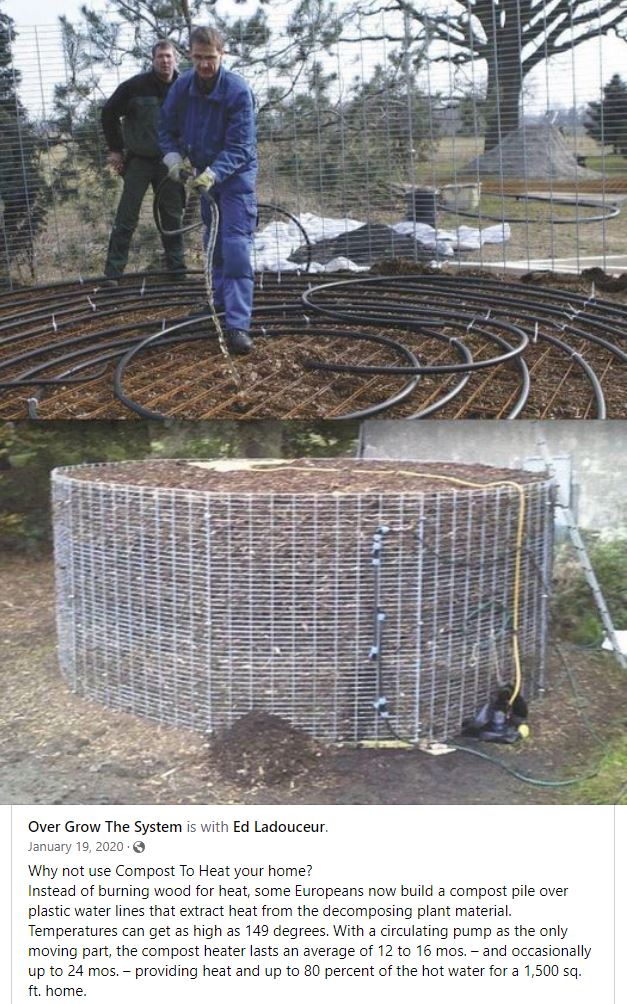
The photograph depicts a man working on a large, makeshift structure in a garden setting. The structure appears to be a compost pile encased within a complex network of plastic tubing that's held together by wire mesh. The tubing is coiled extensively, forming a dense pattern surrounding the compost. The man is manipulating the tubing, perhaps connecting or adjusting it. The setting is lush with greenery, and a classic, slightly aged garden appears in the background. The overall impression is one of resourceful, DIY engineering, a deliberate attempt to harness natural processes (composting) for a practical purpose (home heating). There's a certain aesthetic of "rough elegance" – it's not polished, but it’s clearly intentional and functional.
2. Foucauldian Genealogical Discourse Analysis
This image and text present an interesting case study for a Foucauldian analysis because it reveals shifting power relations around energy. Historically, energy production and distribution have been centralized and controlled by large institutions (state, corporations). This "compost heater" represents a decentralization of that power.
- Discourse and Knowledge: The text positions composting as a viable alternative to conventional heating systems, constructing it as a legitimate form of energy production. This challenges the dominant "discourse" surrounding heating, which traditionally favors fossil fuels and centralized infrastructure.
- Genealogy of Power: We can trace the genealogy of this technology through a history of self-sufficiency movements, permaculture, and ecological awareness. The image suggests a rejection of the modern industrial complex and a return to more localized, sustainable practices. It’s not simply about “heating a home”; it’s about redefining the relationship between humans, nature, and energy production.
- Discipline and Normalization: The traditional power structures in energy have “normalized” dependence on centralized systems and fossil fuels. This "compost heater" subverts that norm by presenting a different way of obtaining warmth.
- Panopticon: While a stretch, there’s a subtle link to the concept of the panopticon – the idea of self-surveillance. The individual implementing this system is effectively taking responsibility for their own energy needs, reducing reliance on external, potentially controlling, forces.
3. Marxist Conflict Theory
This image and text resonate with core tenets of Marxist conflict theory.
- Material Conditions and Class: Access to energy is a fundamental material condition shaping class relations. Historically, control over energy resources has been concentrated in the hands of a ruling class, enabling them to exploit labor and accumulate wealth. This DIY heating system can be interpreted as an attempt to circumvent this control, reducing dependence on external energy providers (often corporations) and potentially lessening the economic burden on individuals/households.
- Means of Production: The "compost heater" represents an attempt to seize the "means of production" of heat – to generate it locally and independently. This can be seen as a micro-level expression of the broader Marxist goal of democratizing control over resources.
- Alienation: Traditional energy systems often alienate individuals from the natural processes that sustain them. This compost heater, by directly harnessing decomposition and natural heat, fosters a reconnection with those processes.
- False Consciousness: This image challenges the "false consciousness" of relying on industrial energy systems, revealing the potential for individuals to meet their needs sustainably.
4. Postmodernism
The image aligns with postmodern themes in several ways:
- Rejection of Grand Narratives: This DIY approach challenges the "grand narrative" of technological progress and centralized infrastructure. It suggests that sustainable solutions can come from localized, individual efforts, rather than large-scale, top-down projects.
- Deconstruction: The image "deconstructs" the conventional understanding of heating – it takes apart the established system and reconstructs it in a new, unconventional form.
- Local Narratives: This system emphasizes the importance of local knowledge, resourcefulness, and adaptation. It’s a localized solution born out of specific environmental and social conditions.
- Simulation and Hyperreality: Though not as prominent, the system can be viewed as a “simulation” of natural heating processes, a way of bringing natural energies into the constructed environment.
Important Note: Some of these analyses are interpretations, and the image/text can be understood in multiple ways. The relevance of each theoretical framework depends on the specific lens through which it is viewed.
Let me know if you'd like me to expand on any of these points or explore other theoretical frameworks.
simple-description (llama3.2-vision)
The meme is a screenshot of a Facebook post from a page called "Overgrow the World" that shows a picture of a man in a blue jumpsuit standing in a yard surrounded by a large, circular, metal heating system. The system appears to be a large, metal coil filled with water that is being heated by a series of pipes. The text of the post reads, "Why not use compost to heat your home?"
tesseract-ocr
A ae Pi Nt eae, . Ns y > c ¢ 4 hoa 7 es ee . Sea Ane r ee Pe ‘ 7 ) aa ite - , Ps = = ? md = ms a ae 3 SS Poy; - A 5 j \\ ee al ie tent et , ron —," \ = . re se Se ~ a 4 co ae | oe ge a SS ee =e 99 ici! pitas 2=o nasa sess ee esas p23SSaS3 a oe 1 '' Siiiiizss bese aees as see os $Ss=s==5== === SS See 5 SSS SSS eet oie N = :=5==: = SSSSSSSSe ese: - <7 eS SSS ee Sa \ © =) >: SS SSS SSS SSS SS SS SS 82222: SS ee ; ee a ae boa WS SS: Ea ee pees BA | : ee te) eH SS SG ok aise ta. A - c pes SE igs, SS ebeag Sea caer BY Over Grow The System is with Ed Ladouceur January 19, 2020-@ Why not use Compost To Heat your home? Instead of burning wood for heat, some Europeans now build a compost pile over plastic water lines that extract heat from the decomposing plant material. ‘Temperatures can get as high as 149 degrees. With a circulating pump as the only moving part, the compost heater lasts an average of 12 to 16 mos. - and occasionally up to 24 mos. - providing heat and up to 80 percent of the hot water for a 1,500 sq. ft. home.