First Seen
2023-11-10T07:56:35+00:00
gemma3-27b-vision
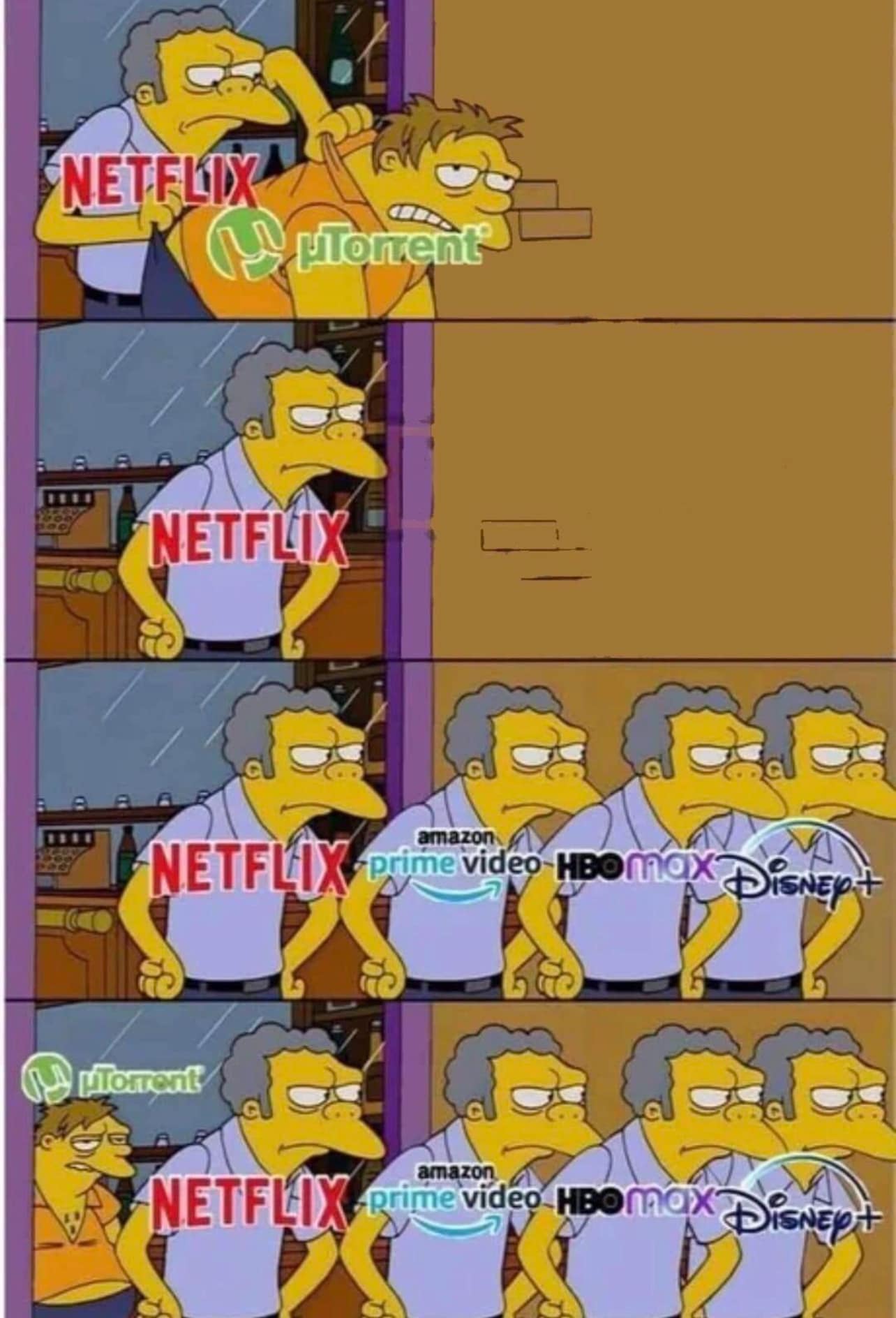
Okay, here's an analysis of the image provided, broken down into sections as requested. I will only include sections where the image/meme is applicable to those specific theoretical frameworks. --- **Visual Description** The image is a four-panel meme using a screenshot from *The Simpsons*. The scene depicts Patty Bouvier, one of the twin sisters, sitting in an armchair with a progressively more distraught and overwhelmed expression across each panel. * **Panel 1:** Patty looks up, seemingly considering something, with the text "Netflix" above her head. * **Panel 2:** Patty is slightly more dismayed, the text “Netflix” remaining. * **Panel 3:** Patty is now looking exasperated, with the texts “Netflix”, “Amazon Prime Video”, “HBO Max”, and “Disney+” all floating above her head. * **Panel 4:** Patty is looking intensely distressed and overwhelmed, with the text “Netflix”, “Amazon Prime Video”, “HBO Max”, “Disney+”, and the text “Torrent” above her head. The overall aesthetic is recognizable from the cartoon *The Simpsons*, using its familiar visual style. The addition of text and the sequencing of images create the meme's humorous effect, which portrays increasing anxiety with the advent of streaming services and ultimately, resorting to illegal pirating as the services become overwhelming and/or the price gets too high. --- **Critical Theory** The meme engages with several key themes central to critical theory, particularly regarding the culture industry and the illusion of choice. The image humorously points to the proliferation of streaming services, which, despite presenting a vast library of content, paradoxically *creates* a sense of more work and anxiety for the consumer. This is a reflection of what Adorno and Horkheimer described as the "culture industry"—a system designed to standardize and mass-produce culture for consumption, not genuine artistic or intellectual engagement. The meme suggests that the apparent freedom to choose from numerous streaming options (Netflix, Amazon, HBO, Disney+) isn’t genuine freedom at all. Instead, it’s an endless cycle of browsing and decision-making, and, eventually, turning to unsavory methods (torrenting) when the options seem excessive or inaccessible. It highlights a feeling of being *overwhelmed* by the very system that promises convenience and entertainment, demonstrating the deceptive nature of consumer capitalism and the illusion of choice it promotes. --- **Marxist Conflict Theory** The meme subtly touches on class and economic issues. Streaming services require subscriptions, creating a financial barrier to access to content. The image's final panel, with the inclusion of “Torrent,” demonstrates a breakdown of the capitalist system when it can no longer provide accessible entertainment. The meme suggests that when the cost of accessing content through legitimate channels becomes prohibitive, individuals are driven to alternative, illegal means. This reflects a class-based conflict: those with disposable income can afford multiple subscriptions, while those who cannot are relegated to less legal, less secure, and potentially less accessible methods. The resorting to torrenting illustrates a rebellion against the economic structure of content distribution, a rejection of the capitalist model. The meme can be interpreted as a form of "cultural resistance" against the commodification of entertainment. --- **Postmodernism** The meme itself *is* a postmodern artifact. It's an intertextual reference, drawing upon the recognizable imagery of *The Simpsons* and remixing it with current cultural anxieties. It plays with the concept of simulation and hyperreality, where the proliferation of choices creates a disorienting, overwhelming experience. The endless scrolling, the constant need to decide *what* to watch, becomes more consuming than the actual content itself. This is a hallmark of postmodern experience. The meme’s humor arises from the absurdity of this situation. The image can be interpreted as a commentary on the postmodern condition: a loss of grand narratives, a fragmentation of meaning, and an overwhelming abundance of choices. It reflects the postmodern skepticism toward authenticity and the blurring of lines between reality and representation. --- I hope this breakdown is helpful! Let me know if you’d like me to elaborate on any of these points or analyze the image from a different theoretical perspective.
tesseract-ocr
Viger SN J Say Ls Wy n wr AWWA OS iS OP y ey Ve aan a ee Ce rN ‘| Bprin video HB@LrIx Ve NW 7\SNG, rh 7 rh ie A ws 7 Y J At a et . Fr ae ext Pt OKT
llama3.2-vision
The meme is a humorous comparison between the streaming services Netflix and Hulu. It's presented as a series of four panels, each showing a character from the Simpsons TV show, Ned Flanders, looking increasingly frustrated and disappointed. The text that appears in the image is "Netflix", "Hulu", and the names of various other streaming services, each with a red X through it, implying that they're all inferior to Netflix.