First Seen
2023-05-10T20:59:59+00:00
gemma3-27b-vision
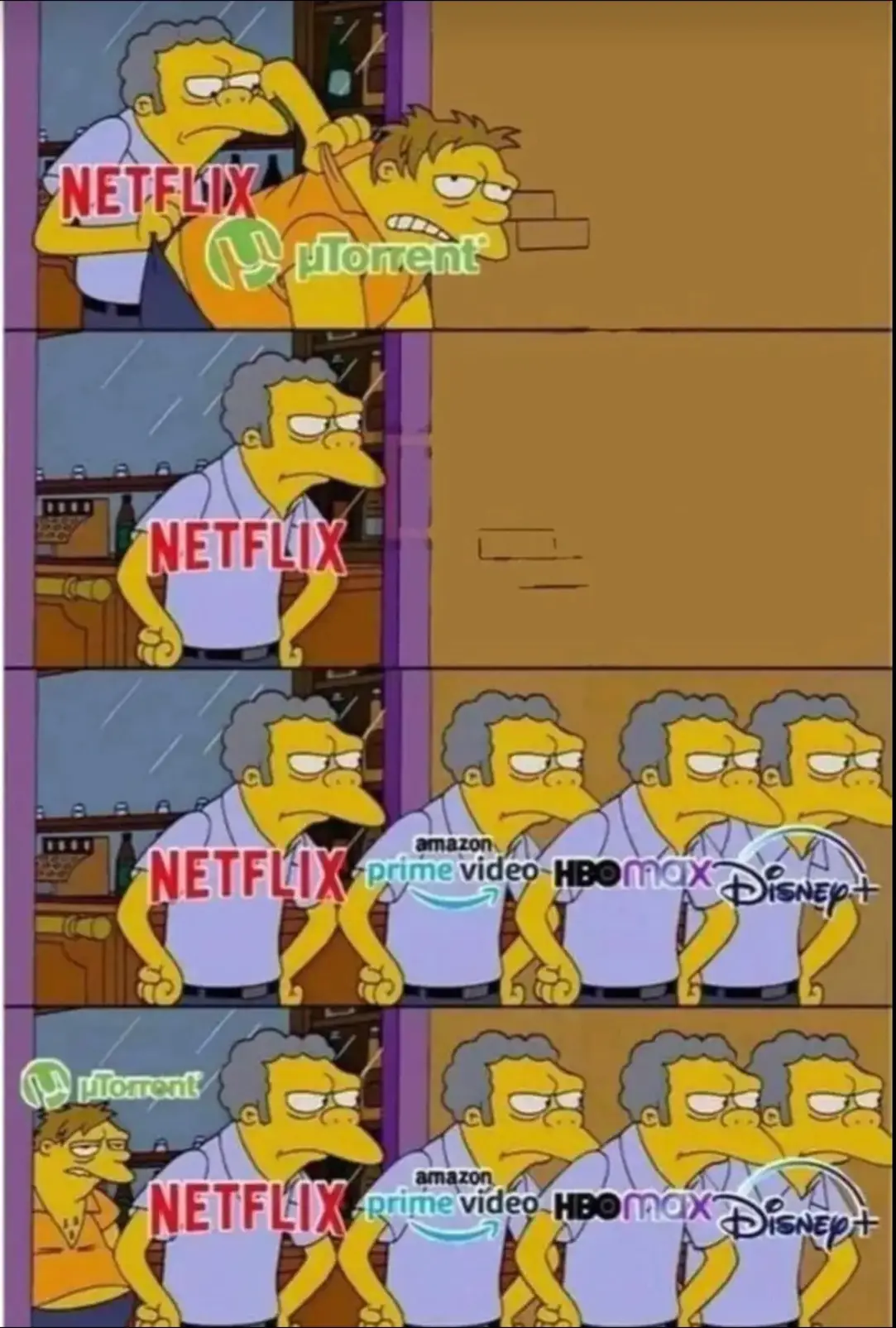
Okay, let's break down this Simpsons meme through the lenses you've requested. It's a rich little image for analysis! ## Visual Description The image is a four-panel progression of a screencap from *The Simpsons*. It features Grandpa Simpson sitting in a chair, looking progressively overwhelmed. Each panel depicts him becoming more surrounded by logos of streaming services. * **Panel 1:** Grandpa is looking overwhelmed with the Netflix logo floating above his head. * **Panel 2:** He looks slightly more burdened, still with the focus on Netflix. * **Panel 3:** The logos begin to proliferate – Amazon Prime Video, HBO Max, and Disney+ are added to the swirling mass around him. * **Panel 4:** The logos have multiplied, completely surrounding him. His face is buried in his hands, signifying complete overload. The original torrent logo is added on top. The colors are standard *Simpsons* fare: yellow skin, bright backgrounds. The use of logos as a growing visual "cloud" is the key communicative element. ## Foucauldian Genealogical Discourse Analysis This meme is *highly* amenable to a Foucauldian reading. The proliferation of streaming services, as depicted, represents a shift in *discourse* regarding how we consume media. * **Genealogy:** Foucault would be interested in the *history* of how we got here. From broadcast television to cable, and now to the seemingly infinite choices of streaming, there’s a genealogy of control over access to media. This meme tracks the evolution of the "watching TV" event and the associated power dynamic. * **Discipline & Panopticism:** The endless options create a kind of self-discipline. We feel *obligated* to subscribe to multiple services to stay current with content, and this choice appears "free" but is constructed by platforms. It’s reminiscent of a panoptic structure – we internalize the sense of being observed (by algorithms and marketing) and regulate our own behavior (subscribing, watching). * **Power/Knowledge:** The streaming services wield power *through* the knowledge they gather about our viewing habits. This knowledge shapes the content offered and reinforces a cycle of consumption. The meme visualizes the 'weight' of this power – the sheer number of services vying for attention is overwhelming. ## Critical Theory From a Critical Theory perspective, this meme encapsulates the increasing **commodification** of culture and leisure. * **Culture Industry:** The streaming services represent a modern iteration of the "culture industry" (Adorno and Horkheimer). They produce standardized content designed for mass consumption, generating profit while potentially stifling critical thought or artistic innovation. * **Alienation:** The endless choices *promise* freedom, but arguably lead to a sense of alienation. The act of choosing from hundreds of shows becomes less about genuine enjoyment and more about navigating an overwhelming system. * **False Consciousness:** This meme points to how we might be lulled into a "false consciousness" believing we're freely making entertainment choices, when in reality, those choices are heavily curated and commercially driven. ## Marxist Conflict Theory From a Marxist perspective, the meme illustrates the tension between the **means of production** (streaming platforms) and the **consumers** (Grandpa). * **Capitalism and Commodification:** The logos represent the commodification of entertainment – turning culture into a product to be bought and sold. Streaming services are competing for a larger share of the consumer market. * **Class Struggle:** The meme can be seen as a subtle critique of the economic forces that control access to entertainment. Those who can afford multiple subscriptions have greater access than those who cannot, creating a form of digital class stratification. * **Exploitation:** The platforms profit from the creative labor of content creators, and from consumer subscriptions, while the consumer feels perpetually burdened by options and cost. ## Postmodernism This meme deeply embodies postmodern themes. * **Hyperreality & Simulation:** The sheer number of options creates a hyperreal experience – a simulation of choice that feels more real than actual freedom. We are bombarded with content, but the line between authenticity and manufactured entertainment blurs. * **Fragmentation & Loss of Grand Narratives:** The era of a few dominant television networks is over. We now live in a fragmented media landscape with countless niche platforms and shows, signaling the end of any shared "cultural moment." * **Irony & Parody:** The image itself is ironic. It uses a cartoon character to comment on a very contemporary issue. It’s a commentary on consumer culture that's delivered *through* that same culture. ## Queer Feminist Intersectional Analysis While less directly obvious, this meme can be read through an intersectional lens. * **Access and Privilege:** Not everyone has equal access to streaming services. Economic disparities, digital literacy, and disability can all create barriers to entry. * **Representation:** The content *available* on these services can be analyzed through a feminist and/or queer lens. Are diverse voices and perspectives adequately represented? Do these platforms perpetuate harmful stereotypes? (The meme doesn't explicitly address this, but it's a relevant consideration). * **Labor Exploitation:** Intersectionally, the workers who create the content that fuels these platforms (writers, actors, technicians) are often subject to exploitation, with certain groups (women, POC, LGBTQ+ individuals) facing disproportionate challenges. (Again, not directly depicted, but implied by the broader context). I hope this thorough analysis is helpful! Let me know if you'd like me to elaborate on any of these points further.
tesseract-ocr
’ Va } aN f | Le .) if ae , a J "hgr ys “4 | Ph Bprin pele AN asa le rap en CO YrToronm ot aw ie oe pty lh AF video. HE oN mt PAN WY OY
llama3.2-vision
This meme is a humorous comparison of the different streaming services available. The image shows a character from The Simpsons, Ned Flanders, standing in front of a TV with a shocked expression. The text "I'm sorry, Dave. I'm afraid I've lost the plot" is overlaid on the image, referencing the classic 1984 comedy film "The Hitchhiker's Guide to the Galaxy". The meme is poking fun at the overwhelming number of streaming services available, making it difficult to keep track of them all.