First Seen
2023-05-10T20:59:58+00:00
simple-description (llama3.2-vision_11b)
The meme is a humorous representation of the IBM Quantum System One, a quantum computer designed to perform complex calculations. The image shows a sleek, futuristic-looking device with a glowing blue light emanating from its core. The text at the top reads "IBM Quantum System One" and the bottom text says "The quantum computer for the quantum computer". The meme is poking fun at the idea that the quantum computer is so advanced that it needs its own computer to run itself.
detailed-analysis (gemma3-27b-vision)
Okay, let's break down this image of the IBM Quantum System One through several theoretical lenses, noting where each lens actually applies and providing a detailed analysis for those that do.
1. Visual Description
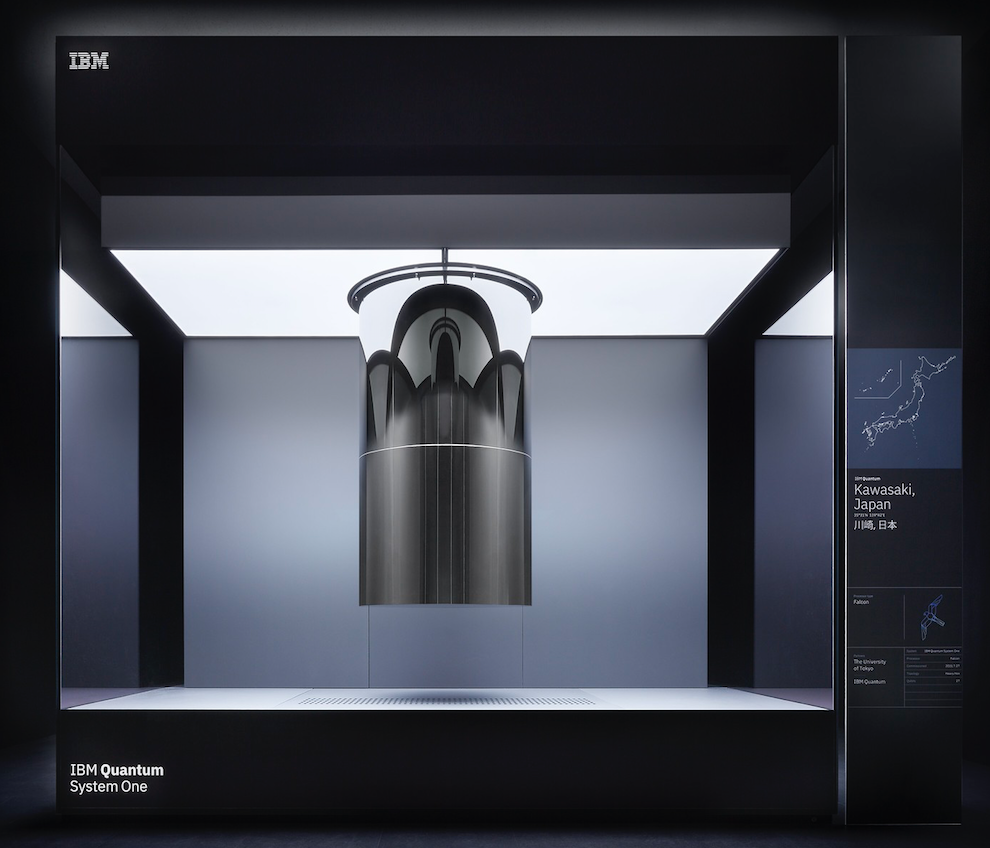
The image depicts the IBM Quantum System One. It's a visually striking piece of technology presented in a highly staged manner. The machine itself is a tall, cylindrical structure, primarily silver and dark grey, appearing almost like a futuristic tower. Its design is a complex arrangement of tiered, stacked components, with a rounded, bulbous top. The machine dominates the center of the frame, suggesting importance and power.
The entire system is encased within a larger rectangular, white structure with recessed lighting that creates a clean, stark environment. This suggests a controlled, laboratory-like setting. The lighting is cool-toned, further emphasizing the technological and scientific nature of the subject.
To the right, a digital screen displays a map of Kawasaki, Japan with Japanese text alongside. Below this there is also a smaller screen. The IBM logo is visible in the upper-left corner. The bottom of the image features text identifying the machine as “IBM Quantum System One”.
The overall impression is one of advanced technology, precision, and isolation. The lighting and framing create a sense of reverence and mystery. The staging resembles a museum exhibit.
2. Foucauldian Genealogical Discourse Analysis
This lens strongly applies. Foucault's work examines how power operates through discourses—systems of thought, language, and practice. The image is brimming with such power dynamics.
- Discipline & Surveillance: The Quantum System One is presented within a highly controlled and disciplined space, mirroring Foucauldian concepts of panopticism (the idea of being constantly watched). The clean, sterile environment and the framing suggest a constant monitoring of this technology and its capabilities.
- Knowledge/Power: The machine is not simply a tool; it is knowledge made material. Its complexity and the very nature of quantum computing position it as a source of immense power. The image suggests that controlling this knowledge equals controlling power. The visual “reverence” reinforces the idea that this is not an object to be casually understood or accessed.
- Genealogy of Control: Tracing the history of computing, we see a shift from mechanical calculation to digital systems to quantum computing. Each stage represents an escalation in the capacity for information processing and control. The image visually encapsulates the culmination of this trajectory.
- The "Subject" as Produced Through Technology: The technology constructs particular types of "subjects" - those with the skills and power to understand and interact with it, and those who are largely excluded. The image implicitly frames those engaged in quantum computing as elites.
3. Critical Theory
This lens applies, but less intensely than the Foucauldian perspective. Critical Theory, particularly stemming from the Frankfurt School, focuses on the critique of power structures and ideology.
- Instrumental Reason: The image embodies Max Horkheimer and Theodor Adorno's concept of instrumental reason—the prioritization of efficiency and control over ethical considerations. The machine exists purely as a tool to achieve certain outcomes, with little visible acknowledgement of the wider social or ethical implications of its capabilities.
- Technological Determinism: The image can be read as promoting a form of technological determinism—the belief that technology shapes society, rather than the other way around. The machine is presented as a force to be reckoned with, almost independent of human agency.
- Commodification of Knowledge: The IBM branding and the machine's existence as a proprietary technology highlight the commodification of knowledge. This knowledge is not freely accessible, but rather controlled by a corporation for profit or strategic advantage.
4. Marxist Conflict Theory
This lens has limited application. While technology is often a site of class struggle in Marxist analysis, this image doesn't explicitly depict that conflict.
- Means of Production: The Quantum System One represents a highly advanced means of production, capable of generating new forms of knowledge and potentially disrupting existing economic structures. However, this potential is obscured by the image’s focus on the technology itself rather than its implications for labor or class relations.
- Unequal Access: The machine embodies the concentration of capital and technological advancement in the hands of a few powerful corporations. This reinforces existing inequalities.
5. Postmodernism
This lens has some, but limited application.
- Simulacra and Simulation: The highly staged and curated image itself can be seen as a simulacrum—a copy without an original. It is a representation of a technology, often divorced from its everyday use or real-world implications. It's about the idea of quantum computing more than the actual process.
- Fragmentation & Hyperreality: While the image doesn’t explicitly show fragmentation, the focus on a single, isolated technology hints at a world increasingly characterized by disconnected systems and an overreliance on technological solutions. The technology is presented as a hyperreal phenomenon.
6. Queer Feminist Intersectional Analysis
This lens has the least application to this specific image. The image doesn’t directly address issues of gender, sexuality, or intersectionality. However, one could speculate:
- Exclusion in STEM: The field of quantum computing, like many STEM fields, has historically been dominated by men. The image reinforces this visual representation, implicitly excluding women and other marginalized genders from the narrative of technological advancement.
- Power Dynamics: The presentation of a highly complex technology with limited accessibility represents a power dynamic that mirrors broader societal inequalities. Those with the resources and knowledge to understand and control the technology have an inherent advantage.
In Conclusion
This image of the IBM Quantum System One is most powerfully analyzed through Foucauldian and Critical Theory lenses. It reveals a system of power, knowledge, and control embedded within the technology itself and the way it is presented. While other theoretical frameworks offer some insights, they are less directly relevant to the core message of the image.
simple-description (llama3.2-vision)
This meme is a picture of a robot, likely a reference to the movie "I, Robot" or a similar sci-fi concept. The image is captioned "I, Robot" and has a quote "I'll be back" in a robotic voice. The meme is likely referencing the movie's robot, saying "I'll be back" in a robotic tone, implying that the robot is a self-aware being with a sense of humor.
tesseract-ocr
ea cri —— a; \ i a ae wa | Kawasaki, Rett A 4 ETT Recurety