First Seen
2023-05-10T20:59:59+00:00
simple-description (llama3.2-vision_11b)
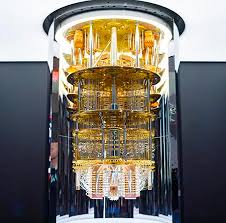
The meme is an image of the Quantum Computing System, a supercomputer developed by Google, with the words "Quantum Supremacy" emblazoned across the top. From a computing perspective, this meme is a humorous commentary on the idea that even the most powerful computers can be outsmarted by a simple joke. The image is a clever play on the idea that even the most complex machines can be outwitted by a simple "Quantum Supremacy" joke, poking fun at the idea that even the most powerful computers can be outwitted by a simple joke.
detailed-analysis (gemma3-27b-vision)
Okay, let's analyze the image of the quantum computer within the specified theoretical frameworks.
Visual Description
The image depicts a large, cylindrical structure, likely housed within a clear protective casing. At its center is a complex, tiered arrangement of metallic components – a quantum processor. The processor is visually striking due to its multi-layered construction. It resembles an inverted, glittering chandelier or a futuristic, metallic beehive. Numerous wires, cables, and intricate circuitry are visible. The color palette is dominated by shades of gold, silver, and black, creating a high-tech, somewhat imposing aesthetic. The structure is set against a dark background, highlighting its form and intricate detail. The lighting suggests a carefully controlled environment, reflecting the precision required for quantum computing. It is housed within a dark-colored, boxy structure behind the glass cylinder.
Foucauldian Genealogical Discourse Analysis
This image immediately speaks to the discourse of technological progress. A Foucauldian lens would explore how the very idea of "quantum computing" has been constructed as a site of power/knowledge. The framing of quantum computing as a solution to previously intractable problems (drug discovery, materials science, breaking encryption) creates a truth regime that prioritizes certain forms of knowledge and problem-solving over others.
- Archaeology of Knowledge: Tracing the historical development of the concept of quantum computation reveals how it emerged from specific intellectual and institutional contexts – theoretical physics, government-funded research, corporate investment. It’s not just a “natural” progression, but a constructed narrative.
- Power/Knowledge: This image visually represents the concentration of power in the hands of those who control this technology (governments, corporations, elite research institutions). The complexity of the machine itself reinforces the idea that access to this knowledge is limited to a select few.
- Disciplinary Technologies: Quantum computing can be seen as a technology that disciplines – or seeks to control – the limits of calculation and knowledge itself. It’s a challenge to classical computing and a new frontier in the control of information.
Critical Theory
From a Critical Theory perspective, this image can be seen as a symbol of the instrumental rationality characteristic of modern and postmodern societies. The quantum computer is not simply a tool, but a manifestation of a drive to dominate nature through technology.
- The Enlightenment Project: The machine embodies the Enlightenment ideal of reason and control, but also its potential for domination and alienation. The pursuit of ever-more-powerful computing risks prioritizing technical efficiency over ethical considerations.
- Technological Determinism: The image can reinforce a sense of technological determinism, suggesting that technology is an autonomous force that shapes society, rather than a tool shaped by human values and power structures.
- Commodification of Knowledge: The development and control of quantum computing are increasingly driven by market forces. The machine represents the commodification of knowledge and the privatization of scientific advancements.
- The Culture Industry: It’s part of the "culture industry" (Adorno & Horkheimer) that presents technological progress as inherently good, obscuring its potential negative consequences.
Marxist Conflict Theory
From a Marxist standpoint, this image represents a concentration of capital and a potential exacerbation of class conflict.
- Means of Production: The quantum computer is a key means of production in the emerging information economy. Ownership of this technology will confer significant economic and political power.
- Class Struggle: The development of quantum computing is likely to benefit those who already possess wealth and power, while potentially displacing workers in other sectors. This intensifies the existing class struggle.
- Ideology: The image can function as ideology, masking the underlying power dynamics and presenting technological progress as a universally beneficial force.
- Surplus Value: The potential for increased efficiency and productivity unlocked by quantum computing will likely be captured as surplus value by the owners of capital, further widening the gap between the rich and the poor.
Postmodernism
A postmodern lens sees this image as a symbol of the breakdown of grand narratives and the increasing fragmentation of knowledge.
- Simulacra & Simulation: The image of the quantum computer may be more simulation than reality. It exists as a concept and a visual representation, increasingly divorced from its material basis.
- Hyperreality: The hype surrounding quantum computing can create a hyperreality, where the representation of the technology becomes more important than the technology itself.
- Deconstruction: A deconstructive approach would challenge the binary oppositions inherent in the concept of "quantum" vs. "classical" computing, revealing the inherent instability and contingency of these categories.
- The End of Metanarratives: Quantum computing can be seen as a rejection of the idea that there is a single, unifying explanation for the universe. It embraces complexity and uncertainty.
Queer Feminist Intersectional Analysis
This is perhaps the most challenging framework to apply directly to the image itself, but we can still consider its implications.
- Who benefits from this technology? Examining the demographics of the scientists, engineers, and investors involved in quantum computing reveals potential biases and exclusions. Historically, STEM fields have been dominated by white men. Who gets to define the future of technology, and whose needs are prioritized?
- Intersectionality: The benefits and risks of quantum computing will not be distributed equally. Marginalized groups (based on race, gender, class, sexuality, etc.) may experience disproportionate negative consequences. For example, if quantum computing is used to develop more sophisticated surveillance technologies, it could exacerbate existing forms of discrimination.
- Challenging Technological Determinism: A queer feminist perspective would challenge the idea that technology is neutral. Technology is always shaped by human values and power dynamics, and it can reinforce or challenge existing social hierarchies.
- Decentering the “Genius” Narrative: The image can subtly reinforce the “lone genius” narrative of scientific discovery. A queer feminist analysis would emphasize the collaborative and often invisible labor that contributes to technological advancements.
Hopefully, this provides a comprehensive analysis of the image from multiple theoretical perspectives. It is important to remember that these frameworks are not mutually exclusive and can be used in conjunction to provide a richer and more nuanced understanding.
simple-description (llama3.2-vision)
The meme is an image of a computer server, specifically a "Raspberry Pi" model, which is a small, low-cost computer. The text that appears in the image is "I'm not arguing, I'm just explaining why I'm right".
tesseract-ocr
a