First Seen
2023-05-10T20:59:59+00:00
simple-description (llama3.2-vision_11b)
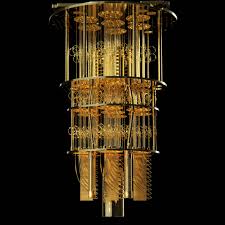
The meme is a humorous representation of a quantum computer's processing power, showcasing its ability to perform complex calculations at an incredibly fast pace. The image depicts a quantum computer's processor, with thousands of quantum bits (qubits) connected in a complex network, highlighting the machine's ability to process vast amounts of data in a single, quantum leap. The text "Quantum Supremacy" is emblazoned on the image, referencing the achievement of a quantum computer processing 10,000 times the calculations of the world's fastest supercomputer in just 200 seconds.
detailed-analysis (gemma3-27b-vision)
Okay, let's break down this image using the frameworks you've requested. This is a fascinating object that lends itself well to layered analysis.
Visual Description
The image depicts a large, ornate chandelier or sculptural installation. It is constructed from many golden, intricately woven or cage-like structures stacked vertically. The design is highly geometric and repetitive, creating a sense of organized complexity. The light source appears to be embedded within the structure, casting a warm, golden glow. The background is entirely black, emphasizing the chandelier's form and luminance. It evokes a sense of luxury, perhaps recalling Art Deco or Victorian aesthetics, but with a decidedly modern and almost technological execution. There’s a sense of both lightness and density – the open weave of the structures creates a delicate appearance, while the overall mass of the installation feels substantial.
Foucauldian Genealogical Discourse Analysis
This object is ripe for a Foucauldian analysis. Looking at its discourse (what it says about power and knowledge), we can trace a genealogy of how this object relates to historically constructed notions of luxury, taste, and power.
- Disciplinary Power: The structured, cage-like form could be seen as a manifestation of disciplinary power. The repetition and organization impose a sense of control and order. The many "cells" within the structure could metaphorically represent surveillance or containment.
- Genealogy of Luxury: Tracing the history of chandeliers reveals their origin as symbols of wealth, status, and nobility. This object is a continuation, but a deconstructed or fragmented version, of that history. The industrial-looking weaving material might signify a shift from handcrafted luxury to mass-produced (though still expensive) displays of wealth.
- Knowledge/Power Nexus: The chandelier's association with enlightenment (literally through light) historically connects to knowledge. The complex structure could be seen as a representation of complex systems of knowledge, highlighting how knowledge is constructed, organized, and used to maintain power structures.
Critical Theory
Applying Critical Theory (particularly the Frankfurt School’s concerns with the Culture Industry), we might view this object as a form of commodified aesthetic experience.
- Commodification of Art/Experience: The chandelier, though perhaps presented as art, can be seen as a product of consumer culture. Its ostentatious display of wealth and artistry is geared towards spectacle and consumption.
- False Consciousness: The illusion of beauty and grandeur it creates could be seen as a distraction from underlying social inequalities. It reinforces the dominant ideology that equates wealth with status and desirability.
- Spectacle & Simulation: This object contributes to the "spectacle" described by Guy Debord, where appearances are more important than reality. It is a constructed simulation of luxury, meant to be consumed through the eyes rather than experienced in a meaningful way.
Marxist Conflict Theory
From a Marxist perspective, this object is a potent symbol of class relations and the exploitation of labor.
- Means of Production & Exploitation: The materials and labor required to create this complex structure likely involve the exploitation of workers in the extraction of raw materials and the manufacturing process.
- Symbol of Bourgeoisie Power: The chandelier is an overt symbol of wealth and privilege, representing the power and status of the bourgeoisie (the owning class). It’s a display of surplus value accumulated through the exploitation of labor.
- Ideological Apparatus: The object functions as an ideological apparatus, reinforcing the legitimacy of the capitalist system by celebrating wealth and consumption.
Postmodernism
This object embodies several key aspects of Postmodernism.
- Deconstruction of Form: It's not a traditional chandelier; it’s a fragmented, deconstructed, and reassembled version. This echoes the postmodern rejection of grand narratives and fixed meanings.
- Simulacra & Hyperreality: The object exists as a simulation of a chandelier, blurring the lines between reality and representation. It’s a hyperreal version, exceeding the authenticity of traditional chandeliers.
- Appropriation & Pastiche: The design draws on historical styles (Art Deco, Victorian) but combines them in a new and unconventional way, creating a sense of pastiche and cultural appropriation.
Queer Feminist Intersectional Analysis
This is a trickier analysis as the image doesn't immediately suggest gender or sexuality. However, we can apply an intersectional lens:
- Deconstructing Grand Narratives of Taste: Traditional aesthetic judgments often reinforce patriarchal norms and expectations. This object, by challenging conventional chandelier design, disrupts those norms and opens up new possibilities for aesthetic expression.
- The Labor of Decoration & Feminization: Historically, decorative arts have been associated with femininity and marginalized labor. Examining the production of this object through an intersectional lens could reveal the gendered and racialized dynamics of its creation.
- Subverting the Symbolic Order: The chandelier is a symbol of domesticity and social hierarchy. By deconstructing this symbol, the object challenges the established power structures and opens up space for alternative interpretations and expressions of identity.
- Luxury as Exclusion: The opulence of this object, if understood as a symbol of elitism, might reinforce oppressive social structures. A queer feminist analysis could interrogate the ways in which luxury and access to beauty are unequally distributed, often excluding marginalized communities.
It’s important to note that these analyses are not mutually exclusive. They are overlapping and can be combined to create a richer and more nuanced understanding of the image. The beauty of visual analysis is that it invites multiple interpretations.
simple-description (llama3.2-vision)
The meme is a screenshot of a NASA image of a stunning star-forming region in the Carina Nebula. The image is captioned "NASA's Hubble Finds a Star Forming in the Carina Nebula" and shows a vibrant, swirling cloud of gas and dust. The text is in a small, white font at the top of the image.
tesseract-ocr
aay Bit | i