First Seen
2023-05-10T21:03:39+00:00
simple-description (llama3.2-vision_11b)
The meme is a playful reference to the Queen of Hearts character from Lewis Carroll's "Alice's Adventures in Wonderland". The image typically features a cartoonish illustration of the Queen of Hearts, often with a mischievous or exasperated expression. The text overlay often reads "Off with their heads!", a nod to the Queen's infamous catchphrase from the book.
detailed-analysis (gemma3-27b-vision)
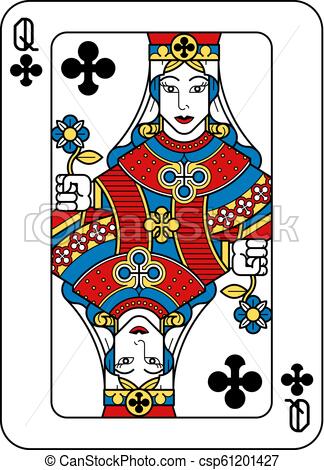
Okay, here's an analysis of the image of the Queen of Clubs playing card, broken down into sections as requested. I'll only include sections where the image lends itself to the analysis.
Visual Description
The image is a stylized, almost graphic illustration of the Queen of Clubs playing card. The queen is depicted from the chest up, facing forward, in a symmetrical composition. She has long, blonde hair adorned with a jeweled crown, and a stern expression. Her clothing is elaborate, featuring a red and blue patterned bodice with gold trim. Her hands are clasped, holding a single flower. The card is bordered by a black and white pattern with the suit symbol, clubs, repeated at the corners and along the sides. The background is off-white. The illustration leans towards a vintage or art deco style, with bold lines and flat colors rather than realistic shading. There is a second, smaller depiction of the queen's head at the bottom of the card.
Foucauldian Genealogical Discourse Analysis
This image can be examined through a Foucauldian lens to understand how the discourse of queenship and femininity is constructed and maintained.
- Power/Knowledge: The image is a representation of power, but a contained power. The Queen’s authority is symbolic (as represented by the card itself), rather than actual. The very act of categorizing her as a "Queen" within a game assigns her a certain, limited role within a system of rules. The visual depiction of her (the crown, clothing, stern expression) constructs our understanding of what a "Queen" is, and how she should be perceived.
- Genealogy of “Queen”: Looking at the history of the visual representation of queens (through art, portraiture, etc.) reveals a lineage of images, all contributing to the current understanding of "Queen". This image participates in that history, upholding certain conventions (regal clothing, crown) while potentially subtly altering or emphasizing others.
- Disciplinary Power: The card, as a tool in a game, disciplines players to understand and abide by certain rules, assigning value and position. The Queen, as a card, represents a specific rank and function within the game's system, contributing to a structure of control.
Critical Theory
This image can be examined using aspects of Critical Theory, specifically how it reinforces social hierarchies and power dynamics.
- Ideology: The depiction of a Queen inherently upholds the ideology of monarchy, or at least the concept of inherited authority and status. Even as a symbolic figure in a game, she represents a historical structure of power. The imagery reinforces the idea of a rigid social order.
- Representation and Power: The way the Queen is represented (regal attire, stoic expression) speaks to the constructed nature of femininity and power. Her image is not necessarily a reflection of a real person, but a projection of societal expectations of what a female ruler should be.
- Mythology: Playing cards, and particularly the court cards, can be seen as a form of modern mythology. The Queen of Clubs is a character with an assigned role, upholding a particular narrative (even if that narrative is just a function of the game).
Queer Feminist Intersectional Analysis
This image prompts an exploration of how gender, power, and representation intersect.
- Gender Performance: The Queen's elaborate dress and facial expression suggest a performance of femininity aligned with traditional royal expectations. This performance can be read as both empowering (she embodies authority) and restrictive (she is bound by societal expectations of how a Queen should appear).
- Absence of Agency: While portrayed as powerful, the image presents a static representation of power. There is no indication of her thoughts, actions, or independent agency. This reinforces the historical silencing of female figures in positions of power.
- Symbolic Power vs. Real Power: The image highlights the distinction between symbolic and actual power. While the Queen of Clubs represents a rank within the game, she has no real-world authority. This disconnect raises questions about the ways in which women have historically been relegated to symbolic roles, rather than granted true power.
- Intersectionality: Although the image primarily presents a gendered figure, examining it through an intersectional lens reveals a lack of diversity in its representation. The Queen is presented as a stereotypical white, European figure, reinforcing dominant narratives of power and excluding other marginalized identities.
Let me know if you'd like me to elaborate on any of these points, or explore other analytical frameworks.
simple-description (llama3.2-vision)
The meme is an image of a playing card, specifically the Queen of Spades. The card is shown in a humorous and exaggerated pose, with the Queen's face contorted in a comically exaggerated expression of shock or surprise. The text "I can smell the desperation" is written at the top of the image, implying that the Queen is overwhelmed by the situation.
tesseract-ocr
Q Wye. val ee nee bal 0°) F