First Seen
2023-05-29T00:57:38+00:00
simple-description (qwen3.5_2b-q8_0)
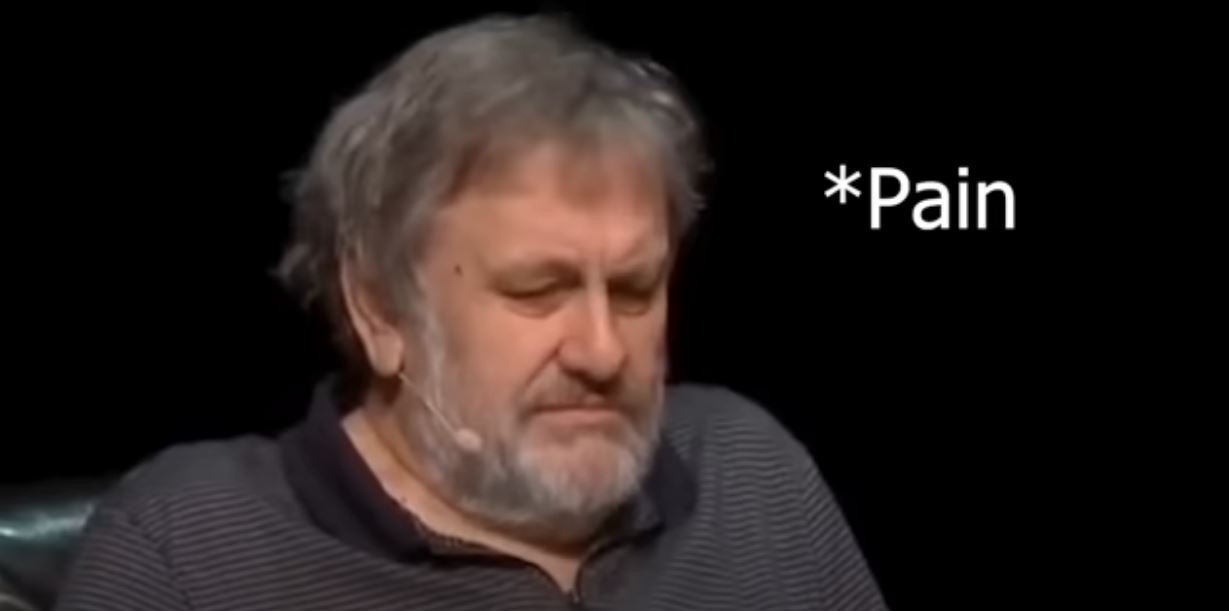
In the context of queerness and anxiety, this meme captures the often invisible, crushing "pain" felt by people navigating their identities. The heavy, downcast expression and closed eyes represent the emotional exhaustion and sorrow that comes with the pressure of being a minority, often feeling like one is hiding deep sadness for their own safety. The text simply labels this internal struggle, reinforcing the idea that queer pain is frequently unspoken and carries a heavy, constant weight.
simple-description (llama3.2-vision_11b)
The meme features a picture of a person with a distressed expression, accompanied by the text "*Queer: Anxiety". The image is likely a reaction image or a screenshot from a video, where the person's facial expression is exaggerated to convey the anxiety of being queer.
detailed-analysis (gemma3-27b-vision)
Okay, here's an analysis of the image, broken down into sections as requested, focusing on relevant theoretical lenses where applicable. Because the image is a portrait with limited context, the interpretations will be somewhat speculative and emphasize the potential for multiple readings, as is common in these critical approaches.
Visual Description
The image is a close-up portrait of an older man. He has graying hair, a full, relatively unkempt beard and mustache, and appears to have deep wrinkles, particularly around his eyes and mouth. He is wearing a dark, striped polo shirt. The background is entirely black. His eyes are downcast, and his facial expression appears pained or burdened. The word "Pain" appears in white text on the right side of the frame. The lighting appears stark and direct, emphasizing the lines and textures of his face.
Foucauldian Genealogical Discourse Analysis
The image, alongside the single word "Pain," presents an intriguing space for Foucauldian analysis. Focusing on power/knowledge, we can examine how "pain" isn't simply a biological sensation, but a concept constructed through discourses (ways of talking, thinking, and acting).
- Discipline and Punishment: The downturned expression and burdened posture could be interpreted as representing the internalization of societal norms and discipline. The implied pain could be a product of societal expectations, the weight of obligation, or the consequences of transgression (even if unseen).
- The Medical Gaze: While we can’t see a medical setting, the image could evoke the power dynamics of the medical field. The "Pain" label suggests a medicalization of experience, framing it as a condition to be diagnosed, controlled, and managed by authority.
- Genealogy of Pain: A genealogical approach would avoid essentializing "pain" but would rather investigate how concepts of pain, its causes, its expressions, and its treatment have evolved historically, and how these evolutions are tied to shifts in power relations.
Critical Theory
From a critical theory perspective, particularly drawing from the Frankfurt School, the image can be interpreted as reflecting the alienation and suffering inherent in modern life.
- Commodification of Suffering: The image, in a way, displays pain. It presents suffering as a spectacle. This echoes critical theory’s concerns about the commodification of experience and the ways in which even deeply personal feelings can be turned into objects of consumption and observation.
- Rationalization and Disenchantment: The man's burdened expression could represent the emotional toll of a rationalized, bureaucratic world, where individuals are reduced to instruments for achieving economic or political goals. The lack of context and the stark presentation emphasize this feeling of dehumanization.
- Ideology and False Consciousness: The label "Pain" could be seen as a superficial explanation that masks deeper, systemic issues causing the individual's suffering. The image may represent the failure of dominant ideologies to address the root causes of human distress.
Marxist Conflict Theory
From a Marxist perspective, the image can be read as a manifestation of class struggle and the exploitation inherent in capitalist systems.
- Alienation of Labor: The man's expression could represent the psychological toll of alienated labor, where individuals are disconnected from the products of their work and from their own creative potential.
- Class Consciousness and Suffering: The image could depict the suffering of the working class, marginalized by a system that prioritizes profit over human well-being.
- Systemic Oppression: The "Pain" label, in this reading, isn't merely an individual experience, but a symptom of systemic oppression and inequality.
Postmodernism
A postmodern interpretation would emphasize the instability of meaning and the subjective nature of experience.
- Deconstruction of "Pain": Postmodernism would challenge the notion that "pain" has a fixed or universal meaning. The image, combined with the label, could be seen as highlighting the ambiguity and constructedness of this concept.
- Fragmentation and Loss of Grand Narratives: The image's lack of context and the man's isolated expression could represent the fragmentation of modern life and the loss of overarching narratives (like religion or ideology) that once provided meaning and coherence.
- Simulation and Hyperreality: In a hyperreal world, the image itself might become more "real" than the actual experience of pain, becoming a signifier detached from any concrete reality.
Queer Feminist Intersectional Analysis
This is the least direct fit, given the image itself doesn’t explicitly signal gender or sexuality. However, it's possible to apply this lens by focusing on how pain is experienced differently based on intersecting identities.
- Silencing of Marginalized Pain: The image could be interpreted as representing the silencing or invalidation of pain experienced by marginalized groups (based on gender, sexuality, race, disability, etc.). The label "Pain" may be a dominant, generalized description that doesn't acknowledge the specific nuances and complexities of pain within these communities.
- Social Construction of Emotional Expression: Queer feminist theory emphasizes how emotional expression is often gendered and policed. The man's reserved expression could be seen as a product of patriarchal norms that discourage men from expressing vulnerability.
- Intersection of Oppression: The image might allude to the ways in which various forms of oppression (e.g., classism, racism, sexism) intersect to create unique experiences of suffering.
Important Note: These interpretations are based on limited information. The meaning of the image is ultimately open to interpretation and depends on the viewer’s own experiences and perspectives. I have provided possibilities grounded in the theoretical frameworks you requested.
simple-description (llama3.2-vision)
The meme is a screenshot of a person with a blank expression, implying they're not reacting to something. The text "Pain" is overlaid on the image, suggesting that the person is experiencing or has experienced pain. The meme is likely used to express a sense of emotional numbness or disconnection.
tesseract-ocr
_ , *Pain - — <ZAA ~— ZF SSCA a ee =