First Seen
2023-05-10T20:59:59+00:00
simple-description (llama3.2-vision_11b)
The meme is a still image from a TV show or movie, featuring a character who is visibly anxious or distressed. The character is likely a queer individual, and the image captures a moment of intense emotional turmoil. The text "I'm not crying, I'm just allergic to happiness" is likely a caption or quote that appears in the image, adding to the character's emotional state.
detailed-analysis (gemma3-27b-vision)
Okay, here's an analysis of the image, broken down into the requested theoretical frameworks. I will only include sections where the framework feels applicable and can generate a meaningful discussion.
1. Visual Description
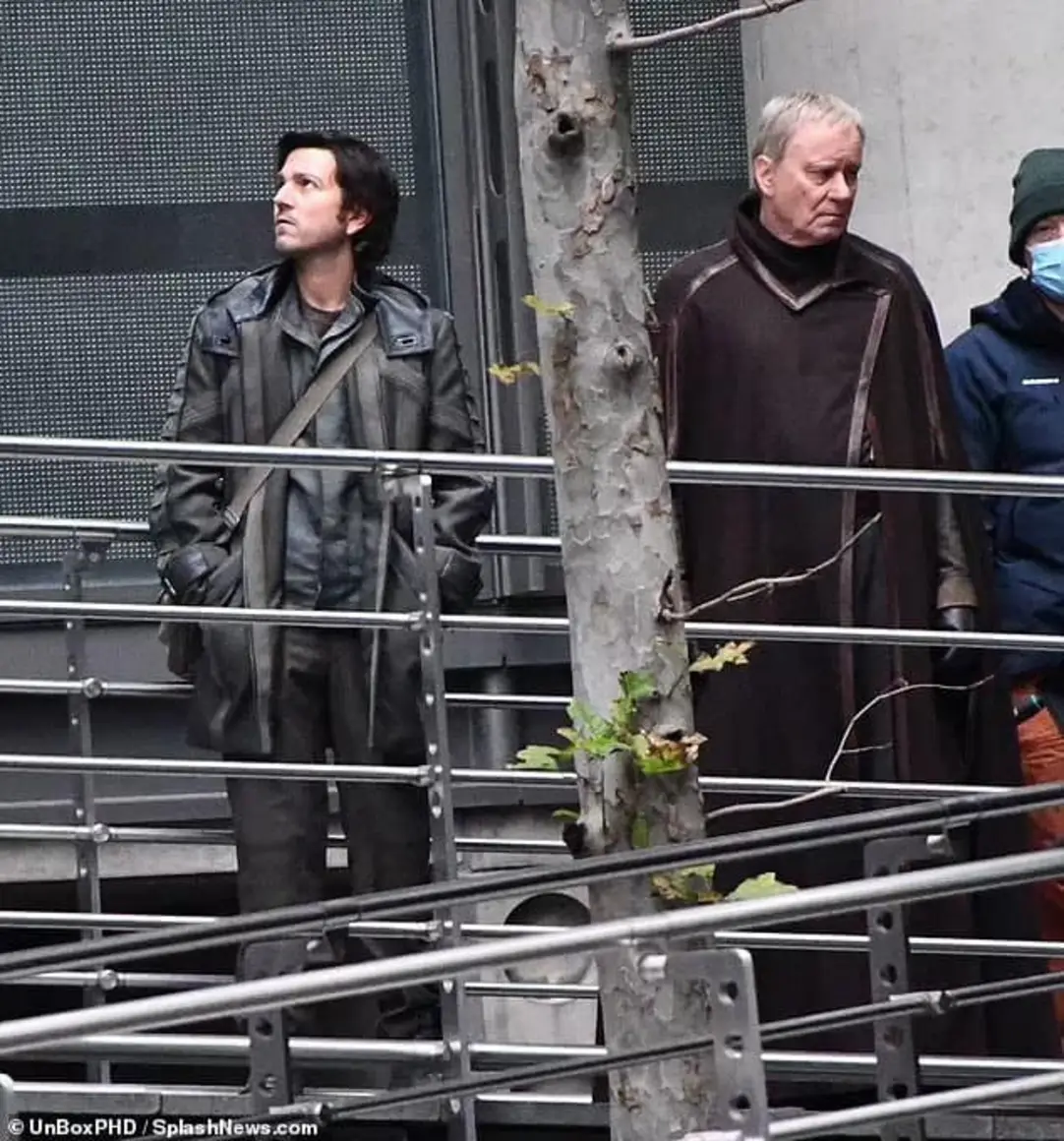
The image depicts two men standing on a metallic walkway or stairs. The man on the left appears younger, dressed in a black, perhaps leather, coat with a noticeable shoulder structure. He is looking off to the side, with a somewhat somber expression. The man on the right is older, wearing a long, dark, cloak-like garment. He’s looking down with an austere expression. A small, pale tree stands between them, and a third individual in a blue coat is partially visible to the right. The background consists of a patterned, potentially reflective surface, and some exposed pipes, suggesting an urban or industrial setting. The overall lighting is flat, making the image appear somewhat stark. The photographer is identified at the bottom.
2. Foucauldian Genealogical Discourse Analysis
This image, particularly the positioning and attire of the men, lends itself to a Foucauldian analysis focused on power, surveillance, and the construction of subjectivity.
- Power/Knowledge: The men's attire, particularly the dark, imposing coats, immediately signals authority or a specific role within a system of power. The industrial backdrop suggests an environment governed by rules and regulations. The metallic walkway itself reinforces a sense of control and containment.
- Discipline & Panopticism: The walkway, with its railings, creates a linear, controlled space. This speaks to the panoptic effect – the idea that one is always potentially under surveillance, even if not directly observed. The men seem to be positioned in a way that allows for easy monitoring.
- Genealogical Trace: We could trace the genealogy of this visual "script." What historical discourses about authority, masculinity, and urban control have led to this aesthetic? The stark, functional clothing might connect to the development of industrial workwear or military uniforms, embodying a history of control and efficiency.
- Subjectivity: The men's expressions suggest a degree of introspection, perhaps even weariness. Foucauldian analysis would not read these as purely "natural" emotions, but as produced by the discourses and power structures surrounding them. They are their roles within the system, and those roles shape their self-understanding.
3. Marxist Conflict Theory
The image evokes themes of class and the structures that maintain social hierarchy, and could be analyzed through a Marxist lens.
- Social Stratification: The clothing and the backdrop suggest a disparity in social status. The imposing figures in dark attire could represent those in positions of power, while the industrial environment hints at the labor conditions that sustain their status.
- Control of Production: The industrial backdrop suggests a setting of production and potentially exploitation. The figures in power (the men) are positioned as overseeing or controlling that process.
- Ideology and Hegemony: The visual representation itself reinforces the existing power dynamic. The image implicitly positions these figures as deserving of their authority, perpetuating the dominant ideology. The seemingly "natural" hierarchy is actually a constructed one, maintained through ideology.
- Alienation: While less directly visible in the image, the industrial backdrop and the men’s somber expressions could suggest a sense of alienation from the products of labor and from each other.
4. Postmodernism
While subtle, a postmodern interpretation can be derived from the juxtaposition of elements within the image.
- Simulation & Hyperreality: The industrial setting, stripped of any obvious "authentic" purpose, could be read as a simulation of reality. The scene feels staged, as if deliberately constructed to represent a certain mood or ideology rather than organically occurring.
- Deconstruction of Grand Narratives: The image subverts the traditional "heroic" depiction of authority. The figures are not overtly celebratory or triumphant; they appear burdened or withdrawn. This deconstruction of traditional narratives challenges the notion of inherent power.
- Loss of Authenticity: The lack of clear context and the ambiguous expressions contribute to a sense of fragmentation and a loss of meaning. The image doesn't offer a clear "message" or narrative; it presents a fractured, ambiguous representation of reality.
Important Notes:
- These analyses are interpretations, and other perspectives are equally valid.
- Without more context about the image (where it's from, its original intention), these are largely speculative.
- The different theoretical frameworks can be applied simultaneously, creating a more nuanced understanding.
Let me know if you’d like me to expand on any of these points or explore the image from a different angle.
simple-description (llama3.2-vision)
The meme features a photo of a person sitting in a wheelchair, looking unimpressed, with a caption "When you finally get to the front of the line at the DMV". The image is likely a humorous take on the frustration and boredom that often comes with waiting in long lines, particularly at government offices like the DMV.
tesseract-ocr
ee eee irene €. EE | | ’ e a FF p = piosnensiserie | AA } | Wes & } | a ‘ : Fog ‘UE. * y sere yt] poe Aus VE : } NE), a —— 0 =~ ie oan . . eh we : ! R | ae : et ay! = mn 4 ee ar a ae dl ap eee << - eS Se ar re. 7 Ba = it aS — ———— ~ re < —= ‘ CRU fq ee telat s — ies