First Seen
2024-01-05T17:17:50+00:00
simple-description (qwen3.5_2b-q8_0)
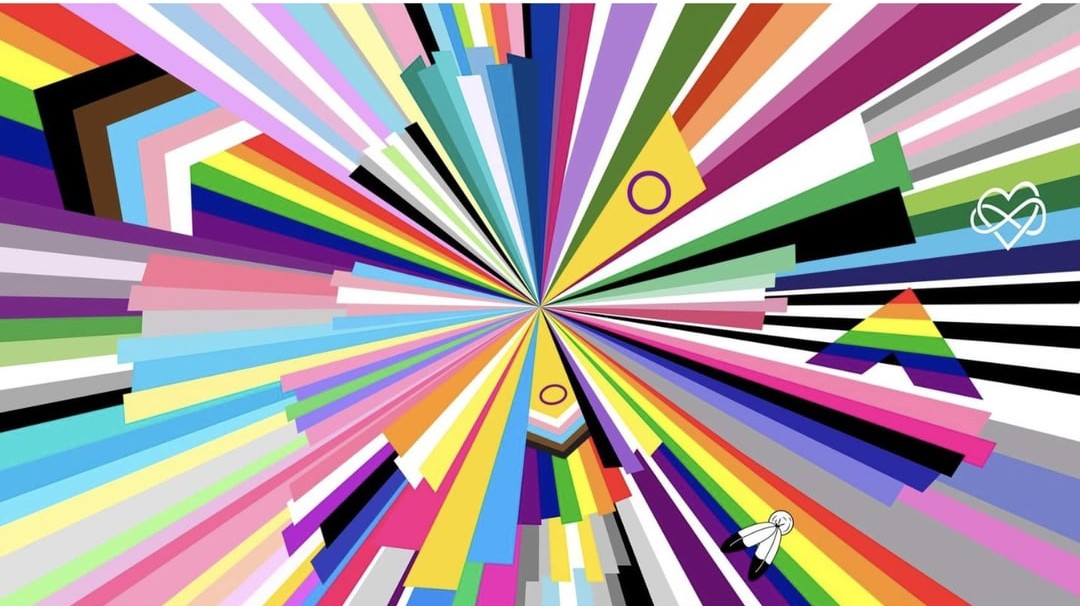
This colorful image represents the vibrant energy and diversity of queer liberation, featuring a sunburst of rainbow stripes radiating outward to symbolize energy and connection. It is filled with specific symbols of identity, including a rainbow pride triangle on the right, purple circles (often associated with bisexual pride), and a white heart outline. The bright, chaotic colors convey a sense of excitement and freedom, while the symbols ground the theme in specific community identities. There is a white letter 'I' visible inside the rainbow triangle on the right side.
simple-description (llama3.2-vision_11b)
The meme is a visual representation of the "Liberation" category in the context of Queer. The image is likely a colorful and vibrant illustration of a butterfly emerging from a cocoon, symbolizing freedom and liberation. The text "Queer Liberation" might appear in a bold, playful font, emphasizing the idea of breaking free from societal constraints and embracing one's true identity.
detailed-analysis (gemma3-27b-vision)
Okay, let's break down this image through the requested theoretical lenses. Given the vibrant and complex nature of the image, particularly the use of flag motifs, several of these lenses are highly applicable.
Visual Description
The image is a strikingly colorful and dynamic abstract composition. It appears to be a radial burst of rectangular stripes, emanating from a central point. The stripes are predominantly in colors associated with various pride flags—LGBTQ+, transgender, bisexual, pansexual, lesbian, asexual, and likely others. The stripes aren't consistently aligned; they are staggered and create a sense of energetic chaos and overlap. The overall effect is a kaleidoscope of color and form, suggesting movement, expansion, and a complex interplay of identities. There's a sense of depth created by the layering and perspective of the stripes. Notably, there are also cartoon elements - what appears to be a stylized bird and a four-leaf clover emblem with interlocking loops. These add a playful, almost whimsical dimension to the otherwise boldly abstract design.
Foucauldian Genealogical Discourse Analysis
This image can be analyzed through a Foucauldian lens as a visualization of the construction of identity and categorization. Michel Foucault’s genealogy focuses on how knowledge and power are intertwined in shaping our understandings of the world. The multitude of flags represents discrete categories and identities constructed through discourse. Each flag defines a group by simultaneously including and excluding.
The image doesn't present these identities as natural or essential, but rather as effects of power/knowledge systems. The radiating pattern suggests that these categories are not static; they expand, overlap, and evolve over time, challenging any notion of fixed or essential identity. The layering and overlap of stripes demonstrate how categories are not mutually exclusive but constantly interact and influence each other. The cartoon elements represent a reclamation of self by those categorized, expressing a unique way to interact with the systems meant to define them.
Through a genealogical approach, we can see how the very language of identity (the flags themselves) is a product of historical forces, struggles for recognition, and the exercise of power. The image visualizes the discourse itself, showcasing the complex and constructed nature of the categories it represents.
Critical Theory
The image embodies aspects of Critical Theory, specifically the exploration of power dynamics and social structures. The radiating stripes can be interpreted as a visual representation of social categories—those who are included (visible within the stripes) and those who are excluded (represented by the gaps and the periphery).
The vibrancy and profusion of colors suggest a celebration of diversity, but also hints at the potential for conflict and fragmentation. The layering of the stripes implies a complex interplay of power relations. Some stripes might be more prominent or dominant than others, suggesting inequalities in social influence and representation. The image questions dominant narratives and challenges viewers to consider the constructed nature of social categories.
The cartoon elements represent a form of cultural expression that exists outside of dominant systems, providing a space for creativity, resistance, and self-expression.
Queer Feminist Intersectional Analysis
This image is particularly rich for a Queer Feminist Intersectional analysis. The use of multiple pride flags speaks directly to the diversity within LGBTQ+ communities and the need to recognize the intersecting experiences of individuals based on their sexual orientation, gender identity, race, class, and other social categories.
The radial burst and overlapping colors emphasize the interconnectedness of these identities. Someone might identify with multiple flags simultaneously, and their experiences will be shaped by the unique intersection of those identities. The image rejects the notion of a singular "queer" experience and instead embraces the fluidity and complexity of lived realities.
The cartoon elements create a space for playfulness and self-expression, challenging dominant narratives and celebrating the diversity of queer and feminist experiences. The image highlights the importance of centering marginalized voices and challenging systems of oppression that impact individuals based on their intersecting identities.
Postmodernism
This image strongly embodies aspects of Postmodernism. The fragmented and chaotic nature of the composition rejects the notion of a unified, coherent worldview. The radial burst and overlapping stripes disrupt traditional notions of order, hierarchy, and representation.
The image can be seen as a rejection of grand narratives and a celebration of difference and multiplicity. There is no single dominant meaning or interpretation; the image invites viewers to construct their own meaning based on their individual experiences and perspectives. The playful, cartoon-like elements further subvert traditional notions of artistic expression. The image embraces a sense of irony, ambiguity, and fragmentation.
Let me know if you'd like me to elaborate on any of these interpretations or apply other theoretical lenses!
simple-description (llama3.2-vision)
The meme appears to be a colorful, abstract image with a mix of shapes and patterns. In the center of the image, there's a text that reads "I can explain it" in a bold, playful font. The image's design and text seem to be a humorous way to poke fun at the idea that complex or abstract concepts can be simplified or explained in a straightforward way.
tesseract-ocr
=