First Seen
2024-06-18T23:21:54.914698+00:00
simple-description (qwen3.5_2b-q8_0)
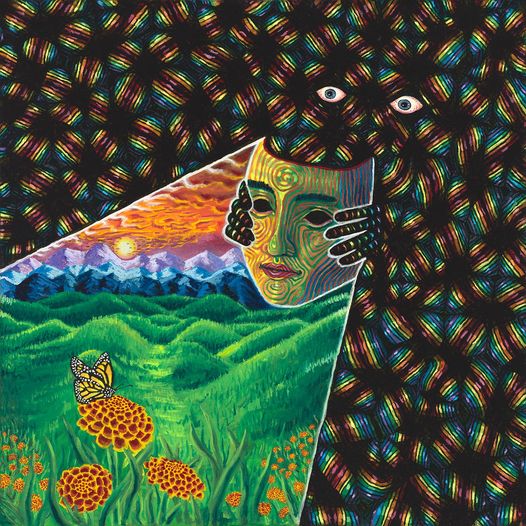
This image depicts a surreal landscape where a bright, nature-filled scene on the left contrasts with a dark, patterned void on the right containing two staring eyes. In the center, a face constructed from multiple masks bridges these worlds, symbolizing the complex identity often explored in queer liberation narratives. A signature text reading "NANA" is visible at the bottom.
simple-description (llama3.2-vision_11b)
The meme features a colorful illustration of a person with a queer liberation theme, surrounded by flowers and a butterfly. The image is captioned "Queer Liberation" and includes a quote from a queer activist. The meme is a celebration of queer identity and liberation, using vibrant colors and imagery to convey a sense of freedom and empowerment.
detailed-analysis (gemma3-27b-vision)
Okay, let's break down the image with analysis using the frameworks you've requested, addressing each section only where relevant. It's important to note that interpretations can be subjective, and many of these theories overlap!
Visual Description
The image is a vibrant, surreal artwork with a strong emphasis on pattern and symbolic imagery. The composition features a fractured, almost cubist, portrait of a face partially obscuring a landscape.
- Foreground: Bright orange and yellow flowers bloom in a field of green. A butterfly hovers near the flowers.
- Middleground: The landscape ascends into rolling hills, eventually leading to snow-capped mountains under a vivid sunset sky. The landscape is partially overlaid by the portrait of a face.
- Portrait: The face is stylized, with swirling patterns within its features. It’s a relatively androgynous face, appearing somewhat peaceful. One hand, decorated with swirling, fractal-like patterns, reaches toward the viewer.
- Background: The background is comprised of a dense, repetitive pattern of stylized, rounded shapes (almost like stacked tear drops or abstracted leaves). It’s a dark field with the shapes being multicolored.
- Overall Style: The painting has a psychedelic, dreamlike quality, combining elements of surrealism, pattern-based art, and stylized portraiture. The use of color is very saturated and contributes to the overall energetic feeling of the work.
Foucauldian Genealogical Discourse Analysis
This artwork invites a Foucauldian reading due to its disruption of traditional representation and layering of imagery. The fracturing of the face and landscape challenges the idea of a unified, stable "self" or a fixed "natural" world.
- Power/Knowledge: The way the face contains and partially obscures the landscape suggests a power dynamic – a human subject asserting dominance over nature. However, the fracturing of the face could also be seen as a disruption of this power – a questioning of the subject's ability to fully “know” or “control” the external world.
- Discourse and Subjectivity: The swirling patterns and fractured form could be interpreted as representations of internal psychological processes – the chaotic, fragmented nature of subjective experience. Foucault would suggest that these are not purely natural occurrences, but are shaped by the discourses we internalize (social norms, cultural narratives, etc.).
- Genealogy: A genealogical reading would trace the historical roots of the imagery. For example, the idealized landscape might connect to Romantic conceptions of nature, while the stylized face could be linked to artistic traditions of portraiture. By fracturing these traditions, the artist deconstructs their authority and reveals the contingent nature of meaning.
Critical Theory
The painting can be understood within the framework of Critical Theory, which is concerned with challenging power structures and exposing hidden ideologies.
- Critique of Representation: The painting rejects a straightforward, objective representation of reality. The fractured form and symbolic imagery suggest that all representation is inherently mediated, and therefore, potentially distorted. This aligns with the Critical Theory's suspicion of universal truths.
- Alienation: The fragmented face and the way it’s juxtaposed with the landscape might evoke a sense of alienation – a separation between the subject and the natural world. This could be interpreted as a commentary on the modern condition, where individuals are increasingly disconnected from both nature and their own inner selves.
- Deconstruction: The artist breaks down traditional forms of depiction—landscape, portraiture—forcing the viewer to question the very ways we understand visual meaning.
Postmodernism
The artwork embodies many key characteristics of Postmodernism:
- Fragmentation and Pastiche: The fractured form of the face and the juxtaposition of different visual elements (landscape, portrait, pattern) create a fragmented, non-linear composition. This echoes the Postmodern emphasis on breaking down grand narratives and embracing multiplicity.
- Self-Reflexivity: The painting draws attention to its own construction as an artwork. It's not simply representing a scene, but is actively questioning the very act of representation.
- Rejection of Essentialism: The androgynous face challenges traditional notions of identity and rejects the idea of a fixed, essential self. This aligns with the Postmodern skepticism toward fixed categories and universal truths.
- Blurring Boundaries: The artist merges different visual styles and elements, blurring the boundaries between inside and outside, subject and object, and reality and imagination.
Queer Feminist Intersectional Analysis (This framework is particularly relevant given the ambiguous and androgynous portrayal of the figure)
- Deconstruction of Gender: The face is purposefully ambiguous, challenging binary notions of gender. This can be interpreted as a queer feminist strategy to disrupt heteronormative expectations and create space for non-binary identities.
- Interconnectedness of Oppression: The layering of imagery—the face superimposed on the landscape—can be seen as a metaphor for the ways in which different forms of oppression (e.g., patriarchy, colonialism, environmental destruction) are interconnected and mutually reinforcing.
- Reclaiming the Gaze: The artwork subverts the traditional male gaze by presenting a subject who is both powerful and vulnerable, and who is not defined by their relationship to a male viewer. The viewer is invited to engage with the artwork on their own terms, without being subjected to objectification or control.
- Nature/Culture Divide: The juxtaposition of the face and landscape also speaks to the feminist critique of the nature/culture divide—the Western philosophical tradition that has historically positioned nature as “other” to culture, and has often been used to justify the domination of both women and the natural world. The artwork suggests that these categories are not as fixed or natural as they appear.
In conclusion: This is a complex and layered artwork that invites multiple interpretations. Its blend of symbolism, fragmentation, and ambiguity makes it particularly well-suited for analysis through a variety of critical frameworks. Each of these lenses offers a different perspective on the artwork's meaning and significance, revealing its rich and multifaceted character.
tesseract-ocr
fae Aaa Ge. Pa <A Ri Rd 6M A Ze = i pe <> Ee eA a ES 7S AY aR * 23 2 SN SIE a e os WIS e —_ aT IN ee = > nll a ie p e es hy on, — Ng IKEA oo + aa i Se ee eS Se See 2 Ca lt am e [\\ oe A eal, ar ee p ap Ky xs i \ se x’ fa. , Ss oe . NaN sy vr Nl vi ep yy as Ks NON ys Ae Se ba oy oS ANE Wel Nae . EY ‘s i /
simple-description (llama3.2-vision)
The meme is a screenshot of a tweet from a popular internet personality, which reads: "when you finally get to the point where you can be yourself and not hide who you are". The image is a cartoon illustration of a person with a big smile, surrounded by a colorful, psychedelic background.