First Seen
2023-11-29T19:50:23+00:00
simple-description (qwen3.5_2b-q8_0)
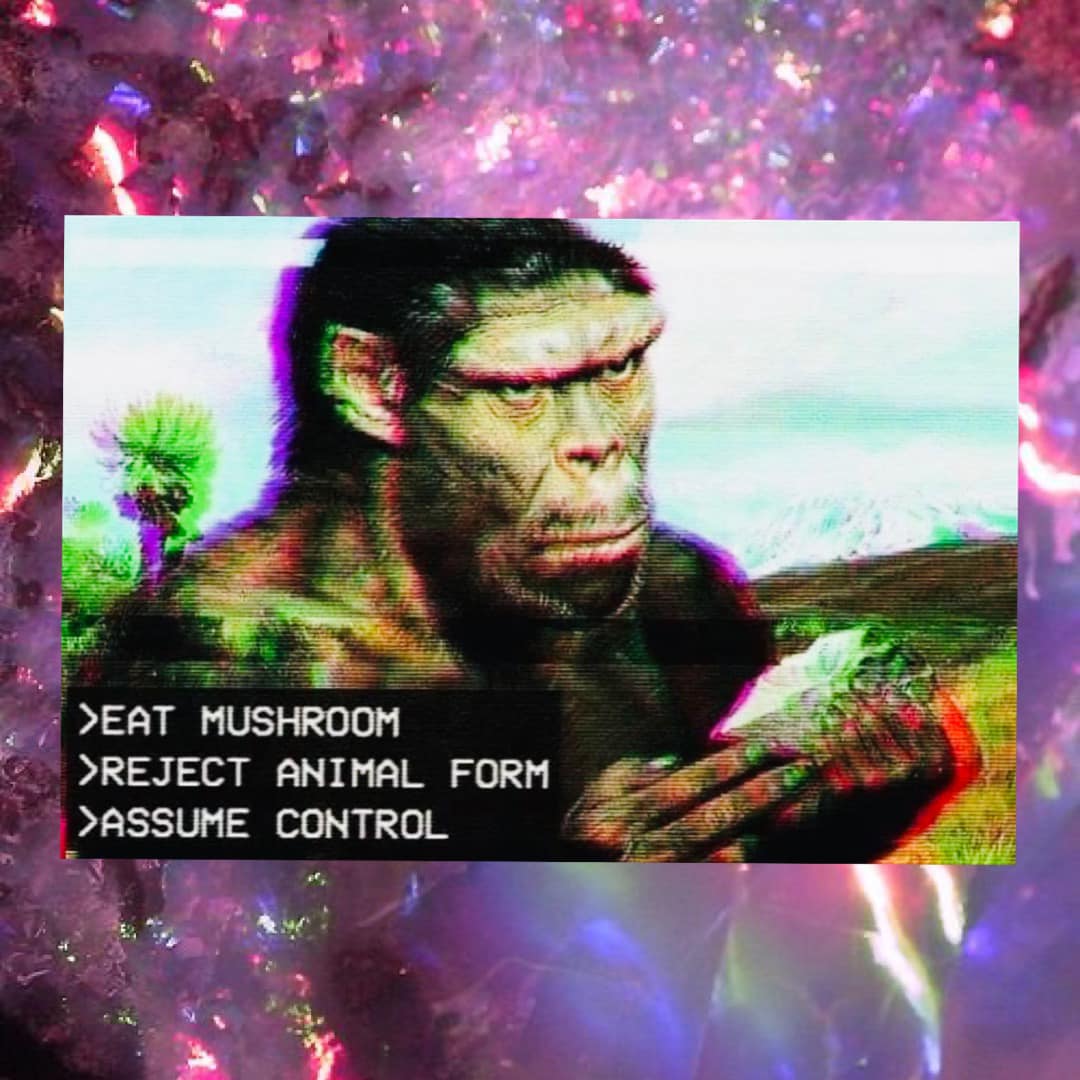
This meme is a screenshot from the video game Prey, featuring the hybrid character Jawed, overlaid with a computer interface showing three choices. The text options represent a tension between instinct and agency: "Eat Mushroom" suggests nature and survival, "Reject Animal Form" emphasizes human identity, and "Assume Control" represents total, god-like power.
From the perspective of Queer and Post-Structuralist theory, the image illustrates the instability of identity. Just as the game forces the character to choose between a human form and an "other" (the animal), queer theory questions fixed social binaries and roles. The ultimate option to "Assume Control" symbolizes a complete rejection of societal norms, asserting that the individual has the right to govern themselves and define their own existence without external dictates.
simple-description (llama3.2-vision_11b)
The meme is a humorous take on the concept of post-structuralism, a philosophical movement that challenges traditional notions of meaning and structure. The image features a monkey eating a mushroom, with the text "I'm not arguing, I'm just eating this mushroom and my brain is changing" - a playful commentary on the idea that one's perspective can be altered by external influences, much like the monkey's altered state. The meme pokes fun at the idea that our perceptions can be changed by external factors, much like the monkey's brain is changed by the mushroom.
detailed-analysis (gemma3-27b-vision)
Okay, here's an analysis of the image, broken down into the sections you requested, only including those relevant to the image's content. It's a dense and layered image, so the analysis will be correspondingly complex.
Visual Description
The image presents a digitally manipulated portrait of a gorilla, seemingly taken from a vintage source (perhaps a movie still). The gorilla is centered, looking directly at the viewer with a somewhat intense expression. The image is heavily distorted, exhibiting a significant degree of chromatic aberration (specifically, red, green, and blue separation), scan lines, and general "glitch" aesthetic – reminiscent of early digital displays or corrupted data.
Superimposed over the image, in a monospace font, are three commands/statements:
>EAT MUSHROOM>REJECT ANIMAL FORM>ASSUME CONTROL
The background is a vibrant, swirling cosmic or nebulous landscape, in shades of purple, pink, and blue, adding to the surreal and otherworldly quality. The combination of the retro imagery, digital distortion, and coded commands creates a distinctly cyberpunk or transhumanist feel.
Foucauldian Genealogical Discourse Analysis
This image can be read through a Foucauldian lens as a disruption of established power/knowledge relations surrounding the "animal" and "human." Foucault's genealogical method explores how concepts (like "animal" or "human") are not natural or inherent, but are constructed through historical discourses.
- Discipline and Normalization: Historically, the concept of the "animal" has been used to define and normalize "humanity" through opposition. Defining what isn't human serves to reinforce the boundaries of human identity and social control. The image challenges this by suggesting a transformation beyond the animal state.
- Power/Knowledge: The commands themselves, presented in the style of computer code, suggest an attempt to re-write the discourse of animal existence. The act of "eating the mushroom" can be interpreted as ingesting a force that destabilizes the established power structures associated with categorization.
- The "Monster" and Transgression: The implied transformation—rejecting animal form and assuming control—creates a "monster" figure that transgresses the boundaries of established categories. This transgression reveals the constructed nature of those categories and challenges the logic that sustains them. The glitching and distortion visually represent this disruption of the stable ordering of knowledge.
Postmodernism
The image deeply resonates with core tenets of Postmodern thought:
- Deconstruction of Binary Oppositions: The image destabilizes the traditional binary opposition of "human" vs. "animal." The intention isn't to become human, but to transcend both categories, suggesting that these classifications are artificial constructs.
- Simulacra and Simulation: The image exists as a simulation—a digitally manipulated representation—of an animal. The distortion and glitching further blur the lines between the real and the simulated, questioning the authenticity of representation. The commands are also a form of simulation—a simulated pathway to "control"—rather than actual control itself.
- Meta-Narratives: Postmodernism challenges grand narratives—universal explanations of reality. The image rejects any inherent "meaning" of animal existence, instead presenting a fragmented, unstable, and self-referential visual experience.
- Irony and Playfulness: There is a degree of ironic playfulness in the presentation. The commands are delivered in a stark, computer-like language, but the underlying message is far from logical or rational.
Queer Feminist Intersectional Analysis
This image, while not explicitly gendered, lends itself to a queer feminist interpretation when considering themes of transformation, agency, and disruption of established norms:
- Deconstruction of Essentialism: The image rejects the essentialist notion that identity (even animal identity) is fixed or natural. The transformation into something beyond the animal form suggests a rejection of inherent categories and a celebration of fluidity and change.
- Agency and Self-Determination: The commands – "eat," "reject," "assume" – suggest a deliberate act of self-transformation. This can be interpreted as a claiming of agency and a rejection of imposed definitions. This is particularly resonant within queer and feminist thought, where reclaiming agency over one's body and identity is crucial.
- Challenging Hierarchies: The implied transcendence of the animal form can be seen as a disruption of the hierarchical ordering of species, where humans traditionally occupy the top position. This can be linked to feminist critiques of patriarchal systems of domination and oppression.
- Trans/Non-Binary Metaphor: The image can be interpreted as a visual metaphor for the transgender or non-binary experience—a rejection of assigned categories and an embrace of fluid self-definition. The "transformation" implied in the image mirrors the process of transitioning or living outside of the gender binary.
In essence, the image is a complex visual statement that invites multiple layers of interpretation. It's a compelling example of how digital art can be used to explore themes of identity, power, and transformation, challenging viewers to question their assumptions about the world around them.
simple-description (llama3.2-vision)
This meme features a screenshot from the 1996 video game "Dino Dinosaur" (a game known for its poor graphics and humorous glitches). The image shows a dinosaur character with a puzzled expression, and the text "Dino Dinosaur says" appears above the dinosaur. Below the dinosaur, the text "Eat mushroom. Reject animal form. Assume control." is written in a style reminiscent of a video game menu.
tesseract-ocr
i lee” i a i - : a em , “ 5 ~_ # . e m . rm rh f m f 1% ’ oY * - ro me 4 . LU Py ”. ht = * Cl F r “ie e.4 rk : . === = . xy — =F = be yy Fee ee ' in—igil ecu ees ee ee es - Soe Sse mee = ee ASSUME CONTROL a —_ Py aa 7” I ae ie « , ata a ‘a a