First Seen
2024-01-24T17:22:15.987391+00:00
simple-description (qwen3.5_2b-q8_0)
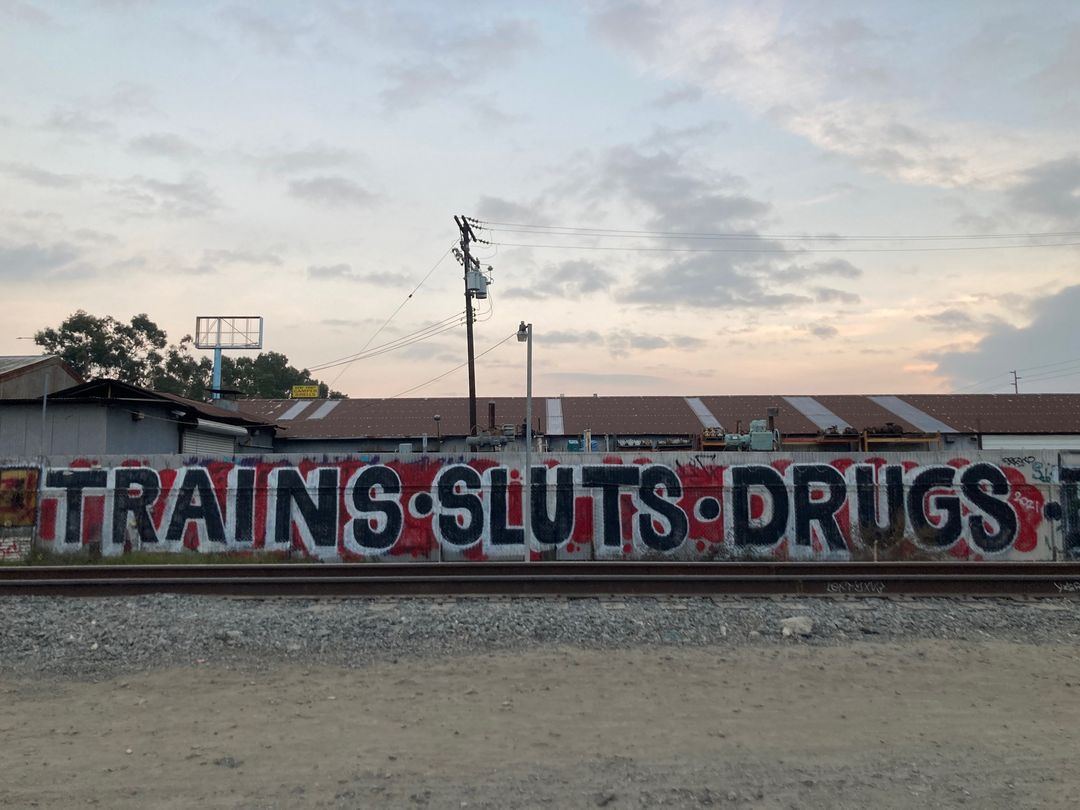
This meme uses the text "TRAINS • SLUTS • DRUGS" to suggest that queer people are just regular people who love trains, have sex, and take drugs. For a person who cannot see the image, this text conveys the idea that "queer" is a fancy word for sex, drugs, and transit, while the theory of Queer - Post-Structuralism suggests that "queer" isn't a separate category to be found, but a descriptor for the messy, unfiltered truth of living. It implies that we don't need a "third option" because the world is already queer—everything, like trains and sexual encounters, is just the queer world in everyday form.
simple-description (llama3.2-vision_11b)
The meme is a playful take on the idea of post-structuralism, a philosophical movement that challenges traditional notions of meaning and identity. The image, which features a train with a queer-themed graffiti, is a tongue-in-cheek reference to the idea that meaning is not fixed, but rather constructed through social and cultural contexts. The text "TRAINS" is written in bold, queer-friendly letters, while the phrase "QUEER" is scribbled in the background, highlighting the idea that identity is fluid and context-dependent.
detailed-analysis (gemma3-27b-vision)
Okay, here's an analysis of the image, broken down into sections as requested, with explanations of each approach and how it applies to the photograph. I'll indicate if a section doesn't apply or is minimal.
Image Description
The photograph shows a freight train car spray-painted with the words "TRAINS SLUTS DRUGS" in large, bold, black letters. The lettering is stark and appears to be hastily done, suggesting a subversive act. The train car is positioned on a track surrounded by gravel, with an industrial backdrop of low-slung buildings and utility poles. The sky is overcast and muted, with a dawn or dusk light. The overall feeling is gritty, raw, and evocative of the margins of society.
Foucauldian Genealogical Discourse Analysis
This approach, heavily influenced by Michel Foucault, looks at how the terms within the graffiti have been constructed through discourse and power relations. It’s less about a direct "meaning" and more about the historical emergence and normalization of these categories.
- Trains: Trains historically represent both freedom of movement and, more recently, a means of industrial transportation. It's a space outside normal regulation, the railroad track a liminal space. The presence of the word “trains” alongside the others suggests a connection between movement, marginalized communities, and the illicit. The term itself has been shaped by industrial history and capitalist expansion.
- Sluts: This term is a powerful example of the social construction of female sexuality. Foucault would argue that “slut” isn’t about an inherent quality; it's a label applied through power dynamics (patriarchy) to control female bodies and sexuality. The labeling process itself defines deviance, and defines those who violate the norm. The visibility of this term on the train car asserts a reclaiming of the label or a defiant expression against moral condemnation.
- Drugs: The category of “drugs” is entirely socially constructed. What is considered a “drug” changes over time and is determined by political, economic, and cultural factors. The criminalization of certain substances creates a specific discourse around addiction, morality, and social control.
The combination of these terms suggests an interconnectedness between transgression, sexuality, movement, and social control. The graffiti is a disruption of dominant discourses, a fleeting, rebellious inscription in a space where power is usually asserted through regulation (the railway).
Critical Theory
Critical Theory, stemming from the Frankfurt School, examines how power structures and ideologies shape our perceptions of reality.
The graffiti can be interpreted as a form of resistance against the dominant culture. The placement on the train car – a symbol of commerce and movement – serves to interrupt the smooth functioning of the capitalist system. The explicit, confrontational language is a challenge to the norms of politeness and respectability.
The message suggests a critique of social marginalization. It points to the ways in which certain groups (those associated with “sluts” or “drugs”) are ostracized and excluded from mainstream society. By juxtaposing these terms, the graffiti invites a critical reflection on the systems of power that create and perpetuate these inequalities. The industrial backdrop emphasizes the connection between these issues and the structures of capitalism.
Marxist Conflict Theory
From a Marxist perspective, the image represents the tensions inherent in a class-based society.
- The Train as a Symbol: Trains are crucial to capitalist infrastructure – moving goods, facilitating trade, and maintaining the flow of capital. Spray-painting the train car can be seen as a symbolic act of sabotage or disruption against this system.
- Marginalized Groups: The terms “sluts” and “drugs” often relate to groups that are economically disadvantaged and subject to exploitation. The graffiti can be understood as a protest against the conditions that lead to marginalization and social unrest.
- Class Conflict: The image suggests a simmering tension between those who benefit from the existing order and those who are excluded from it. The graffiti is a form of subversive communication, a way for marginalized voices to express their discontent and challenge the status quo.
The graffiti is a manifestation of the underlying class conflict that exists in capitalist societies, even in a veiled form.
Postmodernism
Postmodernism challenges the idea of grand narratives and fixed meanings.
- Deconstruction of Language: The graffiti can be seen as a deliberate disruption of language and meaning. The terms are presented in a raw, unpolished manner, stripped of their conventional associations. This challenges the idea that language is a stable and reliable system of communication.
- Fragmentation and Instability: The graffiti is a fleeting moment, a temporary inscription that will eventually be erased or obscured. This reflects the postmodern emphasis on fragmentation, impermanence, and the lack of fixed meaning.
- Rejection of Authority: The graffiti is an act of defiance against authority and social norms. It rejects the idea that there is a single, correct way of thinking or behaving.
The image embodies the postmodern sensibility of questioning, disrupting, and challenging established systems of thought.
Queer Feminist Intersectional Analysis
This perspective examines how systems of power intersect to create unique experiences of oppression for individuals based on their gender, sexuality, race, class, and other identities.
- "Slut" as a Gendered Insult: The term "slut" is explicitly directed at women and girls and is used to shame and control their sexuality. It embodies patriarchal norms that police female bodies and behavior.
- Intersection with Marginalization: The intersection of gender, sexuality, and class can exacerbate experiences of marginalization. Individuals who identify as queer or transgender and who are also economically disadvantaged may face increased vulnerability and discrimination.
- Train as a Space of Movement & Transgression: The train car, a public space, becomes a site for reclaiming agency and challenging normative expectations. The graffiti can be interpreted as a disruption of heteronormative and patriarchal power structures.
- Drug Use and Criminalization: The criminalization of drug use disproportionately affects marginalized communities, particularly those of color and those living in poverty. Drug use is often criminalized, creating a cycle of incarceration and further marginalization.
The graffiti can be understood as a challenge to interlocking systems of oppression, a demand for social justice, and a celebration of marginalized identities. It asserts the right to sexual liberation, challenges the criminalization of drug use, and demands recognition for those who are often silenced and excluded.
Let me know if you'd like me to elaborate on any of these analyses!
simple-description (llama3.2-vision)
This meme is a photo of a graffiti-covered wall with the words "Trains, Sluts, Drugs" spray-painted on it. The text is written in bold, block letters and appears to be a humorous or ironic statement about the types of things that might be found near a train track. The image is likely meant to be humorous or satirical, but its meaning is open to interpretation.
tesseract-ocr
Be a sa SS a rn a 1 egg a AA Ba a NY = ats a VW al” ee /g | i} Can @ Se OF Pa FSX; Se