First Seen
2024-03-17T23:31:26.214146+00:00
simple-description (qwen3.5_2b-q8_0)
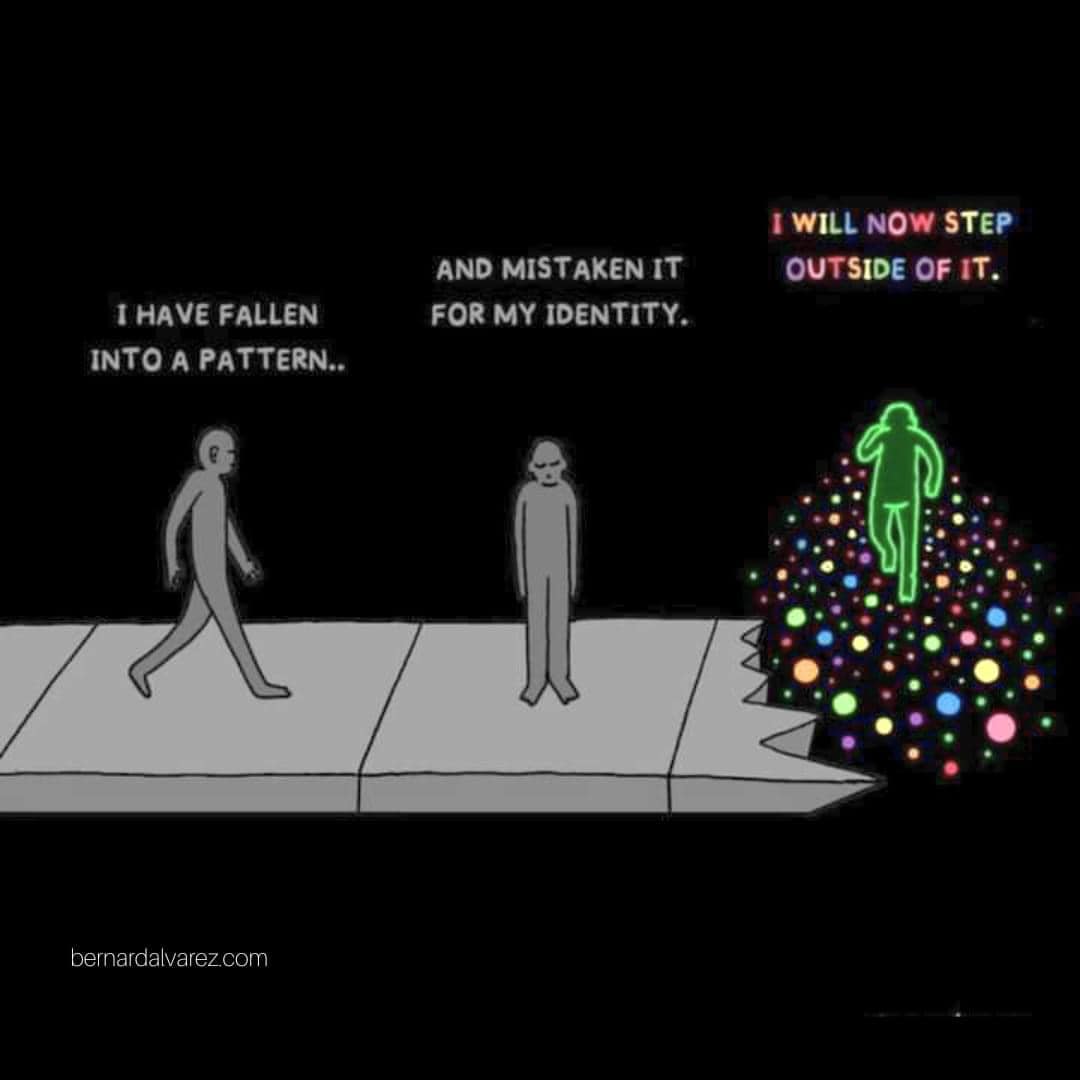
This meme is a visual deconstruction of "identity" and rigid binary structures. In a queer and post-structuralist framework, the image illustrates how individuals often unknowingly conform to external, social definitions of who they are. The first figure walks blindly into a "pattern," symbolizing how we accept pre-determined gender or societal expectations without question. The second figure, who realizes this is just a surface "identity" rather than their true self, represents the critical moment of deconstruction. Finally, the glowing, colorful figure steps outside of these rigid structural categories, representing the queer possibility of creating a new form of self that is fluid and non-homogeneous, refusing to be contained by the binary molds of the past.
Text included in the image:
"I HAVE FALLEN INTO A PATTERN.."
"AND MISTAKEN IT FOR MY IDENTITY."
"I WILL NOW STEP OUTSIDE OF IT."
simple-description (llama3.2-vision_11b)
The meme depicts a person who has been so deeply influenced by post-structuralist thought that they've lost their sense of self and identity. The text "I used to have a personality, and it was so... me" is a commentary on the post-structuralist idea that identity is a social construct, and that our sense of self is shaped by societal norms and expectations. The meme is poking fun at the idea that we can't even define ourselves, and that our sense of identity is a fragile and constantly changing thing.
detailed-analysis (gemma3-27b-vision)
Okay, let's analyze the image with the requested theoretical lenses. It's a stark and thought-provoking piece, lending itself well to several interpretations.
Visual Description
The image is a minimalist cartoon with a muted color palette. Three identical, faceless figures are depicted walking on a gray tiled floor. The figures are silhouetted against a dark background. The background is stark, adding to the sense of isolation and existential questioning.
The figures are arranged sequentially, representing a progression. The first figure is walking on the tiled floor, seemingly unaware of its limitations. The second figure has stepped onto the edge of the tiles, and the third figure has completely left the tiled area, launching into a shower of green light, representing some sort of transformative, or even deconstructive act.
Each figure is accompanied by a phrase:
- Figure 1: "I have fallen into a pattern..."
- Figure 2: "and mistaken it for my identity."
- Figure 3: "I will now step outside it."
The image suggests a metaphor for recognizing and breaking free from constricting structures, or societal norms, and possibly embracing the unknown.
Foucauldian Genealogical Discourse Analysis
This image resonates strongly with Michel Foucault’s work. The tiled floor can be seen as a representation of discourse. The repetitive, patterned tiles symbolize the ingrained systems of thought, language, and power that structure our understanding of the world. These patterns are not neutral; they actively shape our perceptions, categorize us, and govern our behavior.
The first figure "falling into a pattern" represents the moment of socialization, when we internalize these discourses. The statement "and mistaken it for my identity" highlights Foucault's point that identity is not an inherent, essential truth, but rather a construction of these power dynamics. We believe we are expressing 'who we are,' but we are often simply enacting roles and expectations produced by these discourses.
The third figure "stepping outside it" is crucial. It suggests a deliberate act of challenging these discourses. However, Foucault wouldn't see this as escaping to some 'pure' authentic self. Instead, it’s a move into a space of difference—a potentially destabilizing but liberating realm where alternative ways of being and thinking can emerge. The shower of green light could be seen as the effects of this challenge: a disruption of the established order.
A genealogical approach would trace how these patterns (the 'tiles') came into being, what historical power relations underpin them, and how they have evolved over time.
Critical Theory
This image aligns with the broad goals of Critical Theory – the questioning of power structures and their influence on consciousness. The patterned tiles represent societal norms, expectations, or ideologies. These can be anything from gender roles and consumer culture to political systems and religious beliefs.
The figures' progression symbolizes the process of becoming aware of these structures and challenging them. The initial 'falling' suggests an unwitting acceptance, followed by the realization that this pattern has been wrongly equated with one's authentic self.
The final figure's act of stepping outside is a call for emancipation. It symbolizes a rejection of externally imposed identities and a quest for self-determination. However, like Critical Theory, it doesn’t suggest a return to a natural state. It suggests a constant process of critique, self-reflection, and resistance.
The green light is important. It suggests change, transformation, but also potentially the disruptive consequences of challenging established power structures.
Postmodernism
This image is deeply rooted in postmodern thought. The emphasis on the constructedness of identity ("mistaken it for my identity") is a central tenet of postmodernism. The image rejects the idea of a stable, essential self. Instead, it proposes that identity is fluid, fragmented, and contingent—a product of the discourses and systems we inhabit.
The rejection of overarching narratives or "grand theories" is also evident. The image doesn't offer a specific solution or path forward. It simply highlights the process of recognizing and challenging the patterns that shape our lives.
The ambiguity of the green light is also key. It suggests the impossibility of a single, definitive meaning. The "stepping outside" isn't a complete liberation, but rather a movement into a realm of uncertainty and possibility. This aligns with the postmodern emphasis on deconstruction, fragmentation, and the rejection of binary oppositions.
Queer Feminist Intersectional Analysis
The image offers potent metaphors for queer and feminist experiences of marginalization and liberation. The patterned tiles can represent heteronormative and patriarchal structures that constrict and define individuals. The first figure "falling" suggests being socialized into these oppressive norms. The second figure acknowledges the internalization of these norms and their mistaken equation with authentic selfhood.
"Stepping outside" represents the act of queering and refusing to conform. The green light can symbolize the vibrant energy and potential of living authentically outside these constraints. It also suggests the risks and challenges that come with refusing to conform—the potential for disruption, marginalization, and even violence.
An intersectional reading emphasizes that these patterns of oppression are interconnected and mutually reinforcing. The tiled floor isn't just about gender or sexuality; it can represent all forms of social categorization and power dynamics—race, class, ability, etc. "Stepping outside" isn't just about rejecting one constraint; it’s about challenging the entire system of oppression. The green light could represent the coalition building and solidarity needed to create a more just and equitable world.
I hope this detailed breakdown is helpful. Let me know if you'd like me to elaborate on any of these points, or explore additional theoretical frameworks!
simple-description (llama3.2-vision)
This meme is a play on the idea that a person's identity is often tied to their appearance. The image shows a person walking in a straight line, but then suddenly takes a sharp turn to the right, implying that they have changed direction and are now going in a new, unexpected path. The text reads: "I have fallen into a pattern... and mistaken it for my identity."
tesseract-ocr
Pee le) Bais AND MISTAKEN IT OUTSIDE OF IT. Wis aa FOR MY IDENTITY. INTO A PATTERN.. ee | le \ ah Pn os ae i vee te eee Pa) Oe reek Ps a 2 ; LRT ar ri om Pe, rt . A by * o@ te <] i Pe ‘i @ J |. bernardalvarez.com