First Seen
2023-05-10T21:03:39+00:00
simple-description (llama3.2-vision_11b)
The meme is a screenshot of a Reddit comment from a user named "QueerCrip" who is sharing a nostalgic sentiment about their past. The user is expressing that they used to dislike the popular anime "Sailor Moon" when they were younger, but now they love it. The text reads: "I used to hate Sailor Moon but now I love it. I think it's because I was really into the aesthetic of the show when I was younger and I'm still really into it now."
detailed-analysis (gemma3-27b-vision)
Okay, let's break down this meme through the lenses of several theoretical frameworks. I'll only include sections that genuinely apply – some of these theories won't be a good fit.
Visual Description
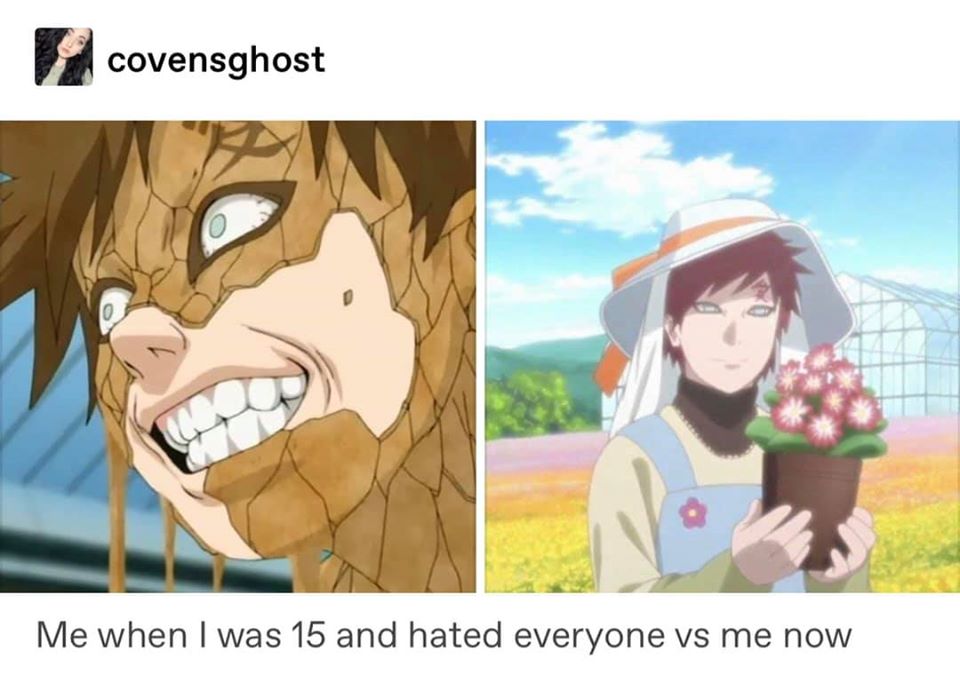
The meme presents a stark juxtaposition of two images. On the left, we see a screencap from the anime Naruto, depicting a very young Naruto Uzumaki in a state of intense rage. His facial features are exaggerated – teeth bared, eyes narrowed, face contorted, giving an impression of unfiltered aggression. The color palette leans into warm, earthy tones which heighten the intense emotion displayed.
The right side shows a different anime character (potentially from Yume Nikki) in a gentler setting. This character is smiling serenely, wearing a sun hat and apron, and holding a potted plant filled with flowers. The color palette is bright and pastel, creating a peaceful and domestic atmosphere. The contrast in expressions and settings is dramatic and clearly intended to convey a change in the creator's temperament.
Foucauldian Genealogical Discourse Analysis
This meme provides a lovely illustration of the construction of the self through a change in discourse. The left image represents a discourse of anger, frustration, and potentially, a perceived lack of power. The snarling face is not simply an expression of emotion, but a performance of a certain position within a web of power relations. "Hating everyone" isn't a natural state, but a way of positioning oneself against perceived threats or oppressions, even if those are internal or imagined.
The right image shows a shift in discourse – a move away from the aggressive, oppositional stance towards a more nurturing, domestic one. This shift doesn't necessarily mean the person has overcome whatever caused the anger. Rather, it suggests a reconfiguration of power relations, perhaps through the adoption of new practices (gardening, domesticity) that define the self in a different way. Gardening, specifically, becomes a practice that performs a different mode of being—one focused on care, growth, and gentleness. The meme traces a genealogy of the self—how it's been formed over time through changes in discourse and practice.
Critical Theory
From a Critical Theory perspective, this meme embodies a critique of the (often unspoken) pressure on individuals to project strength through anger and aggression, particularly during adolescence. The snarling Naruto represents a response to perceived injustices or vulnerabilities. This aggression is a socialized expectation in many cultures (particularly among young men) – a way to "assert dominance" or project an image of invulnerability.
The shift towards gardening signifies a rejection of this mode of being. It suggests a move away from the internalized demands of a patriarchal or competitive society towards a more self-nurturing and communal existence. Gardening, in this light, is a subversive act—a quiet refusal to participate in the traditional power dynamics that equate strength with aggression. The meme highlights the possibilities for resisting these pressures and constructing a more authentic, compassionate self.
Postmodernism
The meme's very structure is postmodern. It juxtaposes two radically different images, creating a playful and ironic commentary on the fluidity of identity. There's no claim to a stable, coherent "self" here; only a series of shifting performances. The meme suggests that identity is not a fixed essence, but a constructed performance dependent on time, place, and circumstance. It also hints at the death of grand narratives–there is no grand story of self, but merely a series of disjointed images that capture fleeting moments. The meme actively plays with representation and its inherent instability.
In essence, this meme resonates with many critical lenses because it's about a change in perspective and a rejection of imposed norms. It's a small, relatable image that touches on much larger themes of power, identity, and the ongoing process of becoming.
Let me know if you'd like me to elaborate on any of these interpretations or explore other theoretical angles!
simple-description (llama3.2-vision)
This meme is a humorous comparison between a person's current emotions and their past feelings. The text "I used to love [insert topic/thing] but now I hate it" is accompanied by two images, one of a person's joyful expression and another of their annoyed face.
tesseract-ocr
Fd covensghost oe => a= | | rr mY f , A Fee ) , + ce \ : aur WSS | . eS | sag) \ yr ay Me when | was 15 and hated everyone vs me now