First Seen
2023-05-10T21:03:40+00:00
simple-description (llama3.2-vision_11b)
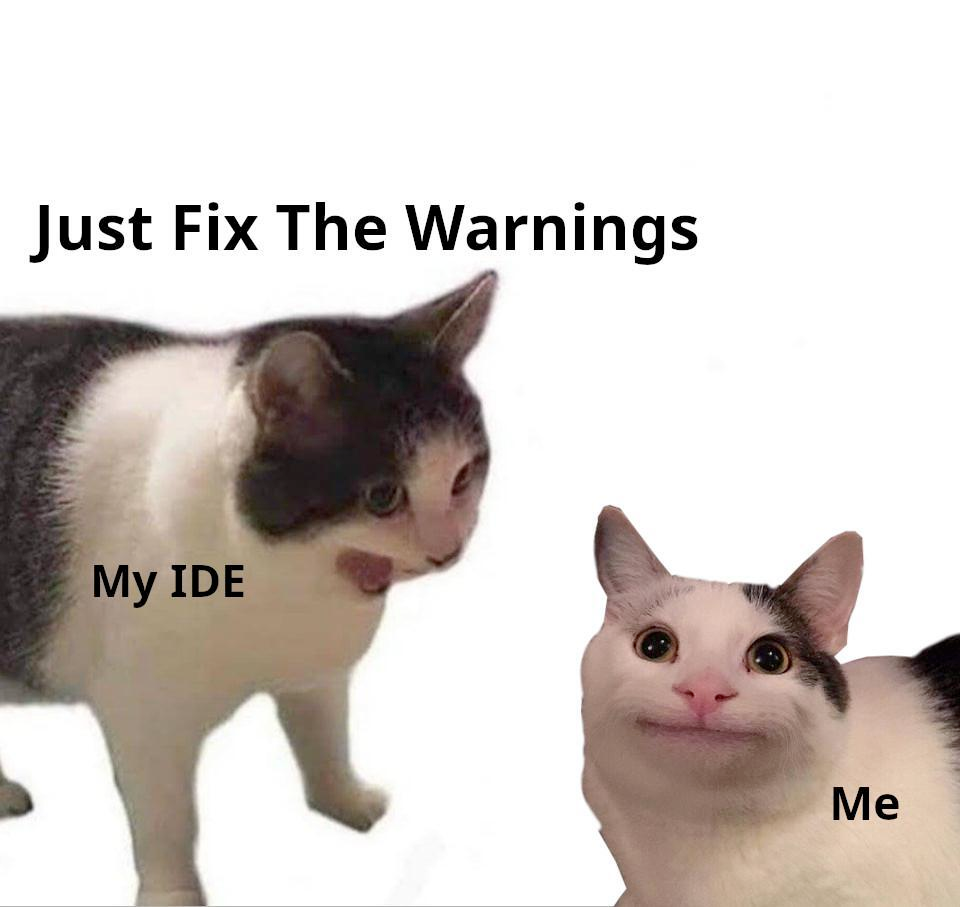
The meme features two cats, one with a puzzled expression and the other with a sarcastic tone. The text "I'm not arguing, I'm just explaining why I'm right" appears above the cats, implying a situation where someone is trying to justify their actions or opinions.
detailed-analysis (gemma3-27b-vision)
Okay, let's analyze this meme using the requested theoretical frameworks, only applying those that are relevant.
Visual Description
The image is a two-panel meme featuring digitally altered cat faces superimposed onto cat bodies. Both cats are depicted in full body, positioned side by side.
- Cat 1 (labeled "My IDE"): Has a highly distorted and unsettling facial expression – its eyes and mouth are unnaturally stretched, creating a grotesque, slightly menacing appearance. It’s positioned in a rather assertive, almost accusatory stance.
- Cat 2 (labeled “Me”): Has a strangely, unnervingly content expression. Its face is stretched but with a bizarrely pleasant, smiling demeanor. Its body language suggests a passive acceptance. The overall effect is unsettlingly cheerful.
The text at the top reads, "Just Fix The Warnings." This is a common frustration within the world of software development and programming.
Foucauldian Genealogical Discourse Analysis
This meme provides a rich site for Foucauldian analysis. The “warnings” in programming represent discourse – a system of thought, language, and practice that creates knowledge and power relations.
- Power/Knowledge: The IDE (Integrated Development Environment) knows what is “correct” or “incorrect” code based on its internal rules. These rules aren't inherently true, but become 'true' through the IDE’s authority. Warnings are assertions of this power. The IDE constructs the knowledge of what constitutes good/bad practice.
- Discipline & Normalization: Warnings are disciplinary tools. They subtly attempt to normalize coding practice. They tell the programmer, "You are deviating from the accepted norm, and therefore, you are incorrect." Ignoring warnings is seen as a deviation that requires correction.
- Genealogy of Warnings: Examining the "genealogy" of warnings, we might ask why specific warnings exist. What historical assumptions, theoretical frameworks, and political pressures led to these particular rules being embedded into the IDE? Often, these rules aren’t objective but reflect the preferences and biases of the developers who created the IDE or the broader coding culture.
- The "Me" Cat: The content cat represents a form of docile body. It has internalized the pressure of the IDE and has learned to accept the warnings, even while feeling a sense of discomfort or absurdity. It's a form of self-discipline.
Critical Theory
The meme speaks to the alienation often experienced in technical labor.
- Instrumental Rationality: The IDE’s focus on warnings embodies instrumental rationality – a system of thought that prioritizes efficiency and control over human meaning and experience. It doesn’t care why the code works, only that it adheres to predefined rules.
- The Commodity Fetish: The IDE itself is a commodity – a product of labor. The warnings become a symptom of the commodification of coding. The focus shifts from the creative act of coding to simply "fixing" the issues flagged by the machine.
- Loss of Subjectivity: The programmer (represented by the "Me" cat) loses a degree of agency. They become a technician, simply responding to the dictates of the machine. The creative spark is diminished.
Marxist Conflict Theory
This meme, while not explicitly about class struggle, can be viewed through a Marxist lens as a representation of the conflict between labor and the means of production.
- Alienation of Labor: The programmer (the “Me” cat) is alienated from the creative process. They’re not free to explore or innovate but are constrained by the demands of the IDE.
- Ideology: The warnings themselves can be seen as ideological – reinforcing a particular worldview about what constitutes “good” code. This worldview serves the interests of the creators of the IDE and the broader technological infrastructure.
- Control of Production: The IDE exerts control over the coding process, dictating what is acceptable and unacceptable. This represents a form of technological control over labor.
I hope this detailed analysis is helpful! Let me know if you’d like me to elaborate on any of these points or apply another theoretical framework.
simple-description (llama3.2-vision)
This meme features two cats with surprised expressions. The text "Just Fix The Warnings" is written above them. The meme is likely referencing a situation where someone is being told to fix errors or warnings, and the two cats are reacting with surprise or exasperation, implying that the task is daunting or frustrating.
tesseract-ocr
Just Fix The Warnings ; i.