First Seen
2023-05-10T21:03:40+00:00
simple-description (llama3.2-vision_11b)
This meme is a humorous take on the Star Trek franchise, specifically the character of Captain Jean-Luc Picard, who is known for his love of fine wine and sophisticated tastes. The meme features a screenshot of Picard from the show, with the caption "Dress in your Sunday best, and for the love of God, no one wears leather pants to formal occasions" - a quote that is often misattributed to him. The meme is poking fun at the idea that Captain Picard would be out of place in a modern setting, and the quote is being used to mock someone who is dressing inappropriately for a formal occasion.
detailed-analysis (gemma3-27b-vision)
Okay, here's an analysis of the meme, broken down into the requested sections, noting where certain lenses don't quite apply.
Visual Description
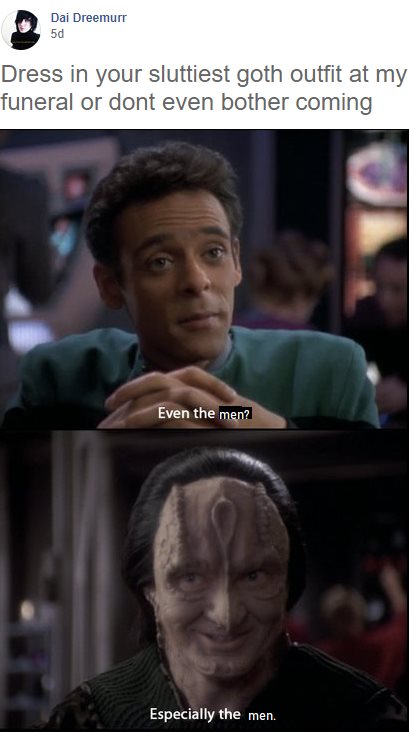
The image is a two-panel meme using a “Drakeposting” format. In the top panel, Drake (actor Aubrey Graham) looks displeased and questions "Even the men?" The lighting is soft and the color is teal/green. In the bottom panel, the same meme format features an image of Count Orlok (Nosferatu) with a grim, almost predatory expression, and emphatically states “Especially the men.” The lighting in the bottom panel is darker, dramatic, and uses chiaroscuro. The overall aesthetic is a dark, moody contrast between the relatively normal Drake and the classically monstrous Count Orlok. The text overlay, "Dress in your sluttiest goth outfit at my funeral or dont even bother coming," sets the premise.
Foucauldian Genealogical Discourse Analysis
This meme offers interesting fodder for a Foucauldian reading. The directive concerning dress codes at a funeral isn’t simply about attire. It's a power play, a way of defining the terms of remembrance and the acceptable performance of grief.
- Discourse & Power: The statement establishes a discourse around mourning. It dictates how grief should be expressed, moving beyond typical somber dress to a hyper-sexualized goth aesthetic. This seemingly whimsical request is a form of disciplinary power – a definition of what is acceptable, and by extension, what isn’t. Those who don't comply are effectively excluded (the “don’t bother coming”).
- Genealogy: The meme taps into the genealogy of goth subculture itself. Goth has a long history of challenging norms around sexuality, mourning, and societal expectations. The demand for "sluttiest goth" isn’t random; it pulls from the subculture’s rebellious roots and reframes them within the context of death. It’s a deliberate attempt to break the typical solemnity of a funeral.
- The "Especially the Men" Shift: The shift to Count Orlok (a classic vampire figure representing repressed desire and transgression) signifies a specific power dynamic. It suggests a particular frustration or desire to see men perform a certain kind of (transgressive) vulnerability or sexuality even in a space traditionally reserved for somber restraint.
Critical Theory
The meme participates in a broader critique of social norms and the performance of identity.
- Social Construction: The demand for "sluttiest goth" outfits demonstrates the social construction of both mourning and sexuality. There's no inherent reason why a funeral should necessitate a particular style, yet the meme playfully challenges the expectation of somber, conventional attire.
- Subversion: The meme subverts the established order of a funeral. Funerals are typically spaces of restraint and conformity; this request deliberately asks for the opposite. This act of subversion can be seen as a way to reclaim agency over one's death and dictate the terms of remembrance.
- Performance of Self: The meme requests a performance of a certain style of self (goth) which can be interpreted as an acknowledgement that identity is not static but constructed and enacted through appearances.
Queer Feminist Intersectional Analysis
This is where the meme gains significant complexity.
- Reclaiming Sexuality: The phrasing "sluttiest goth" directly references the shaming of female (and queer) sexuality. It reclaims that pejorative term as a source of power and expression. The intent isn’t about actual sluttery, but about disrupting the societal expectations that police and restrict sexual expression.
- Gender Performance & Expectations: The emphasis on “especially the men” is crucial. It's a challenge to patriarchal norms that often restrict men’s self-expression, particularly when it comes to fashion, vulnerability, and deviating from masculine stereotypes. It suggests that the poster desires to see men embrace a different, more transgressive performance of masculinity—even at a funeral.
- Intersectional Critique: The meme touches on the intersection of sexuality, gender, mourning, and subculture. It isn't simply about goth style; it's about challenging the expectations surrounding gender, sexuality, and the performance of grief for everyone. The use of the vampire (Orlok) is potentially significant because of the vampire’s historically queer associations (queer coding in film/literature).
- Empowerment: The directive (while blunt) can be interpreted as an act of empowerment – the poster is taking control of how they are remembered and asking others to participate in a celebration of life and self-expression, rather than simply mourning death.
Areas where the analysis is less applicable:
- Marxist Conflict Theory: While we could stretch it to say there’s a critique of consumerism through the demand for particular outfits, it’s not a central theme. The meme isn't primarily about class conflict or economic structures.
- Postmodernism: Elements of postmodern playfulness are present (deconstruction of norms, challenging expectations), but the meme doesn’t fully engage with the broader philosophical arguments of postmodernism.
Let me know if you'd like me to elaborate on any of these points!
simple-description (llama3.2-vision)
This meme is a screenshot of a Twitter post with a dark and humorous tone. The text reads: "Dress in your sluttiest Goth outfit at my funeral or don't even bother coming." The image is likely a screenshot of a TV show or movie, but the specific show or movie is not identified. The meme is a joke about how someone wants to be mourned in style, and the "or don't even bother coming" part is a darkly comedic twist on the typical funeral etiquette.
tesseract-ocr
8 Dal eemurr Dress in your sluttiest goth outfit at my funeral or dont even bother coming on « a Vt a S x a . J unas i a i rs = Especially the men.