First Seen
2023-05-10T21:03:40+00:00
simple-description (llama3.2-vision_11b)
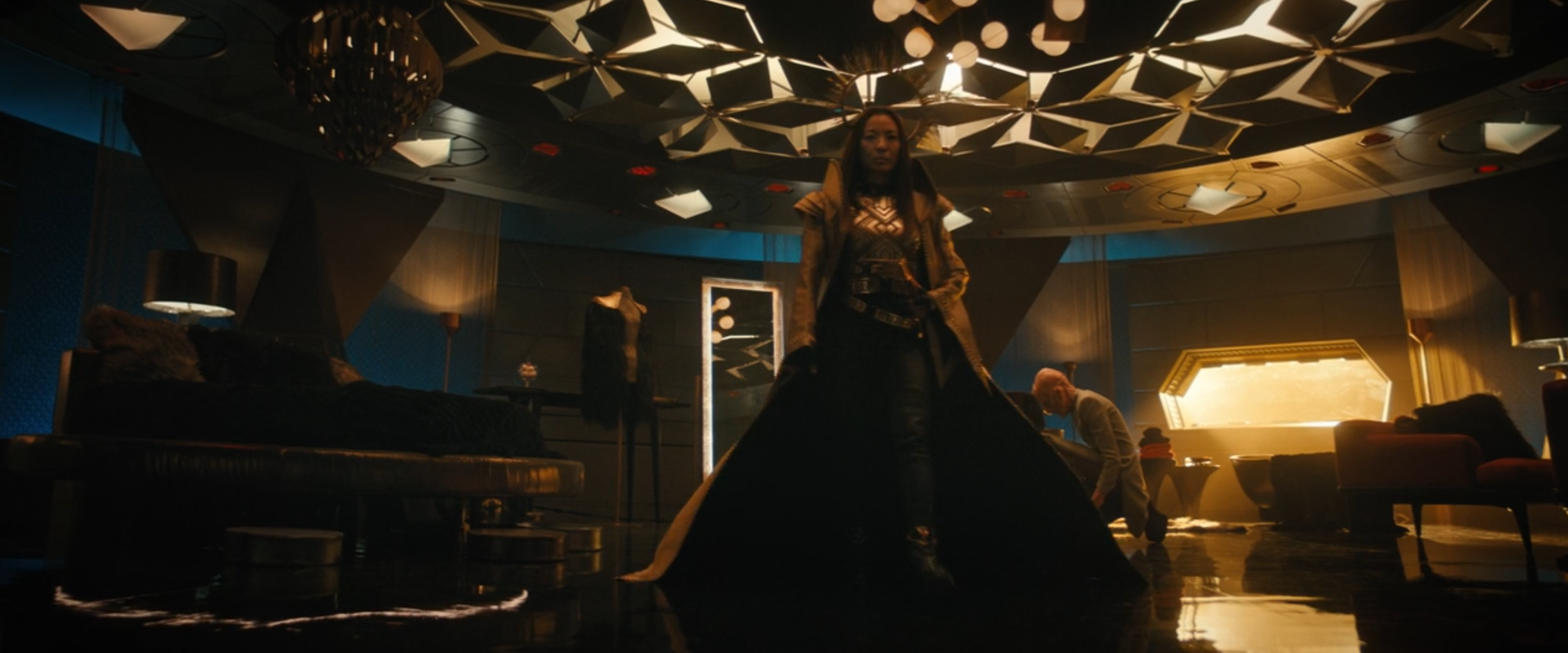
The meme is a screenshot from the Star Trek: Discovery episode "If It's True", featuring Captain Saru (played by Shenzhou captain) and his crewmate, Dr. Hugh (played by Dr. Hugh) who are discussing the "If It's True" concept. The image is a screenshot of the two characters, with the text "If It's True" written on the screen in the background. The meme is a humorous take on the concept of "If It's True" being a popular phrase, with the characters discussing the concept in a humorous way.
detailed-analysis (gemma3-27b-vision)
Okay, let's break down this striking image using the frameworks you've provided. It's a complex scene with rich visual cues that lend themselves to several interpretive layers.
Visual Description
The image presents a dramatically lit interior space, possibly a hall or grand room. A single, imposing figure—presumably a woman—dominates the foreground, standing with her back to the viewer. She is adorned in a dark, elaborate, possibly gothic, gown that pools around her. The lighting is highly theatrical and contrast-heavy, with a strong key light illuminating her form and creating deep shadows.
The architecture is striking. The room is circular, and the ceiling features a complex pattern of interlocking, reflective geometric shapes, resembling stylized stars or snowflakes. This creates a sense of both opulence and rigidity. The walls are a deep teal or blue, and there are several small lamps with dark shades providing localized illumination. In the background, several figures are partially visible, seemingly attending to or observing the central figure. They are smaller in scale, contributing to the sense of the central figure's power and authority. A brightly lit doorway or portal is visible in the background, its geometric shape contrasting with the organic curves of the room. There is a feathered, patterned rug on the floor. The overall impression is one of decadence, power, and an almost ritualistic atmosphere.
Foucauldian Genealogical Discourse Analysis
This image is ripe for a Foucauldian reading. The scene constructs power relations. The central figure, visually elevated and obscured, becomes a focal point for observation and perhaps, obedience. Her darkened silhouette represents a deliberate withholding of identity, reinforcing her power as an abstract force.
The architecture itself—the circular structure, the symmetrical geometric ceiling—can be seen as a microcosm of a disciplinary system. The circular form, reminiscent of a panopticon, implies surveillance and control. The ceiling’s geometric rigidity symbolizes the imposition of order and categorization. The contrasting brightness of the doorway creates a division of spaces of power and subservience.
The figures in the background, seen only partially, represent those subjected to this power. Their postures suggest deference or service. The "discourse" operating here is one of authority, spectacle, and the normalization of hierarchical relations. Foucauldian analysis would seek to trace the historical "genealogy" of these power dynamics, examining how they evolved and were justified over time—what historical, social, or ideological forces constructed this scene.
Critical Theory
From a broader Critical Theory perspective, this image evokes themes of spectacle and alienation. The opulent setting and the central figure's commanding presence suggest a society consumed by appearances and displays of power. The central figure’s obscured identity and the background figures’ passivity suggests a sense of detachment or lack of agency. This mirrors the central claims of the Frankfurt School (Adorno and Horkheimer), where mass culture has become a tool for control and manipulation. The theatrical lighting and elaborate decoration create a "false consciousness", obscuring the underlying realities of social relations. The image is not merely a depiction of a scene; it’s a symptom of deeper societal pathologies, highlighting the dehumanizing effects of unchecked power and spectacle.
Marxist Conflict Theory
A Marxist reading would frame the scene as a representation of class conflict and the exploitation of labor. The opulent setting and elaborate dress of the central figure symbolize the wealth and privilege of the ruling class. The background figures represent the working class, relegated to positions of service and subordination. The spectacle of wealth is deliberately staged to reinforce the power imbalance and legitimize the existing social order. The obscured face could represent the indifference of the ruling class to the suffering of the working class. The room and its decoration are produced through the unseen labor of others, reinforcing the idea that all wealth is built on exploitation. The bright doorway could represent an exit for the privileged but inaccessible to the working class.
Postmodernism
The image resonates with several Postmodern themes. The deliberate theatricality, the blending of architectural styles, and the emphasis on surface appearance are all hallmarks of Postmodern aesthetics. The obscured identity of the central figure can be interpreted as a rejection of essentialism and a celebration of constructed identity. The ambiguous space and fragmented perspectives challenge traditional notions of realism and narrative coherence. The image could be seen as a commentary on the loss of grand narratives and the rise of simulacra—representations that have become detached from reality. The focus on spectacle over substance is also a core Postmodern theme. It's a pastiche of grand, historical styles, but without a clear meaning or purpose, it’s all “surface.”
Queer Feminist Intersectional Analysis
This is more speculative without further context, but potential interpretations exist. The obscured identity of the central figure could challenge patriarchal expectations of female visibility and representation. The figure's dominance, and her deliberate refusal to reveal her face to the male onlookers in the background, could be read as a rejection of the male gaze. The opulence and the rigid structure of the room can be seen as symbolic of the constraints imposed on women by patriarchal systems. The contrasting brightness of the doorway could represent a potential space of liberation. The image could be read as a subversive performance of power, challenging traditional gender roles and hierarchies. An intersectional reading would also consider how class, race, and other factors might intersect with gender to shape the power dynamics depicted in the image. Without knowing the narrative context, it is difficult to say, but a reading could focus on how the figure is attempting to subvert patriarchal power structures, using spectacle and performance to assert her agency.
Let me know if you would like me to expand on any of these interpretations or focus on a specific theoretical framework in more detail!
simple-description (llama3.2-vision)
The meme is a still image from the 2013 film "Thor: The Dark World" featuring Loki (played by Tom Hiddleston) standing in a dark, ornate room. The image shows Loki holding a large, ornate staff, with a sly and mischievous expression on his face. The text overlay reads "When you finally get the Thor you wanted" in a playful, sarcastic tone.
tesseract-ocr
4 Tow © “Gia, ge” ~Aae4 Ptr. ss Fs a dy ae a a - aA eae = * = fh wn i yo | = ’ “y S- Pe at — 4 ES q —_ | ew | ’ : 4 ae ee =