First Seen
2023-05-24T21:09:22+00:00
simple-description (qwen3.5_2b-q8_0)
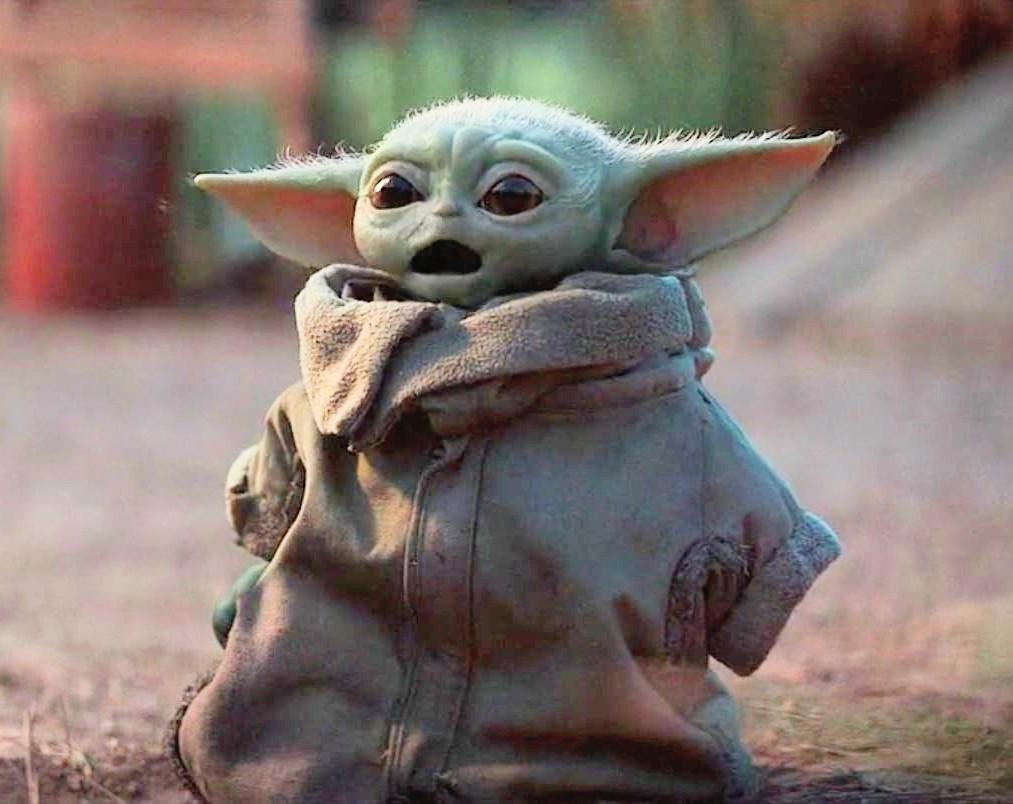
This image features Baby Yoda (Grogu) from The Mandalorian captured with his eyes wide open, mimicking a look of shock or disbelief. In the context of the show, this meme is often used to represent his famous catchphrase "Who are you?" or simply to capture his iconic expression of surprise when someone looks at him with wide eyes.
simple-description (llama3.2-vision_11b)
The meme features a still image of Baby Yoda from the Star Wars series, captioned "Baby Yoda Show" with a series of humorous, sarcastic, and often absurd episode titles, such as "Baby Yoda Show: The One Where He Eats a Whole Pizza by Himself". The meme pokes fun at the idea of creating a TV show centered around the adorable and powerful character, exaggerating his everyday activities and antics.
detailed-analysis (gemma3-27b-vision)
Okay, let's break down this image of Grogu (aka "Baby Yoda") through various critical theory lenses. Please note, these are interpretations based on the image and the broader context of The Mandalorian—and can be subjective!
Visual Description
The image depicts Grogu, a character from The Mandalorian series, in a close-up shot. He is a small, green-skinned creature with large, expressive eyes. His ears are large and pointed. He's bundled in a tan-colored, oversized hooded coat, with the hood pulled up, creating a comforting, protective frame around his face. The coat is slightly rumpled. His mouth is slightly open, suggesting surprise, innocence, or perhaps vulnerability. The lighting is soft and warm, creating a sense of gentleness. The background is blurry, suggesting a rough, outdoor environment (possibly a planet surface). The focus is entirely on Grogu's face and his emotional state, immediately evoking a feeling of protectiveness.
Foucauldian Genealogical Discourse Analysis
Through a Foucauldian lens, Grogu's popularity isn't about his inherent characteristics, but how his image has been constructed and circulated within a specific "discourse" around 'cuteness' and 'vulnerability'.
- Power/Knowledge: The Disney/Lucasfilm apparatus holds the power to define what is valuable and desirable. They have created and promoted a specific narrative around Grogu.
- Discipline: The insistent marketing and widespread media coverage "disciplines" audiences into consuming and engaging with Grogu. We're encouraged to find him lovable.
- Genealogy: Tracing the "genealogy" of this cuteness reveals a lineage of infantile representations – from children in advertising to anime figures. Grogu builds on these existing visual tropes. His design intentionally borrows heavily from the aesthetics of childlike animals, triggering instinctive nurturing responses.
- Discourse of Care: The image itself actively participates in a discourse of care. The soft lighting and vulnerable expression solicit a protective response from the viewer. The oversized coat suggests helplessness and a need for safeguarding.
Critical Theory (Frankfurt School, Adorno/Horkheimer)
Using Critical Theory, we can examine how Grogu functions as an element of the “culture industry” – a system that produces standardized cultural goods to pacify and control audiences.
- Commodification of Affect: Grogu isn't simply a character; he's a commodity. His image is plastered on merchandise, memes, and used for marketing. This commodification extends to our emotional responses. We're encouraged to feel a certain way about him, which serves to reinforce consumerism.
- Distraction and False Consciousness: The widespread obsession with Grogu can be seen as a distraction from more pressing socio-political issues. The intense focus on a fictional character can obscure the real problems facing society.
- Loss of Authenticity: The repetitive nature of Grogu’s image and the marketing surrounding him contribute to a loss of authenticity. His image is endlessly reproduced and sanitized, losing its original artistic intent.
- Emotional Labor: Viewers do emotional labor, feeling protective of a fictional character.
Marxist Conflict Theory
Through a Marxist lens, Grogu’s appeal reveals underlying power dynamics.
- Ideological Apparatus: Grogu is a product of the cultural apparatus controlled by Disney/Lucasfilm—a massive corporation. His popularity reinforces the dominance of corporate interests.
- False Needs: The desire for Grogu merchandise represents a 'false need’ generated by consumer culture. Capitalism manufactures desires to drive profit.
- Distraction from Class Struggle: The intense focus on Grogu can be seen as a distraction from the realities of economic inequality and class struggle.
- Commodification of Innocence: Grogu's innocence and vulnerability are exploited for profit.
Postmodernism
A postmodern approach focuses on the image's constructed nature and the blurring of boundaries.
- Simulacra and Simulation: Grogu’s image has become a simulacrum – a copy without an original. The image has circulated so widely that it exists as a self-referential entity, independent of the character within the show.
- Hyperreality: The fan obsession with Grogu has created a hyperreality – a simulation of reality that is more real than reality itself. The fan communities, merchandise, and online discussions create a world around the character that feels incredibly tangible.
- Deconstruction of Narrative: Postmodern narratives often deconstruct traditional storytelling. The Mandalorian plays with the familiar tropes of the Western and science fiction, blending them in a self-aware way. Grogu’s presence within this deconstructed narrative further highlights the instability of meaning.
- Pastiche and Intertextuality: Grogu borrows heavily from earlier aesthetic traditions (e.g. large-eyed anime characters, baby animals).
Queer Feminist Intersectional Analysis
While Grogu is not gendered in a conventional way (and intentionally designed to be ambiguous), this lens can examine how vulnerability and care are gendered within the context of the show and its reception.
- Challenging Masculinity: The Mandalorian is, at its core, a story about a traditionally stoic, hyper-masculine character learning to care for a vulnerable being. This challenges conventional notions of masculinity.
- Care as Feminized Labor: The act of caring for Grogu is often portrayed as emotional labor, traditionally associated with feminine roles. The Mandalorian performs this labor, subverting gender roles.
- Vulnerability and Power: Grogu’s vulnerability, while endearing, also places him in a position of dependence. This highlights the power dynamics inherent in caregiving relationships.
- Intersectionality of Care: The Mandalorian's care for Grogu intersects with his own trauma and background. This demonstrates how care is always situated within complex social and personal contexts.
Hopefully, this breakdown provides a range of critical perspectives on a surprisingly complex image! Let me know if you'd like me to elaborate on any of these points further.
simple-description (llama3.2-vision)
The meme is an image of the character Yoda from the Star Wars franchise, but it's not Yoda - it's actually a character called "Baby Yoda" or "The Child" from the Disney+ series "The Mandalorian". The image is a screenshot of the character looking surprised or shocked, with its large eyes and expressive face.
tesseract-ocr
=r nm - ™ . 4 «i oe wae E J ee , Re a 5 Ro as re SS ‘ ee 4 yee a y ia - 4 Bee. ee a De oa Ae aR. 4 | . ae Vy sa : . at o in & ee \ r, a. i a io. . ee He ae ee Nay eae a —