First Seen
2023-05-24T21:09:22+00:00
simple-description (qwen3.5_2b-q8_0)
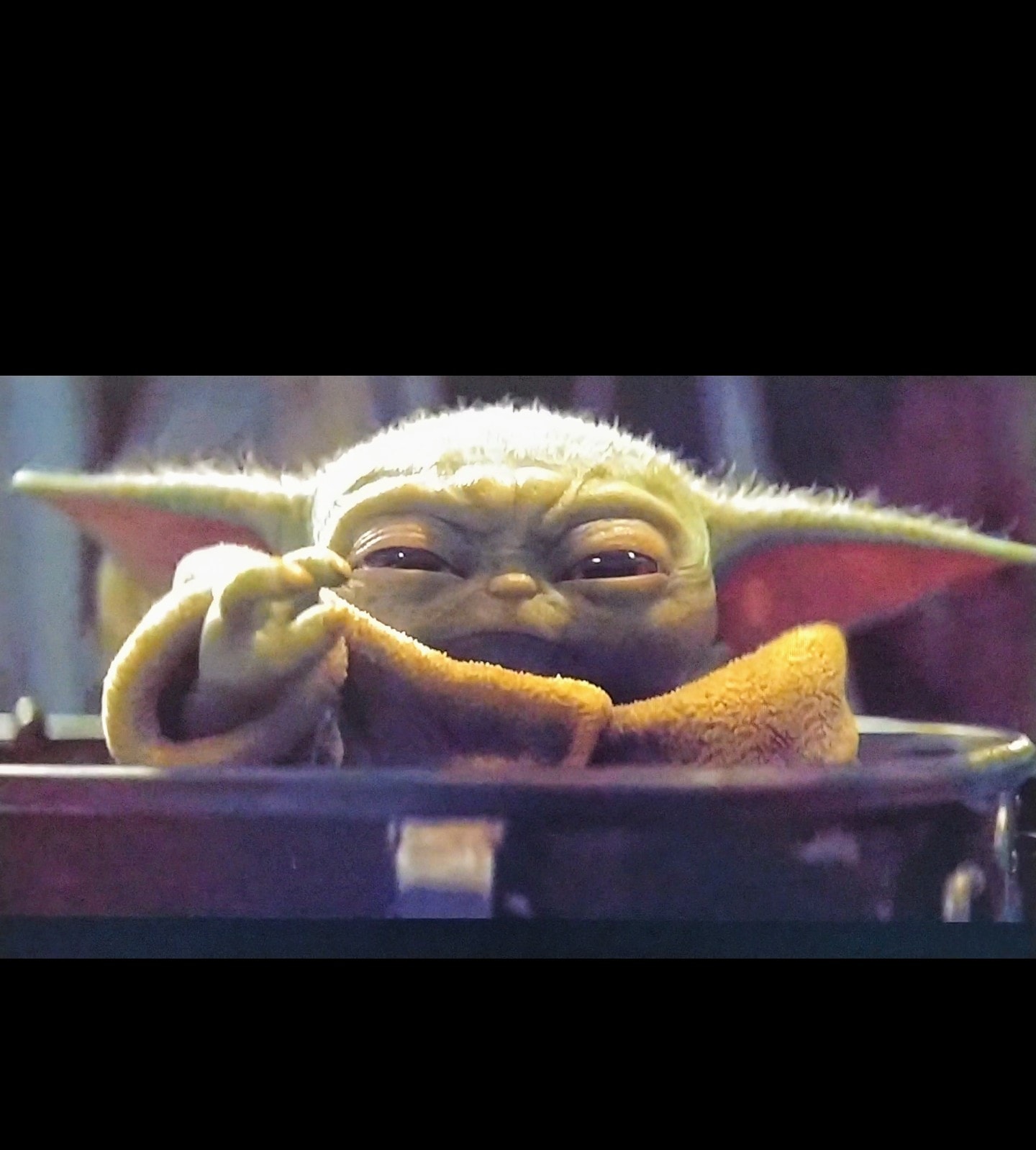
This meme features Baby Yoda looking over the rim of a round pot or container. It captures a moment where he is peering down into a dish while holding his hands near his face. The image is designed to be very clear, allowing viewers to see his distinctive green skin and large ears without any obstruction.
simple-description (llama3.2-vision_11b)
The meme features a still image of Baby Yoda from the Disney+ series "The Mandalorian," with a caption that reads "Baby Yoda Show" in a playful, childlike font. The image itself depicts the adorable, 50-year-old Star Wars character in a humorous, exaggerated pose, as if he's about to launch into a tantrum. The meme is meant to poke fun at the character's age and the idea that he's somehow still a "baby" despite being over 50 years old.
detailed-analysis (gemma3-27b-vision)
Okay, here's a breakdown of the image featuring "Baby Yoda" (Grogu) from The Mandalorian, analyzed through the lenses you requested. Note that some of these theoretical approaches will be more relevant than others – I'll indicate where a section isn't particularly strong due to the image’s content.
Visual Description
The image depicts Grogu (often nicknamed "Baby Yoda") in a floating pod-like carrier. He's a small, green, infant-like creature with large, expressive eyes and oversized ears – traits intentionally reminiscent of Yoda. He's wrapped in a soft, tan cloth or blanket, held somewhat close to his face. The lighting is warm and focuses on his face, creating a sense of vulnerability and innocence. The background is dark and blurred, likely the interior of a spaceship (as featured in The Mandalorian), which highlights Grogu as the central focus. The image appears to be a screenshot or promotional image from the show. The overall impression is one of tenderness, childlike wonder, and perhaps a hint of loneliness.
Foucauldian Genealogical Discourse Analysis
This analysis focuses on how Grogu's character and representation construct and are constructed by power relations and discourses surrounding "childhood," "innocence," and "dependency."
- Discourse of Dependency: Grogu is always represented as dependent – on Din Djarin (The Mandalorian), on the Force, and on care. This isn’t inherent to infancy, but is constructed through the narrative. The show repeatedly establishes the need for protection and guidance for Grogu, reinforcing a discourse of childhood as a state of inherent helplessness.
- Power/Knowledge: The narrative structure places knowledge (and thus, power) in the hands of those who understand the Force and Grogu's species. Din Djarin is initially positioned as a protector but also seeks to know what Grogu is, transferring power to others who can provide that knowledge (e.g. Luke Skywalker). The knowledge surrounding Grogu shapes how he is treated and controlled.
- Genealogy of "Cutness": We can trace a genealogy of cuteness in the design of Grogu. It pulls from tropes of large eyes, small stature, and infantile features, all historically associated with evoking nurturing responses. These elements are then linked to ideas of vulnerability and moral goodness.
- Biopower: The emphasis on protecting and nurturing Grogu represents a form of biopower – a focus on regulating and managing life. The narrative establishes a moral imperative to protect him, highlighting the importance of valuing and safeguarding life (specifically, a certain kind of life).
Critical Theory (Frankfurt School)
Grogu's character can be viewed through the lens of critical theory, specifically the concept of the "culture industry" and the commodification of emotion.
- Manufactured Innocence: Grogu’s extreme cuteness and vulnerability are arguably manufactured to evoke strong emotional responses from the audience. This appeals to a deep-seated desire for innocence and connection, which can be seen as a form of emotional manipulation. The character's appeal is almost entirely based on evoking a protective, nurturing instinct.
- Distraction & Passivity: Some critical theorists argue that the culture industry generates entertainment that distracts from real social issues and promotes passivity. While The Mandalorian has some political elements, Grogu's presence largely functions as an emotional anchor, potentially diverting attention from more complex themes.
- Reification of Childhood: Grogu's image is heavily merchandised, turning his innocence into a commodity. This reifies the idea of childhood as a pure, unspoiled state, ignoring the complex realities of childhood and the social forces that shape it.
Marxist Conflict Theory
This is the least directly applicable theory, but there are potential points of connection.
- The Protector/Protected Dynamic: Din Djarin's relationship with Grogu can be interpreted through a class lens. Din Djarin, a bounty hunter, represents a form of marginalized labor, while Grogu, in needing protection, represents the vulnerable and dependent. This creates a dynamic of power and exploitation, albeit one mediated by affection.
- Commodification of the "Other": Grogu, as a member of a species that is rare and powerful, could be seen as a “resource” coveted by others (as seen in the show). This creates a conflict dynamic, with various factions vying for control over him.
- Ideological Function: The narrative emphasizing the protection of Grogu reinforces an ideology of care and compassion, which can serve to legitimize existing power structures by framing them as benevolent protectors.
Postmodernism
Grogu's character lends itself to a postmodern interpretation by challenging traditional narratives and embracing ambiguity.
- Pastiche & Intertextuality: Grogu is a clear pastiche of Yoda, drawing on established tropes and imagery from the Star Wars universe. He's a remix of existing elements, rather than a wholly original character.
- Simulacra & Hyperreality: The overwhelming popularity of Grogu and the proliferation of merchandise create a hyperreal experience. The image of Grogu becomes more real than the actual character, a simulation that shapes our perception of him.
- Deconstruction of the "Hero" Narrative: Grogu doesn't fit the traditional heroic archetype. He's small, vulnerable, and dependent. This subverts expectations and challenges the notion of a singular, powerful hero.
- Fragmentation: He represents a fragmentation of what the audience has come to accept about the Star Wars universe. He's an outlier and represents the changing landscape.
Queer Feminist Intersectional Analysis
This is the most challenging theory to apply to a single image of a baby alien, but we can explore it through the lens of vulnerability and care.
- Vulnerability & Care as Feminized Traits: Grogu’s constant state of vulnerability and need for care can be linked to historically feminized traits. The emphasis on nurturing and protecting him reinforces societal expectations that caregiving is primarily a feminine role.
- Challenging Masculine Heroism: The relationship between Din Djarin and Grogu disrupts traditional masculine heroism. Din Djarin’s journey is not solely about conquest or power, but about providing care and protection. This subverts expectations and challenges the notion of stoicism and emotional detachment.
- Deconstructing Species Hierarchies: Challenging what we consider "worthy" of care, protection and love. By making the audience care about an alien creature, it challenges species hierarchies.
Let me know if you’d like me to elaborate on any of these analyses further!
simple-description (llama3.2-vision)
The meme is an image of the character Yoda from the Star Wars franchise, but it has been Photoshopped to have the face of a baby, specifically the character from the Star Wars franchise known as "Baby Yoda" or "The Child". The image is captioned "When you're trying to sleep but you know you have to go to work in the morning".
tesseract-ocr
BT ae i ; ; | oa i