First Seen
2023-05-10T21:03:41+00:00
simple-description (llama3.2-vision_11b)
The meme is a screenshot from the Star Wars show "The Mandalorian" featuring Baby Yoda, also known as "The Child". The image shows Baby Yoda looking directly at the camera with a serious expression, and the text "I have spoken" is written above it. The meme is humorous because it implies that Baby Yoda is a wise and powerful being who is capable of speaking and conveying complex ideas, but instead he just says "I have spoken", which is a humorous and ironic statement.
detailed-analysis (gemma3-27b-vision)
Okay, here's an analysis of the meme, broken down into the requested sections. Not every section will be relevant, but I'll cover what applies.
Visual Description
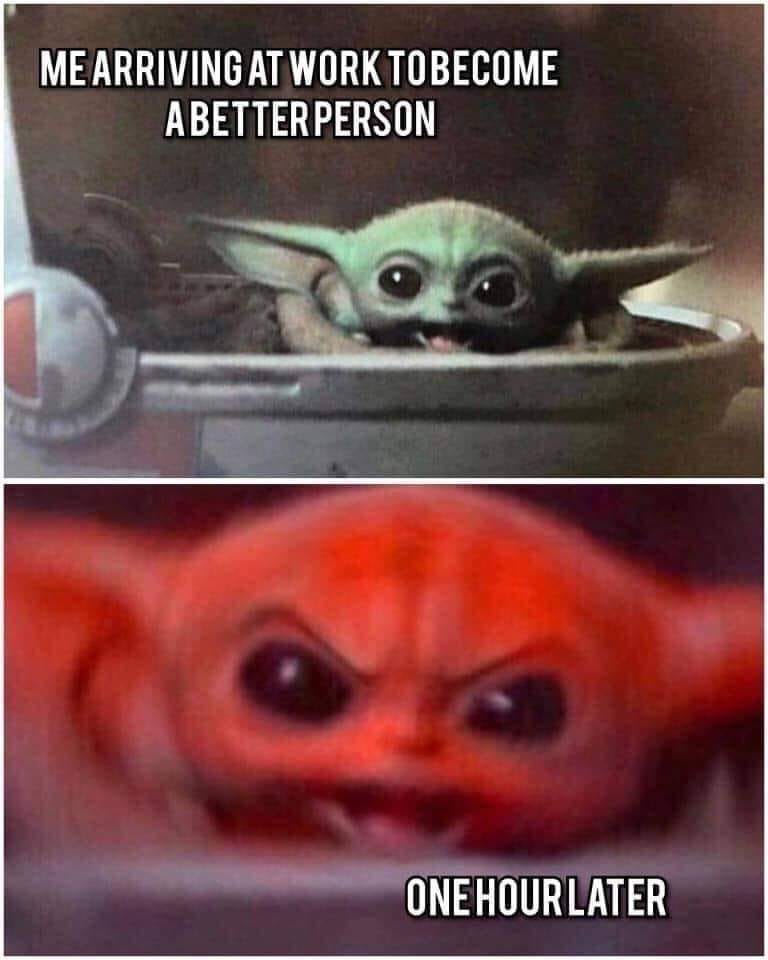
The meme utilizes a two-panel format commonly known as a "drakeposting" or "expectation vs. reality" structure. It features images of "Baby Yoda" (Grogu) from The Mandalorian.
- Top Panel: Shows Grogu in a cute, innocent pose with wide, hopeful eyes. Text overlay reads "ME ARRIVING AT WORK TO BECOME A BETTER PERSON." The background is a spaceship interior, suggestive of embarking on a journey.
- Bottom Panel: Shows a digitally altered Grogu, significantly redder in coloration with narrowed, angry eyes, and a generally frustrated expression. The text overlay reads "ONE HOUR LATER." The red coloration and changed expression contrast sharply with the earlier image. The background is similar but is more saturated with red.
The contrast between the two images creates the humorous effect.
Foucauldian Genealogical Discourse Analysis
This meme lends itself well to a Foucauldian reading. Michel Foucault examined how power operates through discourse – systems of thought, language, and practices that construct our understanding of the world.
- Discipline and Normalization: The "better person" narrative in the top panel represents a specific discourse of self-improvement, often promoted by workplaces (and broader society). This discourse establishes a "norm" – the ideal employee (and person) – against which individuals are measured. The top panel depicts the initial desire to conform to this norm.
- Power/Knowledge: Workplaces hold power/knowledge – they define what constitutes “good” work, “good” behavior, and even “good” people. They then distribute this knowledge through expectations, performance reviews, etc.
- Genealogical Break: The bottom panel demonstrates a “genealogical break” from the expected norm. Grogu’s transformation from hopeful innocence to frustrated anger suggests the pressures of the workplace environment actively work against the initial desire for self-improvement. The shift from cute and docile to angry and visibly stressed shows the impact of the workplace environment. This is not simply individual failure, but a result of how the power structures of work function.
- Panopticism (Implicit): While not directly visible, the feeling of being watched or assessed, even when not directly observed, can be inferred. The meme implicitly suggests the constant performance and self-monitoring demanded by workplaces, even if the monitoring is invisible.
Critical Theory
This meme embodies several themes central to Critical Theory, specifically relating to the alienation of labor and the critique of ideology.
- Ideology: The initial statement – "ME ARRIVING AT WORK TO BECOME A BETTER PERSON" – represents the ideological function of work. Capitalism often promotes the idea that work is not merely a means of survival, but a path to personal growth and fulfillment. The meme subtly critiques this by exposing the disjunction between this promise and the lived reality.
- Alienation: The transformation of Grogu speaks to the alienation experienced by workers. The initial positive intention is eroded by the demands, frustrations, and pressures of the work environment. This results in a feeling of disconnection from one's self and one's goals.
- False Consciousness: The meme suggests that many enter the workplace with a “false consciousness” – believing in the promises of self-improvement and fulfillment. The rapid shift in Grogu’s expression reveals the dissonance between this belief and the actual experience.
Marxist Conflict Theory
A Marxist lens can view the meme as a mini-narrative of class conflict and exploitation.
- Bourgeois Ideology: The initial "better person" aspiration reflects bourgeois ideology – the values and beliefs of the ruling class (capitalists) that are used to justify the existing social order. The message subtly suggests that becoming a better person is inherently linked to conforming to the demands of the capitalist workplace.
- Proletarian Resistance (Implied): While not overt, the frustration expressed in the bottom panel can be seen as a form of resistance. It’s a rejection of the idealized worker and a display of the emotional toll taken by the labor process.
- Exploitation: The meme suggests that the workplace extracts value (in this case, emotional well-being) from the worker. The rapid disillusionment of Grogu is a result of the exploitation inherent in the capitalist system.
Postmodernism
This meme, through its irony and self-awareness, speaks to postmodern sensibilities.
- Irony and Parody: The meme relies on the ironic contrast between expectation and reality. It parodies the aspirational language of self-improvement and the idealized image of the “good” worker.
- Deconstruction of Meaning: The meme deconstructs the conventional narrative of work as a positive force for personal growth. It exposes the underlying power dynamics and contradictions.
- Meta-Commentary: The meme is a meta-commentary on the experience of work itself. It acknowledges the absurdity of expecting to become a "better person" in an environment that often fosters stress and disillusionment.
Let me know if you'd like any of these sections expanded or clarified!
simple-description (llama3.2-vision)
This meme is a humorous image of Baby Yoda from the Star Wars franchise. The image shows Baby Yoda in a diaper and with a mischievous expression, with the text "I'm going to do the things I used to do" above it, and "in my pajamas" below it. The meme is poking fun at the idea that even as adults, we often find excuses to avoid getting dressed and doing adult tasks.
tesseract-ocr
De ecu tena ABETTERPERSON | — “) | a UES