First Seen
2023-05-10T21:03:41+00:00
simple-description (llama3.2-vision_11b)
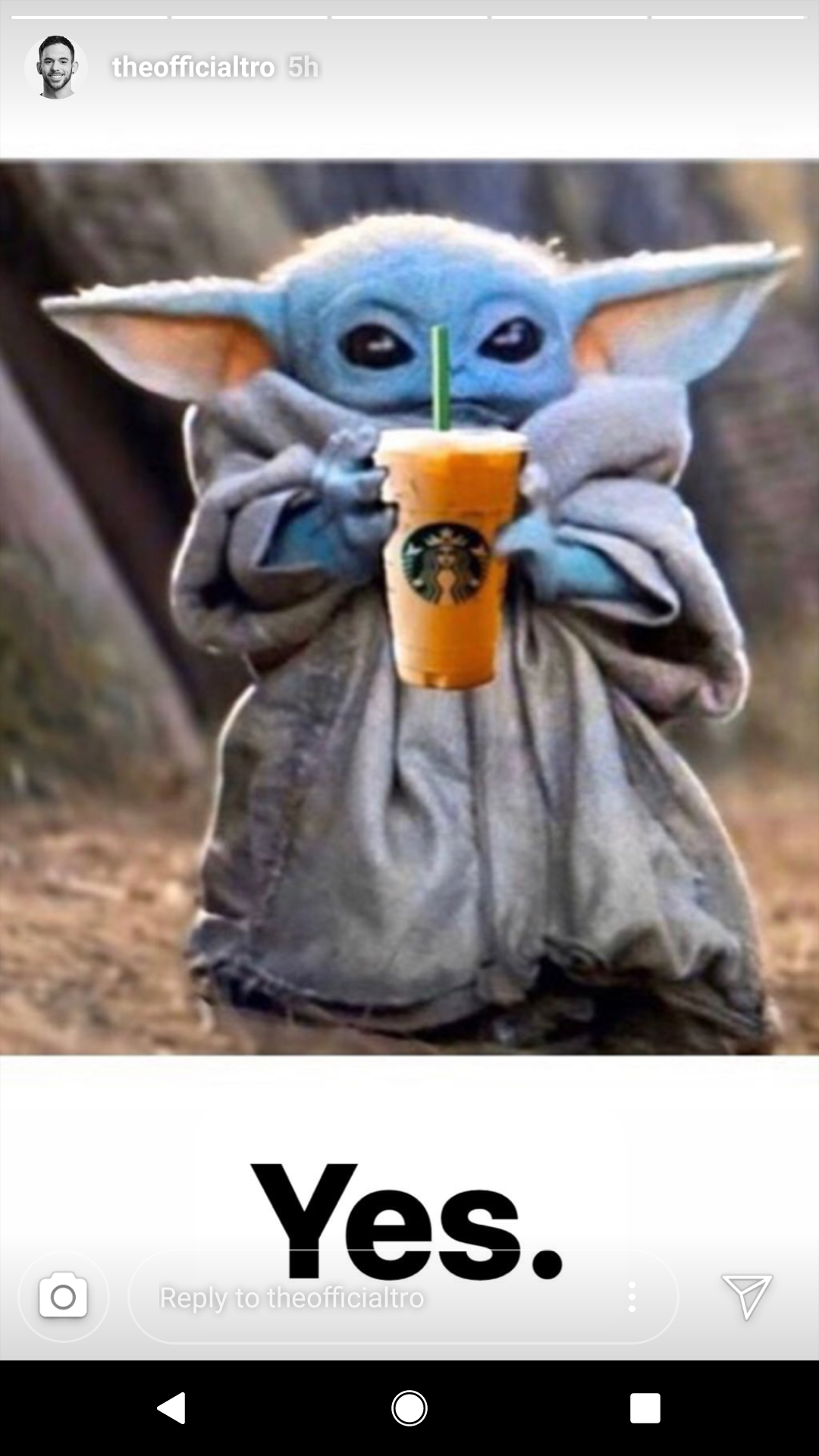
The meme is a playful image of Baby Yoda from the Star Wars series, holding a Starbucks coffee cup and giving a thumbs up, as if to say "yes" to the idea of enjoying a coffee. The text "Yes." appears at the bottom of the image, emphasizing the idea that even Baby Yoda enjoys a good cup of coffee. The meme is a lighthearted and humorous take on the character's personality.
detailed-analysis (gemma3-27b-vision)
Okay, let's break down this image/Instagram post with some theoretical lenses.
Visual Description
The image features “Baby Yoda” (Grogu) from the Disney+ series The Mandalorian. It's a close-up shot of the character seated and holding a Starbucks Frappuccino with a green straw. Grogu appears to be staring intently at the drink, seemingly savoring it. The background is blurred but appears to be a natural, outdoor setting with foliage. The post includes the text “Yes.” below the image, overlaid on a white background. The account posting is "theofficialtro." The image appears to be a meme or a lighthearted comment on pop culture.
Postmodernism
This image is a strong example of postmodern pastiche. It mixes elements of different cultural spheres – the sci-fi/fantasy world of Star Wars (Grogu), a global consumer brand (Starbucks), and the digital culture of memes/Instagram.
- Blurring of Boundaries: The combination of high and low culture (sci-fi and commercial beverage) disrupts any sense of authenticity or hierarchy.
- Intertextuality: The image relies on the viewer's existing knowledge of both The Mandalorian and Starbucks to create meaning. The "Yes." reinforces this as a response to an assumed question of enjoyment.
- Simulation & Hyperreality: The image isn’t about a genuine experience of Grogu drinking a Starbucks; it's a representation of that experience. It's a simulation that arguably becomes more “real” as it circulates and is shared online, becoming part of digital culture.
- Irony and Playfulness: The image is inherently playful and likely intended as a humorous juxtaposition, challenging viewers to engage with its absurdity.
Critical Theory (Specifically, Adorno and Horkheimer's Culture Industry)
This image can be analyzed through the lens of the Culture Industry.
- Commodification of Culture: Grogu, originally a character within a narrative, is now utilized as a vehicle for marketing a product (implicitly Starbucks). The image commodifies both the character and the feeling of enjoyment.
- Standardization & Mass Production of Taste: The image contributes to a standardized aesthetic of online humor – the use of popular characters in everyday situations. This creates a homogenous taste culture.
- Loss of Individuality: The circulation of such images discourages critical thought. It presents a readily consumable piece of "content" that requires no deep engagement.
Marxist Conflict Theory
While seemingly innocuous, this image can be interpreted through a Marxist lens focusing on the power dynamics between brands and consumers.
- Capitalist Appropriation: Starbucks, a powerful multinational corporation, is indirectly promoted through the image. It "piggybacks" on the popularity of a beloved fictional character to gain exposure.
- False Needs: The image subtly reinforces the idea that happiness or enjoyment can be attained through consumer products (even implicitly, via association with Starbucks).
- Ideological Hegemony: The normalization of brand integration into all aspects of culture, even within seemingly playful content, contributes to the dominance of capitalist ideology. It subtly reinforces the idea that consumption is normal and desirable.
Foucauldian Genealogical Discourse Analysis
Focusing on the power/knowledge dynamic, we can see how this image participates in the construction of certain discourses.
- Discourse of Consumption: The image contributes to a discourse that equates enjoyment with consumption. The act of holding the Starbucks drink (even in a fictional context) is presented as desirable.
- Discourse of "Cutness" and Commodification: Grogu's "cuteness" is a key component of his popularity and, therefore, his marketability. The image reinforces the link between cuteness and consumption.
- Normalization of Brand Integration: By seamlessly placing a corporate logo within a beloved fictional world, the image normalizes the integration of brands into all aspects of our lives.
Queer Feminist Intersectional Analysis
This lens is the most challenging to apply directly, but potential readings exist.
- Commodification of "Cutness" and Gender: While Grogu is gender-ambiguous, the appeal to “cuteness” has historically been used to infantilize and control, particularly targeting feminine-coded attributes. The commodification of this cuteness potentially reinforces harmful stereotypes.
- The Social Construction of Desire: This post leverages pre-existing fandom and cultural understanding. Desire for Star Wars and, by association, Grogu, is a constructed phenomenon that the post capitalizes on.
Let me know if you'd like me to expand on any of these analyses or explore other theoretical lenses.
simple-description (llama3.2-vision)
The meme features a character from the Star Wars franchise, Baby Yoda, from the Disney+ series "The Mandalorian". The image shows Baby Yoda holding a coffee cup with a straw and a caption "I like it" in a humorous nod to the popular coffee chain Starbucks. The image is a play on the iconic "I like it" phrase used by the character in the show.
tesseract-ocr
oc 2 Sa ‘ LT ar f \ wr ——