First Seen
2023-05-10T21:03:41+00:00
simple-description (llama3.2-vision_11b)
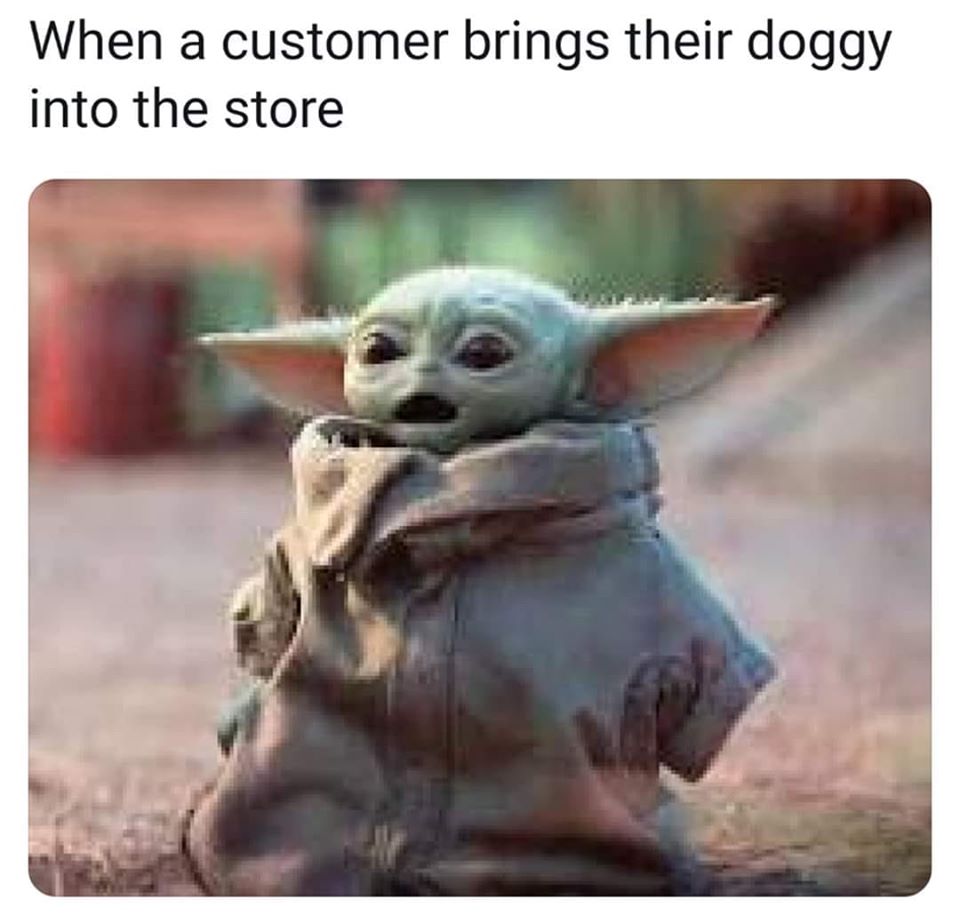
This meme is from the Star Wars series, specifically the show "The Mandalorian." It features Baby Yoda, a character from the show, reacting to a customer bringing their dog into a store. The image is captioned "When they bring their dog to Starbucks."
detailed-analysis (gemma3-27b-vision)
Okay, here's an analysis of the image and caption, broken down into sections based on the theoretical frameworks you requested. I’ll be selective, applying only those frameworks that genuinely illuminate the content.
Visual Description
The image features "The Child" (Grogu) from the Disney+ series The Mandalorian. He's depicted sitting, hunched over, with a visibly distressed or upset expression. He's clutching a small piece of cloth or fabric. The background is blurred, suggesting an indoor setting. The overall lighting is somewhat dim and emphasizes the vulnerability and discomfort expressed in the character’s face. The image is clearly aiming for comedic effect by using a popular character to represent a relatable feeling. The caption reads: “When a customer brings their doggy into the store.”
Foucauldian Genealogical Discourse Analysis
This meme highlights how rules and regulations surrounding public space (the "store") and the permissibility of animals within them have been historically constructed. Consider the shifting discourses around pets. Historically, dogs have been viewed through a variety of lenses: as working animals, protectors, companions, or even threats (rabies concerns, status symbols). This led to a complex web of rules dictating where dogs were (and weren't) allowed.
The meme implicitly evokes the discourse surrounding "appropriate" behavior in commercial spaces. The store, traditionally, functions as a space of transaction, governed by expectations of order, cleanliness, and customer behavior. Bringing a dog disrupts that order. The meme’s humor arises because it positions the character of Grogu (a somewhat alien creature himself!) as the defender of those unspoken rules, reacting to the disruption. A genealogical analysis would trace the historical shifts in these norms, asking how these rules came to be, and what power dynamics underpin them.
Critical Theory
The meme utilizes a popular culture figure (Grogu) to express a common experience and frustration – an everyday annoyance. Critical theory, particularly in its focus on the "culture industry" (Adorno and Horkheimer), would analyze how this meme functions within that industry. The image uses a familiar character from a widely consumed media property to tap into a pre-existing emotional response. It's a short-hand communication that bypasses complex argumentation.
Furthermore, this image can be seen as a reflection of the increasing anxieties surrounding public space and social interaction. It expresses a mild irritation that is relatable to a lot of people. The power dynamic is subtly present - the customer asserting their desire to bring their dog into the store, and Grogu representing a tacit resistance to that assertion.
Marxist Conflict Theory
While not a central focus, a faint thread of conflict theory can be seen. The store, in a Marxist framework, represents a site of capitalist exchange. The meme implicitly touches upon the potential conflict between the owner's desire for a pleasant shopping experience (and the store's desire to maintain order and cleanliness) and the customer's assertion of their autonomy. The dog represents a disruption to the expected transaction. It’s a very subtle example, but the tension – even if humorous – points to underlying conflicts within the economic sphere.
Why other frameworks aren't as strongly applicable:
-
Postmodernism: While memes are a product of the digital age, this meme doesn't particularly deconstruct grand narratives or embrace radical relativism. It's a relatively straightforward expression of annoyance.
-
Queer Feminist Intersectional Analysis: There's no overt gender, sexuality, or systemic oppression being addressed in this meme, so an intersectional analysis is not relevant here.
I hope this breakdown is helpful! Let me know if you'd like me to elaborate on any of these points.
simple-description (llama3.2-vision)
This meme is an image of the character Baby Yoda from the Star Wars series, with a surprised and delighted expression on his face. The image is captioned "When a customer brings their dog into the store". The meme is a humorous take on the common experience of being surprised or annoyed when a customer brings their pet into a store, and Baby Yoda's adorable reaction is meant to convey the shock and amusement of this situation.
tesseract-ocr
When a customer brings their doggy into the store Ye ae