First Seen
2023-05-24T21:09:25+00:00
simple-description (qwen3.5_2b-q8_0)
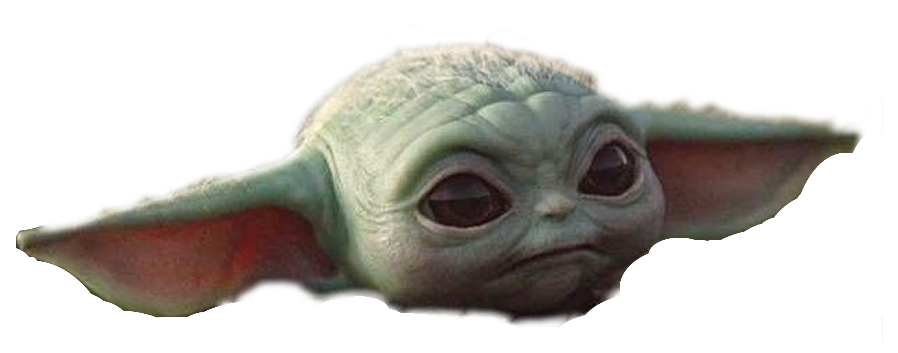
This image captures Baby Yoda (Grogu) in the iconic "Deadpan Boredom" meme. To someone who cannot see it, the image represents a character who is completely unbothered, annoyed, or just utterly unimpressed by the situation. The serious, deadpan expression communicates a sense of total detachment, as if he has already decided that whatever is happening is irrelevant to him.
simple-description (llama3.2-vision_11b)
The meme is a screenshot of a young, green creature from the Star Wars franchise, known as "Baby Yoda" or "The Child," from the Disney+ series "The Mandalorian." The image shows the creature's adorable face, with large, round eyes and a small, button nose. The text "I am 300 years old" is often overlaid on top of the image, humorously implying that the young creature is actually an ancient being.
detailed-analysis (gemma3-27b-vision)
Okay, let's break down an analysis of the image of Grogu (Baby Yoda) through several theoretical lenses.
1. Visual Description
The image showcases a close-up, head-on view of Grogu, a character from The Mandalorian. The primary color is a muted, olive-green. Grogu possesses large, expressive eyes, round and dark, which dominate the composition. The texture appears soft and slightly fuzzy, suggesting a young, vulnerable creature. His ears are oversized and fan-like, with prominent reddish/pink inner ears. The lighting is relatively even, emphasizing the details of his facial features, particularly around the eyes and mouth which expresses a downcast, sad mood. The background is stark white, isolating the subject and further drawing attention to his face. The focus is sharp, rendering detailed skin textures and highlighting his infant form.
2. Foucauldian Genealogical Discourse Analysis
Foucault's concepts of discourse, power/knowledge, and genealogy are relevant here. Grogu’s reception is shaped by a discourse of cuteness, vulnerability, and the “infant schema” - a set of physical characteristics (large eyes, small size, soft features) that trigger nurturing responses in humans. This discourse isn’t natural; it’s constructed through media, cultural narratives, and evolutionary psychology.
A genealogy of Grogu’s image would trace the historical roots of the “cute” aesthetic, linking it to marketing strategies (think baby food commercials, toy design) and the control over desire and consumption. The immense popularity of Grogu is a demonstration of power/knowledge. The creators of The Mandalorian understood and skillfully deployed this discourse of cuteness to create a cultural phenomenon. This isn't merely about liking a character; it’s about a calculated appeal to deeply ingrained emotional responses that drive viewership and merchandise sales. The image reinforces the power of media to construct what we perceive as appealing and desirable, contributing to the surveillance of emotional responses.
3. Critical Theory (Frankfurt School)
From a Critical Theory perspective, Grogu's popularity can be viewed as symptomatic of a broader cultural trend toward infantilization and escapism. The Frankfurt School theorists (Adorno, Horkheimer, Marcuse) would argue that mass culture (like The Mandalorian) offers simplified narratives and emotionally satisfying experiences that distract from deeper social and political problems.
Grogu embodies a pure, innocent vulnerability that appeals to audiences overwhelmed by complex realities. His cuteness functions as a form of commodification of emotion; it's a feeling sold to us through entertainment. This emotional manipulation, according to critical theorists, prevents audiences from engaging with critical thought and potentially challenging dominant power structures. It’s a form of control disguised as entertainment.
4. Marxist Conflict Theory
Applying Marxist theory, Grogu's image becomes a site of economic conflict. His cuteness is not intrinsic, but a constructed value exploited for profit by Disney (and Lucasfilm). Grogu’s likeness is emblazoned on toys, clothing, and countless other merchandise items, creating a surplus value appropriated by the corporation.
The image reinforces the commodification of culture; emotions (the desire to nurture, protect) are turned into marketable products. The intense fan base around Grogu demonstrates the power of consumerism to create ideological control. People are motivated to consume these goods because of the emotional connection they have with the character. This is an example of the base (economic forces) influencing the superstructure (cultural norms and tastes).
5. Postmodernism
From a postmodern perspective, Grogu’s image embodies the breakdown of grand narratives and the celebration of pastiche. He is a derivative of Yoda, yet simultaneously presented as a “new” character, embracing intertextuality. The character’s popularity isn’t necessarily based on a complex story or profound meaning but on a playful, ironic embrace of nostalgia and cuteness.
Grogu's image is readily re-contextualized through memes and online culture, demonstrating the fluidity of meaning in the digital age. The character’s appeal is ultimately superficial; it’s about the sign (the image) rather than any underlying signified (meaning). The image plays with the idea of authenticity and originality, offering a self-aware, ironic experience of pop culture.
6. Queer Feminist Intersectional Analysis
While the image doesn’t directly present issues of gender or sexuality, a queer feminist intersectional analysis could explore how Grogu's inherent vulnerability and dependent state challenge traditional notions of strength and masculinity. In many cultures, emotional expressiveness and a need for care are often coded as feminine traits. Grogu, as a male-coded character, embodies these qualities. This subversion (even if unintentional) can be interpreted as a challenge to rigid gender norms.
Intersectional analysis would also consider the position of the viewer. Different audiences will interpret the image differently based on their own identities and experiences. A woman might identify with Grogu’s vulnerability in ways that a man might not. A person of color might interpret the image through the lens of representation in media. It’s crucial to acknowledge the multiple layers of identity that shape the viewer’s experience.
Let me know if you'd like me to elaborate on any of these interpretations or explore other theoretical frameworks!
simple-description (llama3.2-vision)
The meme is a still image of the character Yoda from the Star Wars franchise, but with his head replaced by the face of Baby Yoda (also known as "The Child") from the same series. The image is captioned "When you're still on the clock but you're already on the couch".
tesseract-ocr
=