First Seen
2023-05-24T21:09:25+00:00
simple-description (qwen3.5_2b-q8_0)
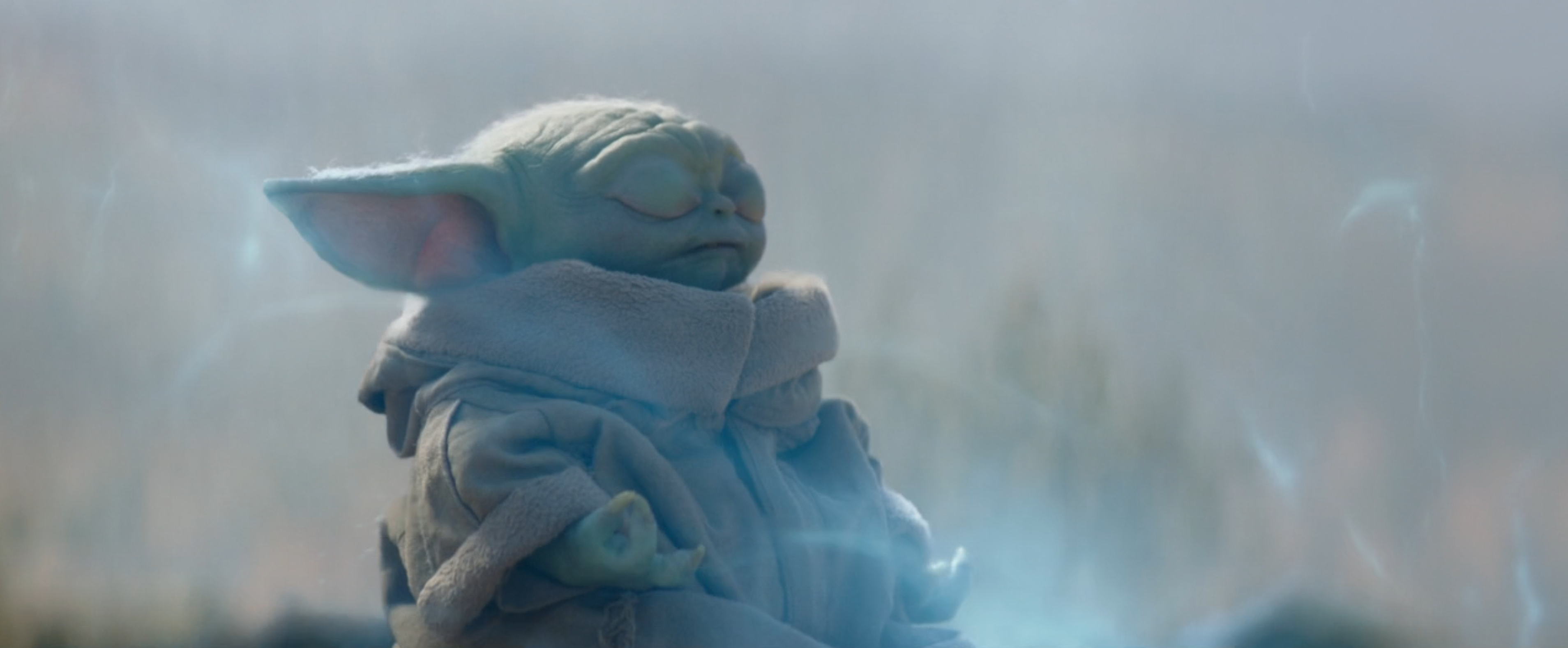
This meme features the character 'Baby Yoda' (Grogu) from the Star Wars universe. He is shown sleeping peacefully in a foggy, cozy scene, wrapped in a hooded robe that makes him look very comfortable. Although a small logo is visible on the sleeve, no legible text appears in the image.
simple-description (llama3.2-vision_11b)
The "Baby Yoda Show" meme features a still image of the character "Baby Yoda" from the Star Wars series, The Mandalorian. The image depicts Baby Yoda looking at the camera with a serious expression, as if he's about to say something profound. The text "I don't like it" is overlaid on the image, implying that Baby Yoda's disapproval is so strong that it's being broadcast on a show, as if it's a news program.
detailed-analysis (gemma3-27b-vision)
Okay, here’s an analysis of the image of Grogu (Baby Yoda) from The Mandalorian broken down into the requested sections. I'll indicate when a section doesn’t fully apply, or requires nuanced interpretation.
Visual Description
The image depicts Grogu, a young creature of the same species as Yoda, in a moment of focused concentration. He’s facing slightly upwards with eyes closed, and his hands are clasped in front of him, suggesting a meditative or Force-sensitive exercise. He is entirely swathed in a light tan, oversized coat with a large, enveloping collar. The background is an indistinct, hazy blue-grey, likely suggesting a Force-induced environment or a subtle, ethereal plane. A soft, cool blue light emanates from his clasped hands, reinforcing the image of concentrated power. The overall color palette is muted, creating a serene yet powerful impression. The image feels cinematic and is high quality.
Foucauldian Genealogical Discourse Analysis
This image, and the construction of Grogu’s character, provides a fascinating point for Foucauldian analysis. The 'cuteness' and infantilization of a powerful, potentially dangerous being (as Yoda’s species are traditionally presented) isn’t accidental. Discourses of power operate through normalizing forces, and here we see a normalizing power employed on a traditionally powerful being.
- Genealogy of Cuteness: We can trace a genealogy of cuteness - how certain physical features (large eyes, small size, vulnerability) have become associated with powerlessness, and therefore a need for protection. This allows Grogu to exert a different kind of power. He doesn't wield overt Force abilities in a dangerous way; he elicits care and protection. This shifts the power dynamic away from traditional displays of Force mastery.
- Discipline & Control: While appearing vulnerable, the Force abilities are also indicative of immense power. The way the narrative controls access to, and displays of, Grogu's Force ability is a disciplinary mechanism. It emphasizes his dependence on the Mandalorian, strengthening the power imbalance.
- Discourse on Species: The narrative also relies on a pre-existing discourse around Yoda’s species. This species is traditionally presented as ancient, powerful, and enigmatic. Grogu, as a member of this species, inherits this discourse, but it is modified by his youth and apparent helplessness.
Critical Theory
The image of Grogu is highly symbolic within the context of The Mandalorian and can be analyzed through a lens of critical theory.
- Commodification of Innocence: Grogu represents a symbol of innocence and vulnerability in a harsh and violent galaxy. The narrative capitalizes on this, using his plight to generate emotional investment from the audience. This is a form of commodification, turning innocence into a marketable emotional product.
- Ideology and Sentimentality: The intense emotional response to Grogu masks deeper ideological concerns. The focus on protecting the helpless distracts from systemic issues within the Star Wars universe (the Empire, political corruption, etc.). The narrative prioritizes individual care over large-scale political solutions. This reinforces a specific ideology emphasizing individual responsibility over systemic change.
- Symbolic Representation: Grogu can also be seen as a symbolic representation of "lost childhood." In a galaxy defined by conflict and trauma, Grogu embodies a lost innocence, creating a sense of nostalgia and longing within the audience.
Marxist Conflict Theory
While not directly apparent in the image, the broader narrative of The Mandalorian offers fertile ground for Marxist analysis.
- Grogu as a Commodity: Within the context of the show, Grogu is pursued by remnants of the Empire who want to extract his Force-sensitive blood for nefarious purposes. This frames Grogu as a resource – a commodity to be exploited for the benefit of a powerful, oppressive group.
- Class and Power Dynamics: The Mandalorian (Din Djarin) is a bounty hunter operating on the fringes of society. His relationship with Grogu is driven by a moral compass that clashes with the exploitative capitalist interests of the Empire. This creates a class conflict, highlighting the struggle between individual ethics and systemic greed.
- Control of Means of Production: The Empire's desire to control Grogu's Force sensitivity illustrates a broader theme of controlling the “means of production” (in this case, the potential power represented by the Force). They want to monopolize this power to maintain their dominance.
Postmodernism
Grogu’s popularity and the nature of the Star Wars universe itself touch on postmodern themes.
- Pastiche & Intertextuality: The Mandalorian is heavily reliant on referencing and borrowing from previous Star Wars installments. Grogu, as a creature evoking Yoda, embodies this intertextuality. He is a pastiche—a blending of familiar elements in a new context.
- Fragmentation of Grand Narratives: The Star Wars universe has undergone many re-interpretations and expansions. The Mandalorian contributes to this fragmentation, challenging the monolithic narratives of the original trilogy. The focus on individual survival and moral ambiguity within a complex galaxy undermines the clear-cut "good vs. evil" dichotomy of the earlier films.
- The Simulacrum and Hyperreality: Grogu’s image, particularly through merchandise and social media, has become a simulacrum—a copy without an original. The image is widely circulated and consumed, existing independently of the character’s narrative function. This creates a hyperreality—a world where the image has become more real than the reality it represents.
Queer Feminist Intersectional Analysis
This is the most challenging area to apply directly to a single image, but some potential connections can be made.
- Challenging Traditional Masculinity: The Mandalorian's evolving relationship with Grogu challenges traditional notions of masculinity. The Mandalorian’s role shifts from a hardened bounty hunter to a caregiver, demonstrating a vulnerability and emotional intelligence often absent in traditional action heroes. This can be read as a subtle critique of patriarchal norms.
- Mothering & Caregiving: While Din Djarin is a male figure, he embodies aspects of nurturing and caregiving typically associated with mothers. The power of care is a feminist concept, and Din Djarin's role subverts the expectation that caregiving is solely a female domain.
- Intersectional Vulnerability: Grogu, as a young member of a species historically presented as powerful, is inherently vulnerable. This vulnerability intersects with his species identity, his age, and his dependence on the Mandalorian. The narrative centers on protecting this vulnerability, highlighting the importance of intersectional care and protection.
I hope this breakdown is comprehensive and insightful! Let me know if you'd like me to elaborate on any of these points or explore other theoretical perspectives.
simple-description (llama3.2-vision)
The meme is an image of the character Grogu (also known as "Baby Yoda") from the TV show "The Mandalorian," with a shocked and terrified expression on his face. The image is captioned "When you realize you have to go back to work on Monday".
tesseract-ocr
al, y “a —_ “— } > =. a he y —