First Seen
2023-05-24T21:09:25+00:00
simple-description (qwen3.5_2b-q8_0)
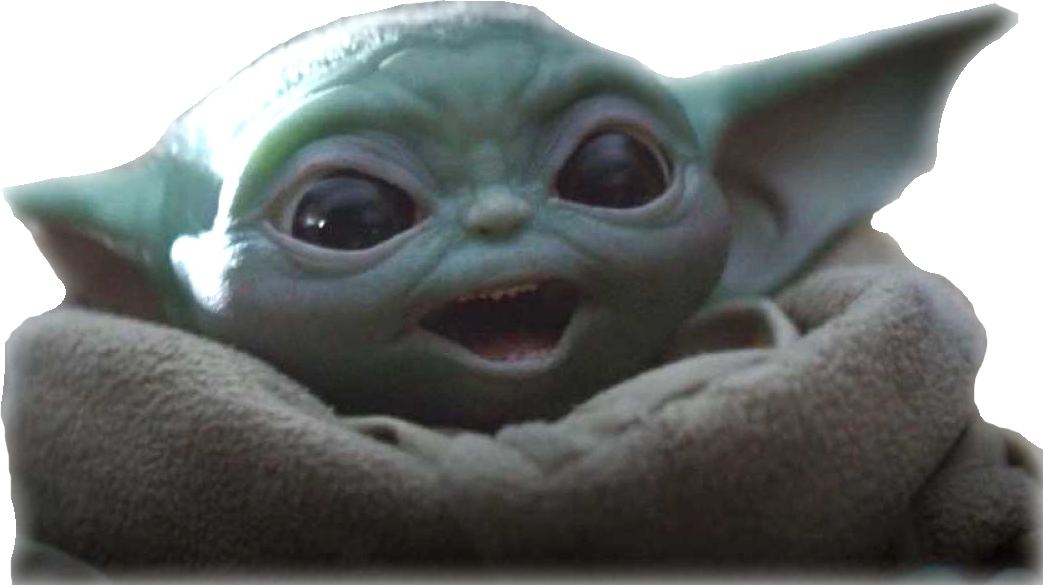
This image features Baby Yoda (Grogu) from The Mandalorian huddled up against the lens, appearing as if he is speaking or reacting with innocent surprise. His wide, dark eyes and open mouth suggest a moment of curiosity or realization, often used to represent a baby character encountering something magical or significant.
simple-description (llama3.2-vision_11b)
The "Baby Yoda Show" meme features an image of the character Baby Yoda from the Star Wars series "The Mandalorian" with a caption that reads "Baby Yoda Show" in a playful, cartoonish font. The meme is a humorous take on the character's adorable and mysterious nature, with the implication that the show is all about Baby Yoda's adventures and antics. The meme is often used to express excitement or enthusiasm for the character, and is frequently paired with other memes or jokes to create a humorous and lighthearted atmosphere.
detailed-analysis (gemma3-27b-vision)
Okay, here’s an analysis of the image of "Baby Yoda" (Grogu) through the lenses you requested. Not every category will be relevant, and I will note when that is the case. I will also lean into the specific nature of the image as presented, not necessarily the entirety of the character's arc in the show.
Visual Description
The image depicts Grogu, the character popularized by The Mandalorian. He is a small, green-skinned creature with large, expressive eyes and pointed ears. He's swaddled in a soft, textured, tan/grey wrapping. The lighting is somewhat dramatic, with a bright highlight on his head, drawing focus to his face. His mouth is open in a slightly endearing, vulnerable expression. The angle is a close-up, emphasizing his size and innocence. The background is stark white, isolating the figure and pushing him to the forefront. The overall impression is one of cuteness, fragility, and emotional openness.
Foucauldian Genealogical Discourse Analysis
This is perhaps the most interesting lens to apply. Michel Foucault's work examines how power operates through discourse – systems of thought, language, and practice.
- Discourse of “Cutness”: The image fundamentally relies on, and actively participates in, a deeply ingrained cultural discourse of "cuteness." This isn’t simply an aesthetic preference; it's a system of power. Historically, cuteness has been associated with helplessness, vulnerability, and a need for protection. This creates an asymmetrical power dynamic: we, the viewers, are positioned as protectors/caregivers. The disproportionate size of Grogu's eyes is a key component of this, triggering instinctive nurturing responses.
- Genealogy of ‘The Child’: The discourse of cuteness as it applies to children has a genealogy—a history of evolving norms. Historically, children were seen as miniature adults, expected to contribute to labor. The modern idea of childhood as a period of innocence and dependence is a relatively recent construct, shaped by economic shifts and evolving social expectations. Grogu embodies this historical discourse even though he is not a human child.
- Power/Knowledge: The image operates within a power/knowledge system. Disney/Lucasfilm produce and control the dissemination of Grogu’s image, shaping the narrative around him. We, the viewers, consume this image, internalizing its messages and contributing to the perpetuation of this discourse. The image's virality reinforces the power of Disney/Lucasfilm to influence cultural perceptions.
- Normalization of Power Imbalance: The image normalizes the power imbalance embedded in the nurturing role. The viewer is encouraged to feel protective and caring, reinforcing the perceived need to control and safeguard.
Critical Theory
A critical theory lens, rooted in the Frankfurt School, examines how culture reinforces existing power structures.
- Commodification of Emotion: The image of Grogu is a prime example of the commodification of emotion. His cuteness is not inherently valuable; it's made valuable by Disney/Lucasfilm through marketing, merchandising, and narrative deployment. Our emotional response to the image is harvested for economic gain.
- Culture Industry: Grogu’s image is a product of the “culture industry,” a concept developed by Adorno and Horkheimer. The image is mass-produced, standardized, and designed to generate consumer desire. It functions as an ideological tool, distracting from larger societal issues.
- False Consciousness: The overwhelming popularity of Grogu could be argued to contribute to a form of “false consciousness.” We become so captivated by his image that we become less critical of the systems that produced him.
- Spectacle: The image operates within the realm of the spectacle as described by Guy Debord. It is an image meant to captivate and distract, obscuring the underlying realities of production and consumption.
Marxist Conflict Theory
While not the most central application, Marxist theory can offer some insight.
- Capital Accumulation: The image fuels capital accumulation for Disney/Lucasfilm. The character is a brand asset, generating revenue through merchandise, streaming subscriptions, and licensing agreements.
- Labor Exploitation: The creation of Grogu’s image and the associated merchandise require the labor of artists, animators, factory workers, and marketers. This labor is often undervalued or exploited within a capitalist system.
- Ideology & Distraction: The image can be seen as an ideological tool that distracts from the underlying class conflicts inherent in a capitalist society. It offers a temporary escape from the harsh realities of economic inequality.
Postmodernism
Postmodernism, with its focus on fragmentation, pastiche, and the blurring of boundaries, is somewhat applicable.
- Intertextuality: Grogu's design is overtly reminiscent of Yoda, a figure from the Star Wars canon. This is an example of intertextuality—the relationship between texts. The image deliberately invokes a pre-existing cultural reference.
- Simulation & Hyperreality: Grogu’s image operates within a realm of simulation and hyperreality. The image is not ‘real,’ but it evokes intense emotional responses, blurring the line between representation and reality. The character is a digitally created construct, further emphasizing this separation.
- Loss of Grand Narratives: Postmodernism questions grand narratives, like the traditional hero's journey. The character can be seen as challenging those conventions.
Queer Feminist Intersectional Analysis
This lens is the least directly applicable, though some interesting interpretations can be offered.
- Challenge to Binary/Gendered Care Roles: Grogu’s vulnerability and need for care could be interpreted as challenging traditional, gendered expectations of caregiving. He requires protection and nurturing, regardless of the gender identity of those providing it.
- Intersectional Vulnerability: While Grogu is not human, his vulnerability can be examined through an intersectional lens. His species is unknown and likely marginalized within the Star Wars universe. This creates a unique form of vulnerability based on difference.
- Co-optation of "Innocence": The use of a character evoking babyhood—often associated with innocence and dependence—is a trope that can be scrutinized through a feminist lens. The image may reinforce problematic narratives about vulnerability and power dynamics.
I hope this analysis is thorough and provides a range of perspectives on the image of Grogu through the lenses you requested. Let me know if you'd like me to elaborate on any particular aspect.
simple-description (llama3.2-vision)
This meme is an image of the character Yoda from the Star Wars franchise, but with a big smile on his face and his eyes are wide with excitement. The image is captioned "When you're 12 weeks pregnant and you just found out it's a boy".
tesseract-ocr
(a Pa a. raf PUR Mi ee a s