First Seen
2023-05-24T21:09:25+00:00
simple-description (qwen3.5_2b-q8_0)
This meme features Baby Yoda, the green alien child from the Star Wars franchise, looking grumpy while holding a fuzzy blanket over his eyes to block out a confusing view. The text overlay in the corner reads, "I can't see a lot, baby," which is a phrase often used to describe the frustrating struggle of trying to process complex information or emotions that are hard to parse.
simple-description (llama3.2-vision_11b)
The meme is a screenshot of Baby Yoda from the Star Wars series, The Mandalorian, with the caption "I only know one thing" written in a childlike scribble. The image shows Baby Yoda looking up at the camera with a serious expression, as if he's trying to convey a deep understanding of the universe. The caption is a humorous take on the character's innocence and wisdom.
detailed-analysis (gemma3-27b-vision)
Okay, here’s an analysis of the provided image of "Baby Yoda" (Grogu from The Mandalorian), broken down into sections as you requested. I will only include sections that demonstrably apply to the image and its cultural context.
Visual Description
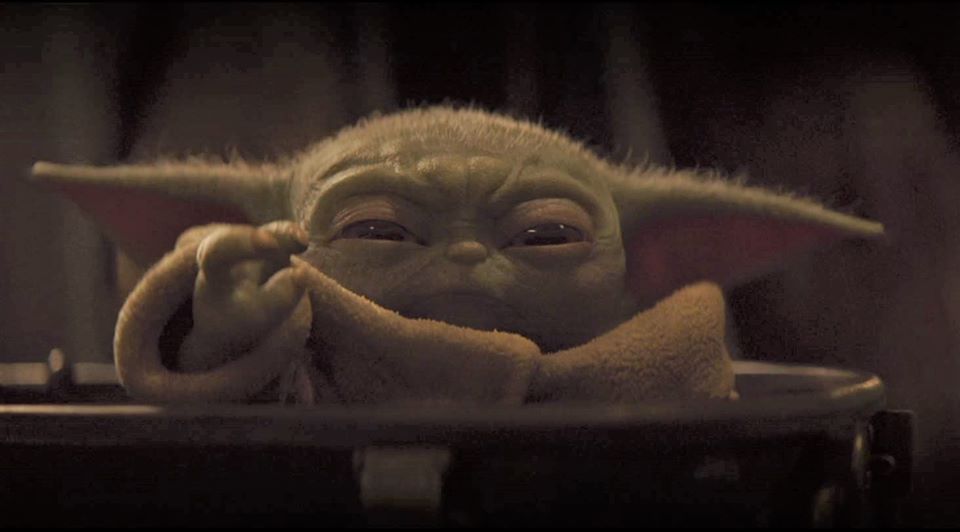
The image depicts a close-up of Grogu, the character popularly known as "Baby Yoda" from the Disney+ series The Mandalorian. He's positioned within what appears to be a ship’s control panel or console, looking directly at the viewer. The lighting is warm and predominantly sepia-toned, creating a sense of intimacy and nostalgia, while also recalling older sci-fi and Western film aesthetics.
Grogu's large, expressive eyes are the focal point, conveying a mix of innocence, curiosity, and (perhaps) a touch of mischievousness. His facial features are exaggerated and endearing, drawing on the "baby schema" – features that trigger nurturing instincts. The texture of his skin is realistically rendered, showing fine details and imperfections. The background is dark and blurred, keeping the focus entirely on Grogu and creating a sense of depth. The framing suggests he's caught "in the act" of something, heightening the sense of connection with the viewer. The composition, with Grogu's face filling the frame, emphasizes his vulnerability and cuteness.
Foucauldian Genealogical Discourse Analysis
This image, and the broader phenomenon of "Baby Yoda," can be examined through a Foucauldian lens to understand how power operates through the construction of a cultural "truth" and the normalization of certain forms of desire.
- Discourse of Cuteness: The image participates in a long-standing discourse of cuteness, deeply embedded in Western culture. This isn’t a neutral phenomenon; it’s a constructed category. Foucault would argue that this discourse serves a function, perhaps in maintaining social order by encouraging nurturing behavior or in promoting consumerism by attaching emotional value to products (the Grogu merchandise is a prime example).
- Genealogy of the 'Mascot': Tracing a genealogy of the "mascot" figure – the small, vulnerable, endearing character – we see how this trope has historically been used to soften narratives, generate brand loyalty, or reinforce particular ideologies. Grogu fits neatly into this lineage but operates at an unprecedented scale due to the power of modern media and social media.
- The Formation of Subjectivity: The way Grogu is presented – small, dependent, and needing protection – subtly reinforces ideas about vulnerability and care, influencing how we perceive and respond to these concepts.
- Power/Knowledge: Disney/Lucasfilm wields significant power/knowledge in shaping the narrative around Grogu. They control the image, the story, and the associated merchandise, defining the parameters of our engagement with the character.
Critical Theory
From a Critical Theory perspective (influenced by thinkers like Adorno and Horkheimer), the image of Grogu, and its overwhelming reception, can be seen as participating in the "culture industry."
- Commodification of Affection: The character is a powerful example of how affection and emotional response are increasingly commodified in contemporary culture. Grogu is not simply a character; he's a product designed to elicit an emotional response that translates into consumer spending.
- Distraction and Reification: The intense focus on Grogu can be seen as a form of distraction from more pressing social and political issues. His cuteness "reifies" a sense of innocence and vulnerability, potentially obscuring the complexities and contradictions of the world.
- The Erosion of Authenticity: The character's popularity, fueled by social media, creates a simulacrum of authenticity. The genuine emotional responses of viewers are often mediated and manipulated by marketing campaigns and online trends.
Postmodernism
The character’s success embodies several postmodern characteristics:
- Pastiche and Intertextuality: Grogu draws heavily on existing tropes of science fiction, Westerns, and even traditional folklore. He’s a remix of familiar elements, referencing Yoda but existing as a distinct entity.
- Hyperreality: The online world’s obsession with Grogu often exceeds the reality of the character within the show. The endless memes, fan art, and merchandise create a hyperreal version of Grogu that becomes more powerful than the original source.
- The Collapse of Grand Narratives: While Star Wars is a grand narrative in itself, Grogu's appeal often lies in his individual story and endearing qualities. He represents a shift away from large-scale, heroic narratives toward more personal and emotional connections.
- Playfulness and Irony: The online community’s engagement with Grogu often involves a playful and ironic approach. The character is simultaneously celebrated and parodied, reflecting the postmodern tendency to destabilize meaning.
I hope this detailed analysis is helpful. Let me know if you’d like any of these sections expanded or clarified.
simple-description (llama3.2-vision)
This meme is a screenshot of the character Baby Yoda from the TV show "The Mandalorian" with a surprised expression. The text "I have spoken" appears in the image, which is a quote from the show. The meme is likely being used to express surprise or shock at something.
tesseract-ocr
mani ti : '