First Seen
2023-05-24T21:09:26+00:00
simple-description (qwen3.5_2b-q8_0)
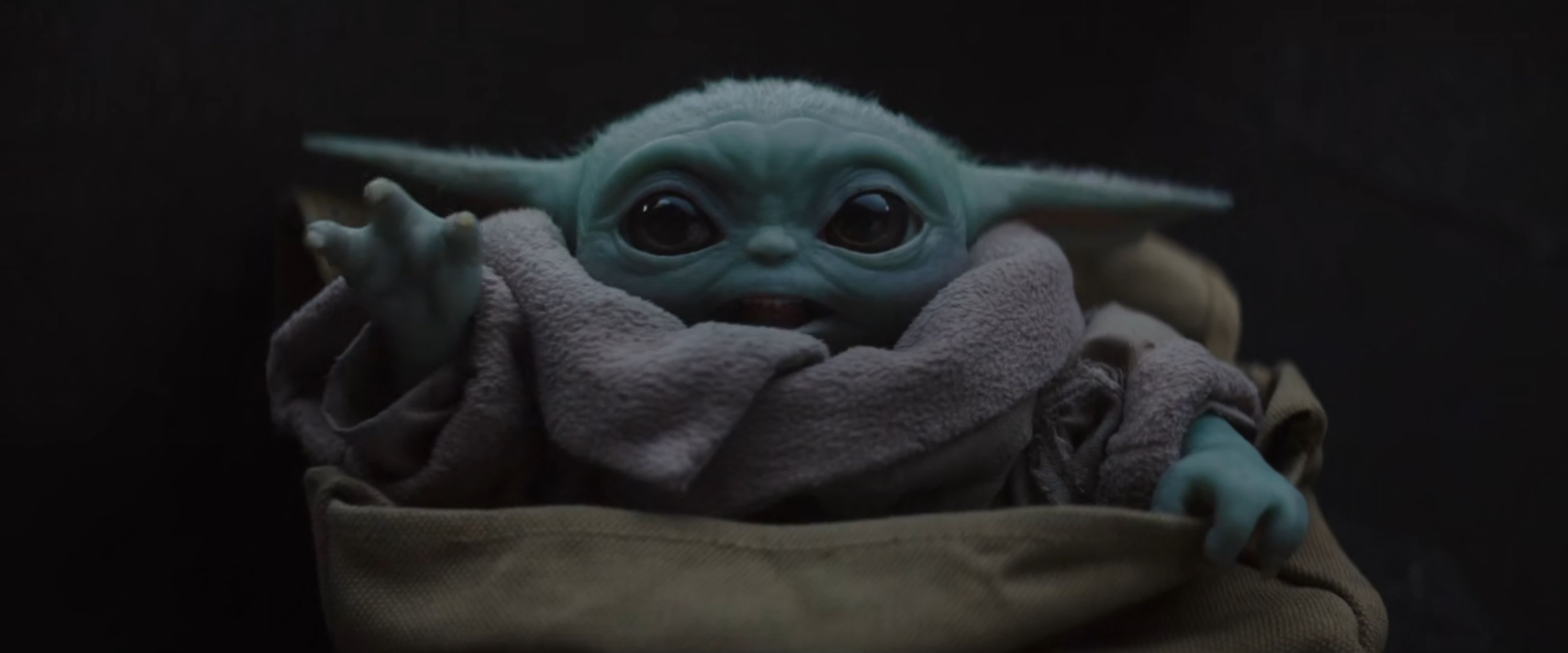
This image is a popular "baby face" meme because Baby Yoda's wide-eyed, innocent expression mimics that of a toddler. He is wrapped in a brown sack that features the logo "MANDALORIAN" on the tag and "THE MANDALORIAN" on the bag itself. He looks directly at the viewer with his hand raised, creating a cute, cutaway perspective that turns the character into a funny, innocent subject for the internet.
simple-description (llama3.2-vision_11b)
The meme is an image of Baby Yoda from the Star Wars series, with a caption "Baby Yoda Show" and a screenshot of a TV show with a "show" button highlighted. The meme is a humorous reference to the popular "Baby Yoda Show" TV show, where the character's name is used as a title for a fictional show.
detailed-analysis (gemma3-27b-vision)
Okay, let's break down this image of "Baby Yoda" (Grogu from The Mandalorian) through various theoretical lenses.
Visual Description
The image is a close-up shot of Grogu, a creature belonging to the same species as Yoda. He is depicted as a small, infant-like being with large, expressive eyes and prominent ears. His skin is a pale green hue, and his features are soft and rounded. He is wrapped in a light-brown swaddling cloth or robe, providing a sense of vulnerability and protection. The background is entirely black, which throws the viewer's focus directly onto Grogu's face. The lighting is soft, highlighting the texture of his skin and the folds of the cloth. The composition creates a sense of intimacy and encourages the viewer to perceive Grogu as a being deserving of care. His arms are extended slightly, almost as if reaching out.
Foucauldian Genealogical Discourse Analysis
A Foucauldian analysis would focus on the discourses surrounding Grogu and how those discourses construct knowledge about what it means to be "childlike," "vulnerable," "precious," and even what constitutes "power" within the Star Wars universe.
- Power/Knowledge: The massive cultural impact of Grogu is not simply about cuteness. It's about the power invested in this image through the Star Wars franchise and the media that amplified it. This power dictates what we perceive as appealing, endearing, or needing protection. The franchise's power to define those concepts is significant.
- Genealogy of "Cuteness": Examining the historical evolution of “cuteness” in media and how it’s been used to evoke specific emotional responses, to market products, or to even control behavior. Grogu taps into a pre-existing cultural vocabulary of infant-like features that elicit nurturing instincts.
- Discipline and Control: The show’s narrative positions Grogu as requiring protection. This reinforces societal power dynamics where the “weak” (infants, those requiring care) are subject to the authority and control of others. The Mandalorian’s role as protector reinforces this dynamic, even though he’s not traditionally thought of as a “caregiver.”
- The Panopticon of Social Media: The rapid circulation of Grogu images through memes and social media created a system of constant visibility. Every response to the image was monitored by the gaze of others, shaping a culture around his perceived innocence and need for protection.
Critical Theory
Using a Critical Theory lens (often drawing from the Frankfurt School) we can analyze how the image serves as a vehicle for broader social ideologies.
- Commodification of Affection: Grogu’s enormous popularity was rapidly turned into a massive merchandising opportunity. This highlights a key tenet of Critical Theory: the tendency of capitalist society to commodify everything, including emotions and affection. The emotional connection viewers have with Grogu is exploited for profit, turning a symbol of innocence into a product.
- Distraction and Reification: Grogu's cuteness and endearing qualities can be seen as a form of societal distraction from larger systemic issues. His popularity diverts attention from political, economic, and social problems, reinforcing the status quo. The image "reifies" the idea of innocence as something inherently valuable, obscuring the complex realities of the Star Wars universe (violence, oppression, etc.).
- The Illusion of Authenticity: Though a fictional character, Grogu is presented in a way that elicits genuine emotional responses. This blurring of the lines between reality and representation is a hallmark of modern media and a point of concern for Critical Theorists, who question the authenticity of experiences in a heavily mediated world.
Marxist Conflict Theory
From a Marxist perspective, the image can be analyzed in terms of class relations and the exploitation of cultural capital.
- The Symbolic Capital of “Cutness”: Grogu embodies a form of symbolic capital – something that holds value not because of its material worth, but because it's socially constructed. This symbolic capital is largely controlled by Disney (the owners of Star Wars), which dictates how this image is disseminated and monetized.
- False Consciousness: The overwhelming positive reception to Grogu can be seen as a distraction from the inherent conflicts and inequalities within the Star Wars universe (and arguably, in the real world). The focus on Grogu's cuteness may obscure the underlying power struggles and systemic injustices.
- Control of Cultural Production: Disney’s control over the Star Wars franchise allows it to shape the narrative and, consequently, the values and beliefs of its audience. The creation and promotion of Grogu as a beloved character is a form of cultural control.
- Commodity Fetishism: The merchandising of Grogu exemplifies commodity fetishism. The value of the Grogu-branded products is detached from the labor and resources used to create them, and instead rests on the emotional connection people have with the character.
Regarding the remaining prompts:
- Postmodernism: While Grogu taps into archetypal imagery of the “child,” the image's sheer proliferation through internet memes and remix culture embodies postmodern playfulness and the breakdown of original meaning. The character's image becomes a signifier detached from a fixed, authoritative meaning.
- Queer Feminist Intersectional Analysis: This would be less directly applicable, as the image doesn’t inherently address queer or feminist issues. However, a queer feminist reading could explore how Grogu’s vulnerability and “innocence” are constructed through traditionally gendered and patriarchal frameworks of caretaking and protection. The image reinforces these power dynamics, and the analysis would focus on how those dynamics perpetuate inequalities. Additionally, intersectionality would ask how different audiences (based on race, class, etc.) experience this image and the emotional connection to it.
I hope this detailed breakdown provides you with a comprehensive analysis of the image through various theoretical lenses! Let me know if you'd like me to elaborate on any particular point.
simple-description (llama3.2-vision)
This meme is an image of the character Baby Yoda from the Star Wars franchise, sitting in the dark with a concerned expression. The text "when you finally get to sleep but then you remember you have to go to work tomorrow" is overlaid on the image, implying that even the adorable Baby Yoda can't escape the stresses of everyday life. The meme is a humorous take on the universal experience of worrying about the next day's responsibilities.
tesseract-ocr
\ . a = aeeal — ~ a 7 ; 5.” 4 x <n . , a a ae _ _ . _ ~ ¥ . 2 . , . ~~ ~~ = Pa Kt Ne a NA Soe : ‘ Po <= - . eee e as * A i :